Winter Birding in the Himalayan Foothills

Subsequent to my last post a few years back, I had done multiple trips to areas around Rajaji N.P., but failed to post on any of them.

We spent nearly ten days in and around this area over the year-end, giving me plenty of time for birding. Few things are more delightful than walking westward along a ridgeline in this landscape on a crisp winter morning, the mellow sunlight on your back, with the incessant call of the Hilaans resounding through the hills, interspersed with the calls of kakar from the forested slopes below. On one occasion, two kakar called from the forested slopes on either side simultaneously.

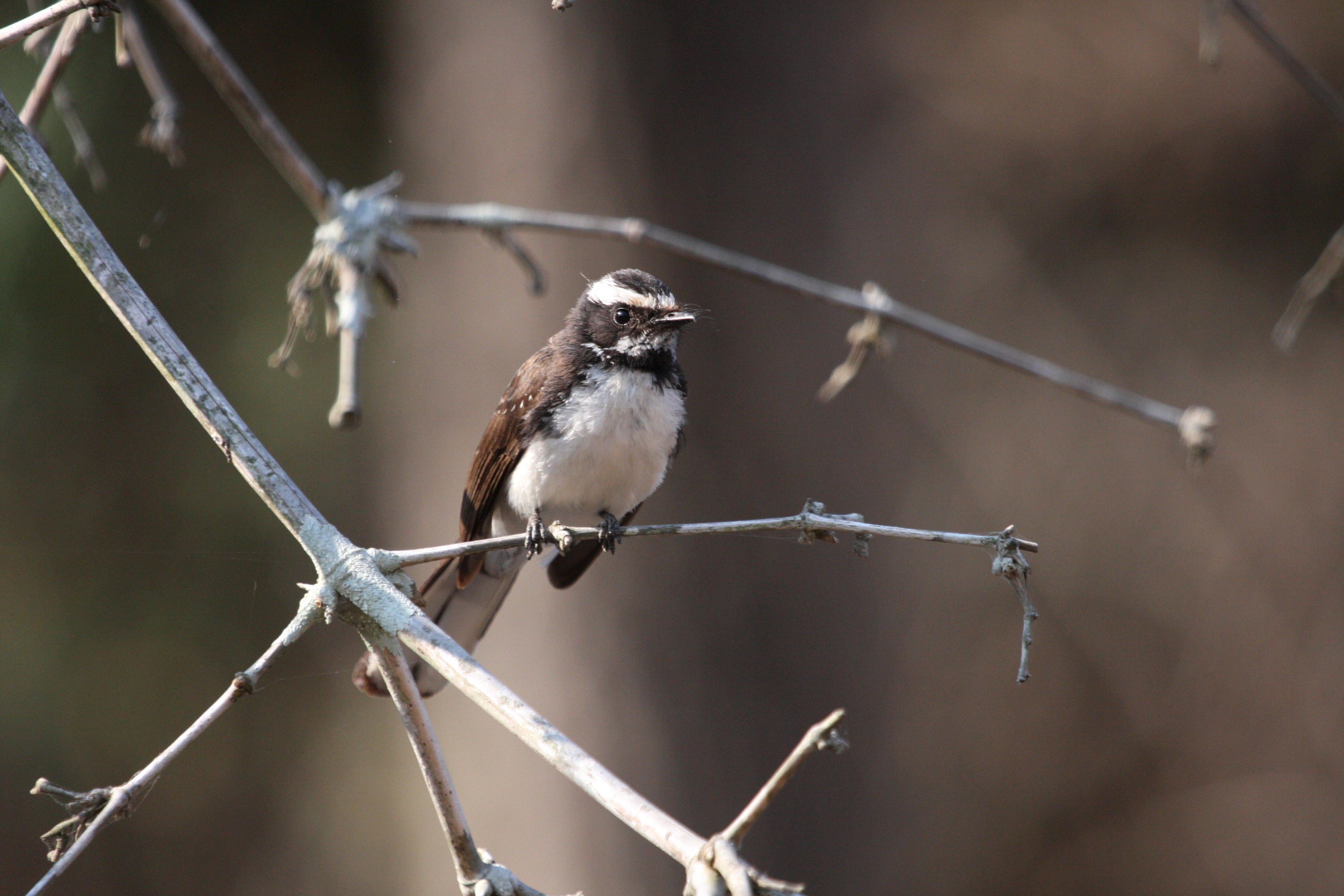
These daily outings through terraced fields and wooded paths netted a reasonable haul of avian sightings (over sixty species, not earth-shattering, but reasonably satisfactory). I tried alternating this with sitting for an hour at a vantage point on our property and found the door-delivered sightings just as good, if not better. Yellow-bellied fantail, Bar-winged flycatcher shrike, Grey-capped pigmy woodpecker, White-throated fantail and Greenish Warbler were certain fixtures, apart from the ubiquitous Himalayan bulbul which flocked everywhere. Enormous flocks of Grey-breasted prinia were all around. These birds were quarrelsome scolds. Crimson sunbirds were seen around the same spot at the eastern periphery of the property each morning. I once spotted a solitary blue-throated barbet.

It is also a very gratifying experience to have a bird wave wash over you on a narrow wooded path. Something that happened a couple of times. Grey-headed canary flycatcher, White-throated fantail, Black-chinned babbler, Yellow-bellied fantail, Grey-breasted prinia and a couple of other species. While the mixed flock passes over you, there’s the whirring of little wings all around and a momentary feeling of elation.

It is curious how sightings tend to vary year on year. Last year there was a large flock of Himalayan goldfinches constantly circling around our place. I found a tree laden heavy with Crested tree swifts. Both were exceptional sightings, seen on only one trip. The resident pair of Crested buntings failed to appear this time. Chestnut-shouldered petronias and flocks of Eurasian tree sparrows, which I encounter each time in specific spots were also missing. However to compensate, there were several White-capped buntings pecking away at the grass on the driveway each morning. And several Black-crested bulbul.

I did the Chilla range safari as I usually do, and one drive on the Vindhyavasini temple route in the Ghori range along the Been and Tedon rivulets. Birding in the Chilla Range safari was tepid, with just Rose-ringed parakeets and Black bulbuls seeming to occur everywhere in large flocks. Other sightings were scanty and the ones seen were typical of this drive – Common stonechat in the chaurs of Mundal sot, Changeable hawk eagles calling from the forest edge and so on.

The one sighting I have missed over the past couple of trips has been of the resident leopard. I never failed to encounter this animal on the roadside shortly before reaching home, after sundown. I haven’t seen it over the past couple of trips. There has been felling of the forest and some development around the area I used to encounter it in and this has disrupted the sightings. It is very much around however, and my 14-year old son had the thrilling experience of hearing it call from the thickets while out on an evening walk with my father-in-law.

Here are some pictures. Most of these were clicked by my son as he now claims ownership of what was once my camera.

Blue-capped redstart. This was a bird I had not encountered before and identified it subsequently.
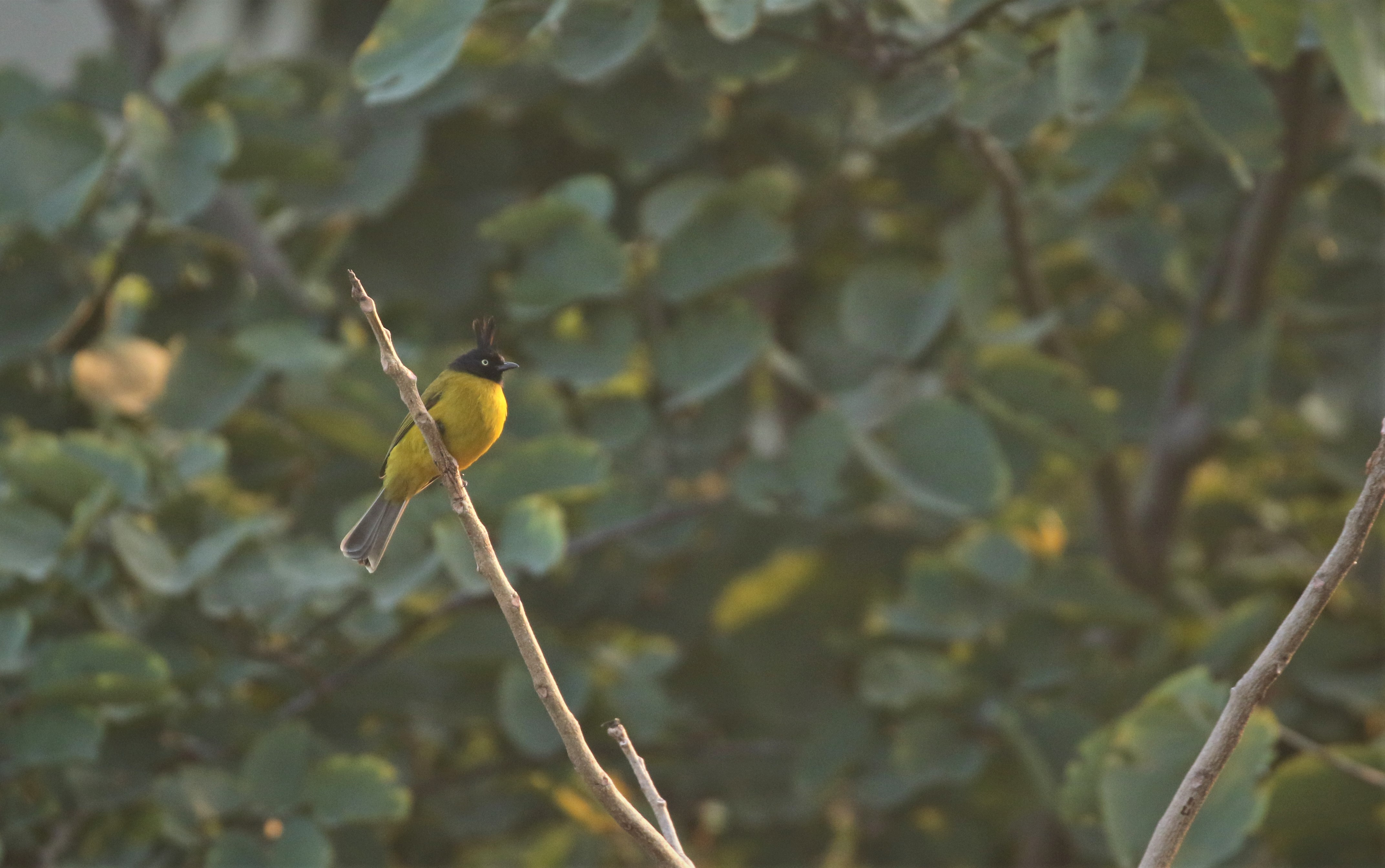
Black-crested bulbul are usually seen in the area, but were far more numerous and visible this time around.
Plumbeous water redstart near the Vindhyavasini temple.
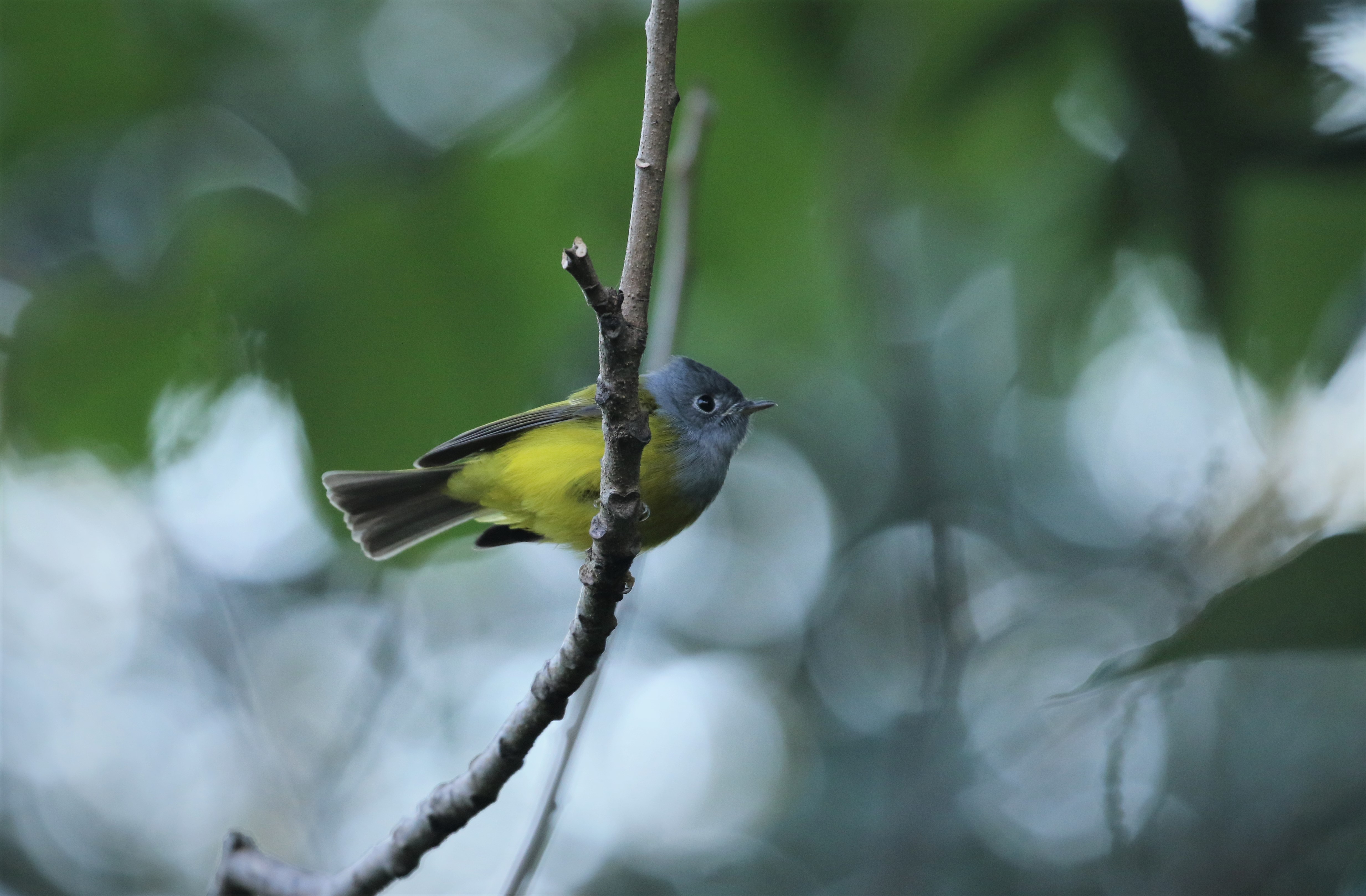
Grey-headed canary flycatcher
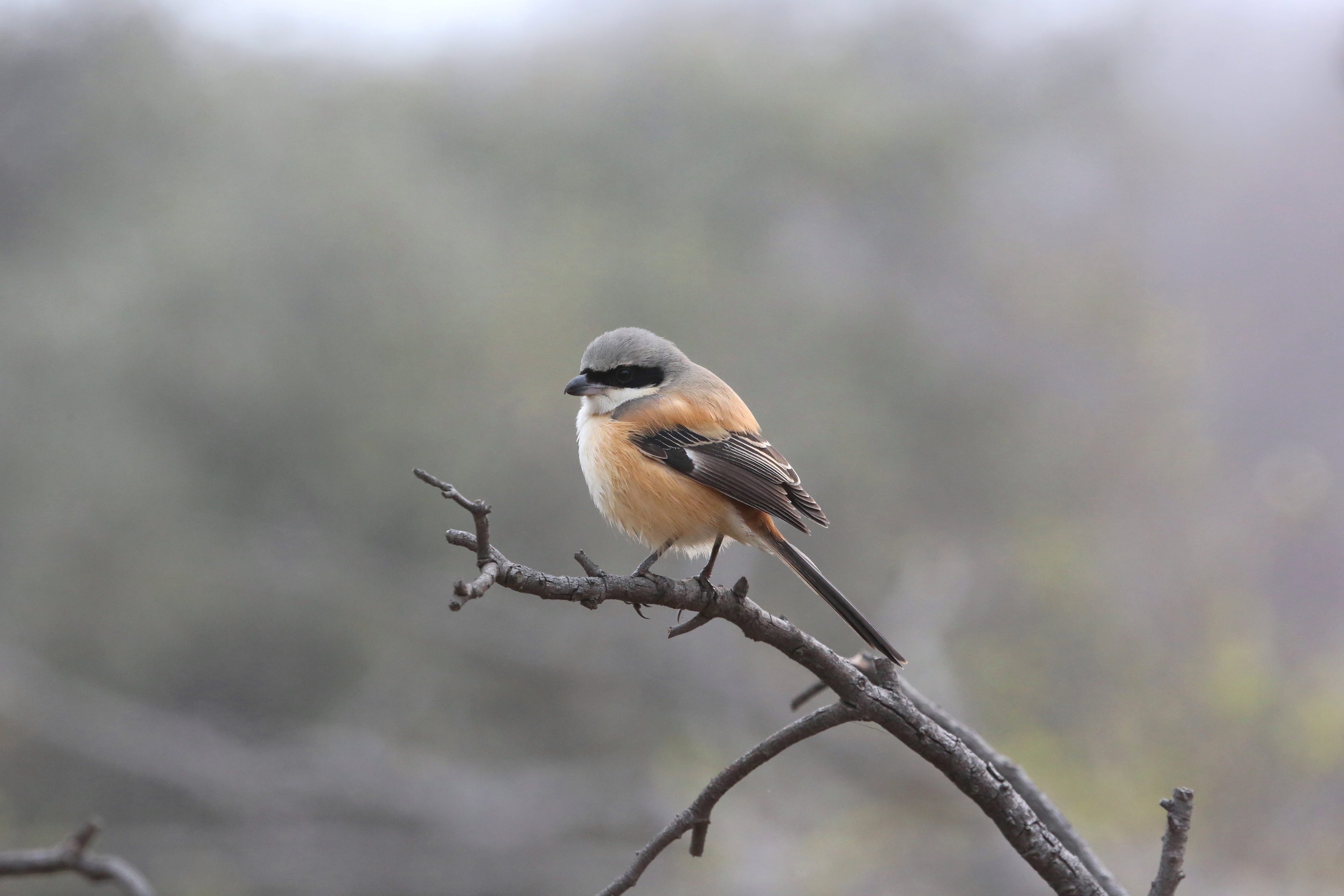
Bar-winged flycatcher shrike
White-capped buntings were commonly seen this time around.
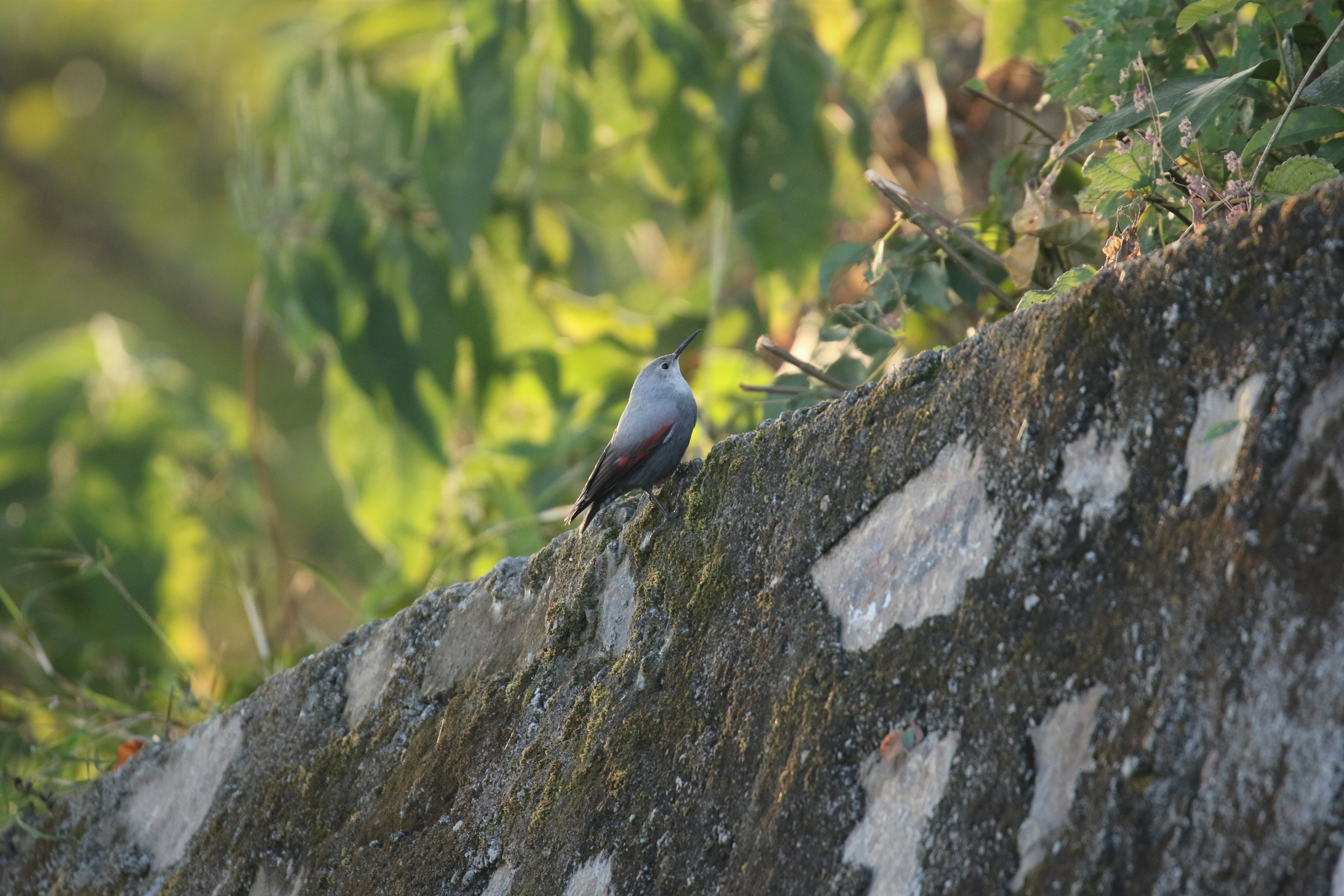
The retaining walls on the property were happy hunting grounds for the Wallcreeper.
Common stonechat on Mundal Sot
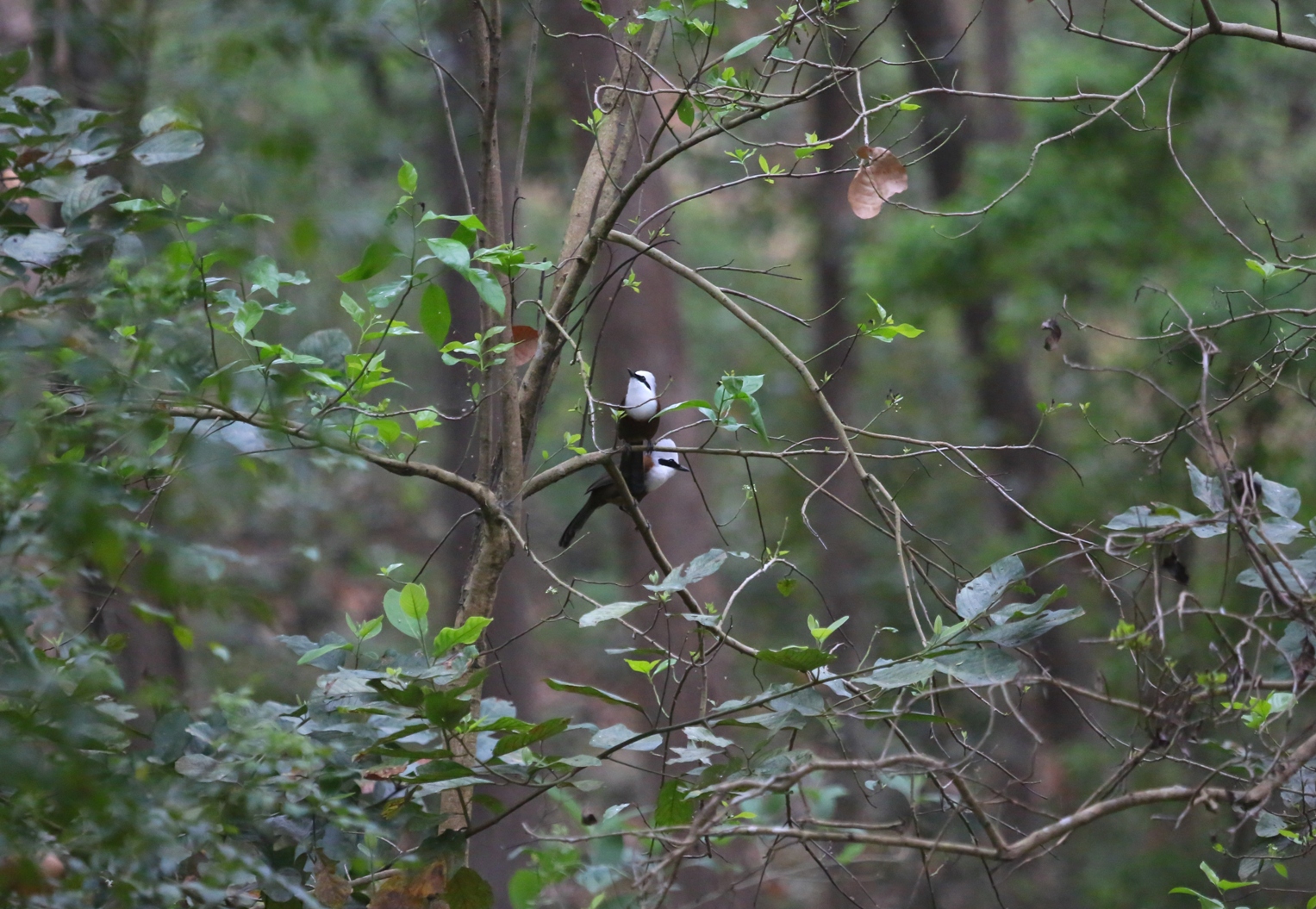
Streaked laughingthrush
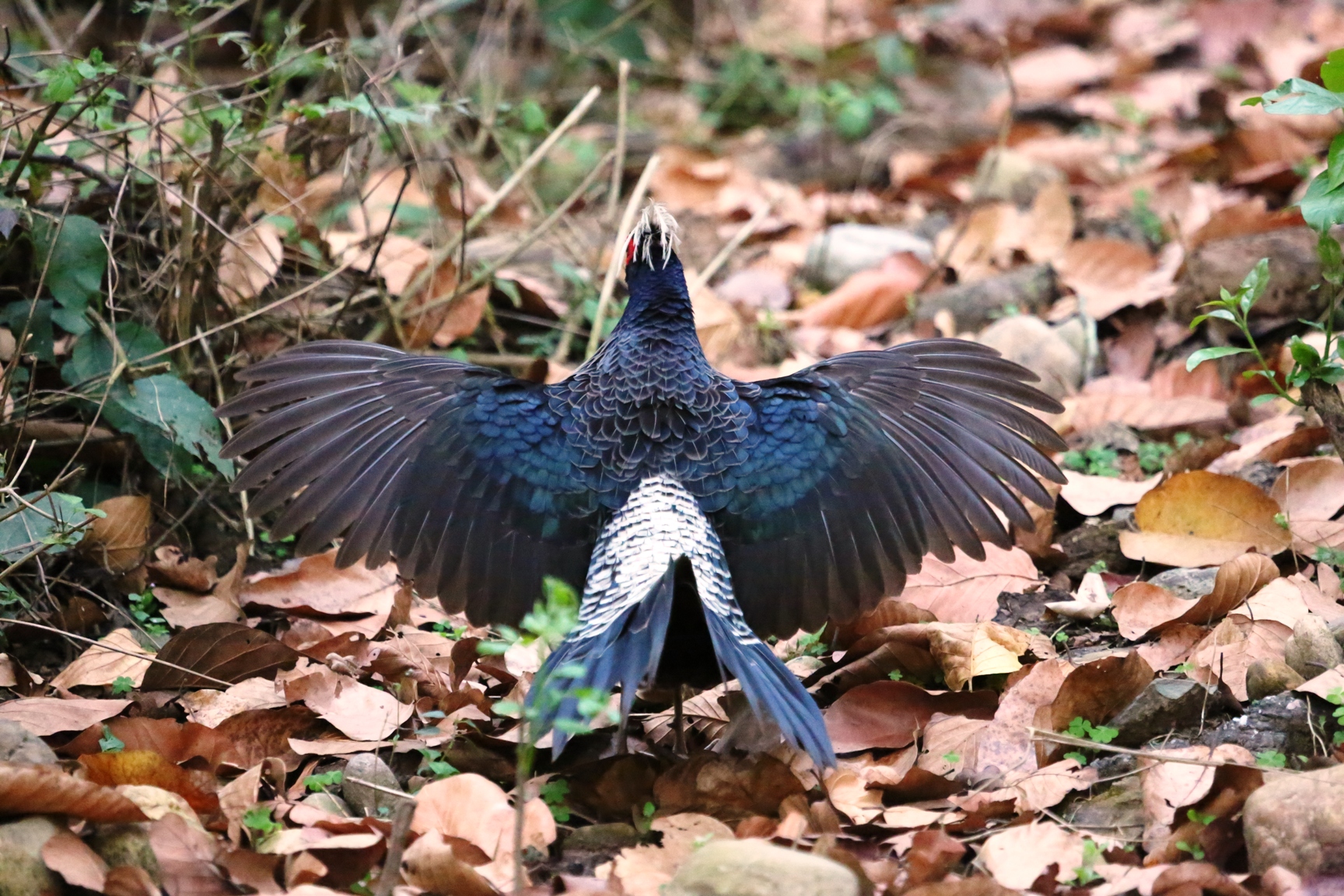
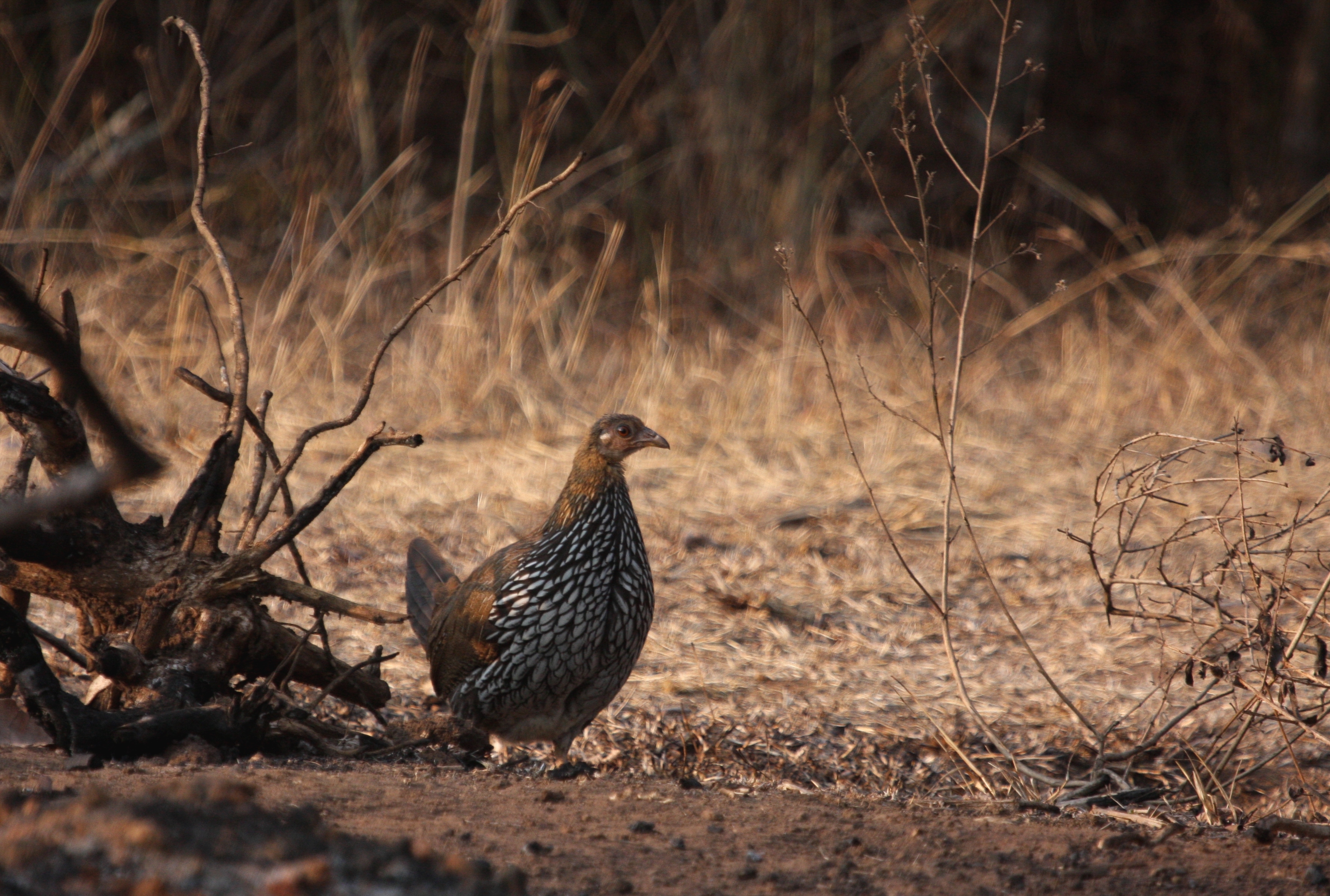
Kalij pheasants in the forest.
We ran into three jackals gorging themselves on fallen fruit beneath a small Ber tree, on the Been riverbed.
Indian red admiral

Here are some pictures I could find from previous trips.

Here’s the list of species sighted, in alphabetical order:

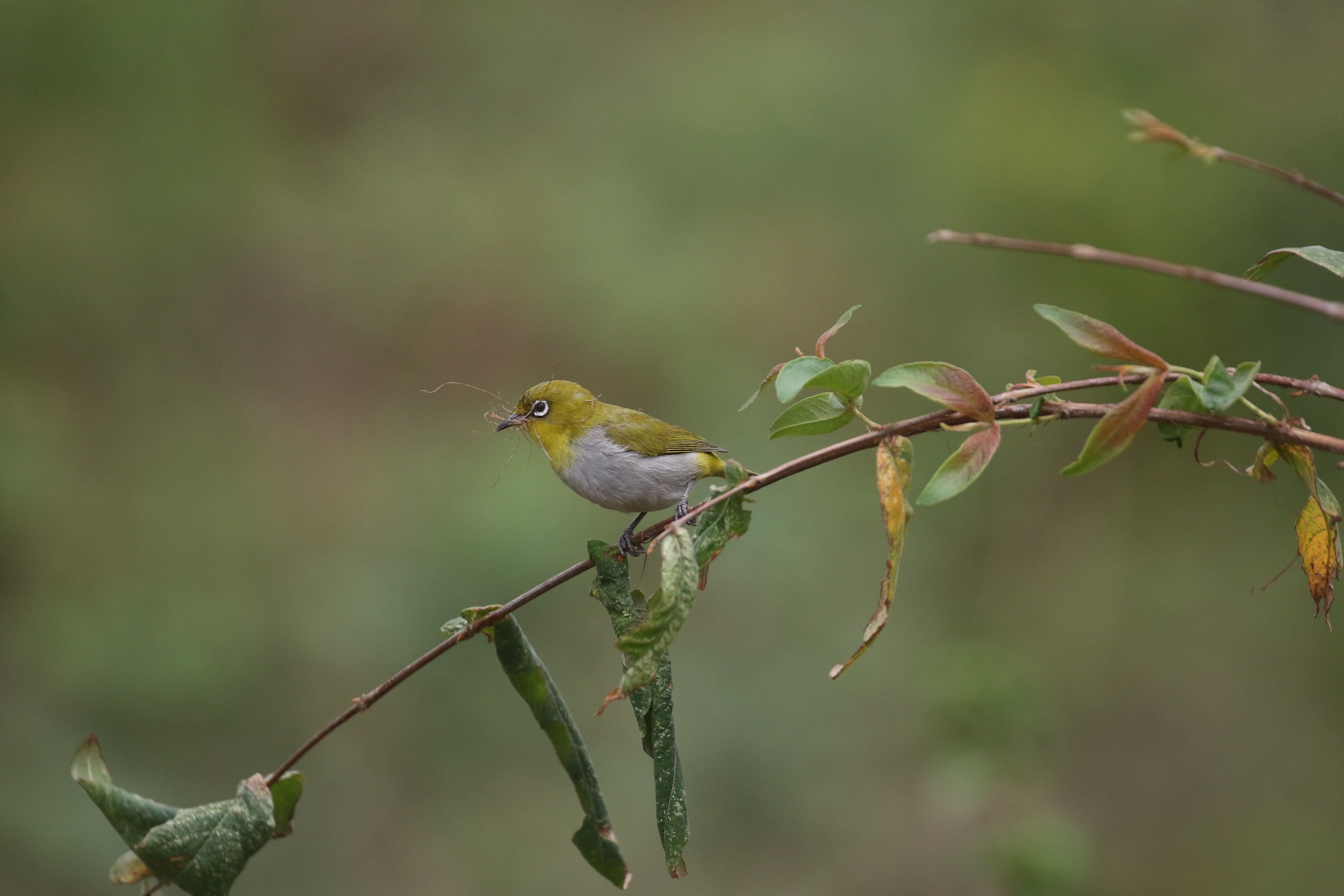
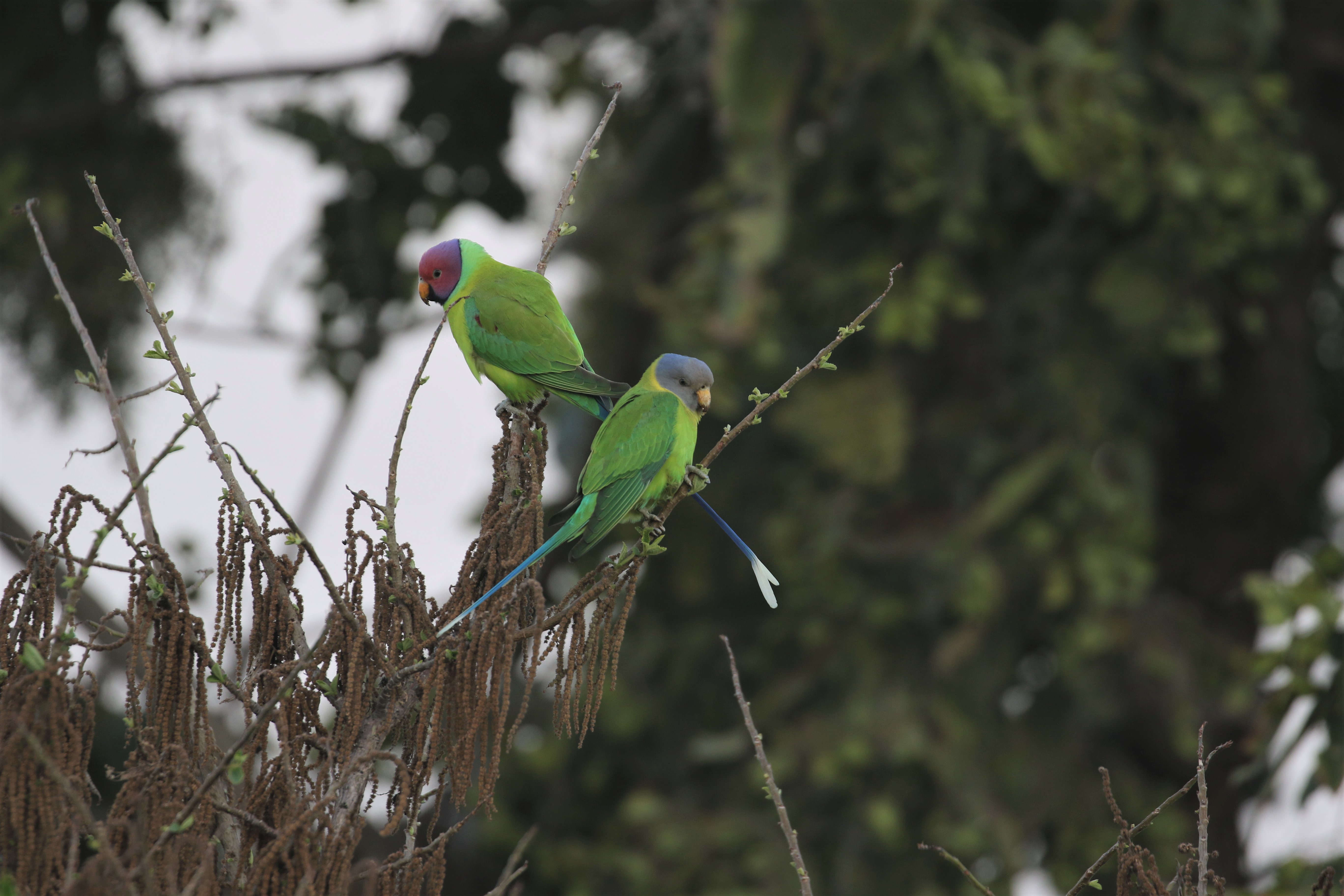
Ashy drongo, Asian brown flycatcher, Bar-tailed treecreeper, Bar-winged flycatcher shrike, Black bulbul, Black-chinned babbler, Black-crested bulbul, Black-hooded oriole (call), Blue-capped redstart, Blue-throated barbet, Blue whistling thrush, Blyth’s leaf warbler, Brown-capped pygmy woodpecker, Changeable hawk eagle, Cinereous tit, Common iora, Common rosefinch, Common tailorbird, Crimson sunbird, Dusky warbler, Great barbet, Greater flameback, Greater yellownape, Green-backed tit, Greenish Warbler, Grey bushchat, Grey-breasted prinia, Grey-capped pygmy woodpecker, Grey-headed canary flycatcher, Grey-headed woodpecker, Grey treepie, Himalayan bulbul, Indian robin, Indian treepie, Jungle babbler, Jungle bush quail (call), Jungle myna, Kalij pheasant, Large-billed crow, Lineated barbet, Olive-backed pipit, Oriental turtle dove, Oriental white-eye, Paddyfield pipit, Pale-billed flowerpecker, Peafowl, Plum-headed parakeet, Purple-rumped sunbird, Red junglefowl, Red-vented bulbul, Red-wattled lapwing, Red-whiskered bulbul, River lapwing, Rusty-cheeked scimitar babbler, Shikra, Slaty-headed parakeet, Speckled piculet, Streaked laughingthrush, Velvet-fronted nuthatch, Wallcreeper, White-breasted kingfisher, White-capped bunting, White-crested laughingthrush, White-tailed ruby-throat, White-throated fantail, Wooly-necked stork, Yellow-bellied fantail

K. Gudi/BRT Tiger Reserve: Sep ’16

Dates:                   2 – 5 Sep ’16

Camp:                   K. Gudi Wilderness Camp

Who:                     P

k-gudi-sep-16-612

Glory Lilly (Gloriosa superba) by the roadside a short way from the camp

My kid P and I did three nights this time. The weather was cool with some spells of rain. Sightings were not particularly great as a result, but the forest was hauntingly beautiful, and straight out of a Grimm’s Fairy Tales movie set one particular morning, with a thick mist hanging over it.

k-gudi-sep-16-085

Brown fish owl, early in the morning

Visibility was poor due to luxuriant growth of Eupatorium Ageratina adenophora, Lantana Lantana camara and Bracken Pteridium aquilinum. These three weeds dominated the ground cover and it is very likely that they have had a deleterious effect on the herbivore population over the years. And this possibly explains why the large herds of gaur that were once plentiful in BRT are nowhere to be seen today. Elephants have become scarce too. The only consolation is that there is not much Parthenium hysterophorus . The post-monsoon clearing of vegetation by the track will not happen for another month. The undergrowth was tall enough to completely hide a leopard or sloth bear, making sightings possible only if the animal was on the track itself. Due to this reason, Durgur road, which is usually unfailingly productive on the way out (in the evenings), drew a blank this time.

k-gudi-sep-16-926

Another insidious plant that I should have noticed earlier but somehow hadn’t was the hemiparasitic Mistletoe Loranthus sp. It infested a majority of the Axlewood Anogeissus latifolia trees, leaching nutrients and water. I heard that it had almost completely decimated the Indian gooseberry Phyllanthus emblica trees.

k-gudi-sep-16-111

The darker leaves are from Mistletoe (Loranthus sp.), a hemi-parasite.

The birding was okayish, not too great. Grey wagtails had started to arrive a week back and were plentiful. I learnt to ID the vaguely squirrel-like call of the Orange-headed thrush. This call resonated frequently through the camp and the jungle as these birds were everywhere too. There is another call, a more frantic one, which is not quite as distinctive. I also got familiar with the Blue-bearded bee-eater’s call, given that a pair was constantly (and noisily) haunting the surroundings.

k-gudi-sep-16-142

Orange-headed thrush outside tent No. 7

I also puzzled over a call that sounded like the Stork-billed kingfisher’s except that it had four continuous notes in place of the usual two (or three). Rahul, an avid birder from Bangalore who was visiting indicated that this was the winter call of the Stork-billed kingfisher. Rajesh, my good friend, spotter extraordinaire and favourite driver was puzzled; he said he hadn’t seen this bird around.

k-gudi-sep-16-745

Jungle babblers behind the Gol Ghar. They are bold enough to hop right into the Gol Ghar looking for crumbs. Pic by P.

k-gudi-sep-16-402

This is a very common weed I have not been able to ID yet.

Naturalist Basavanna has shifted from Bandipur to K. Gudi and accompanied us on our drives (Narayan did too, for the first two days). He taught us to ID the call of the Drongo cuckoo. We were waiting by Anni kere when what superficially sounded like the Indian cuckoo’s call started up (except that this is not the season for the Indian cuckoo to call). And except that this was three notes up and one down, unlike the sing-song pitch of the Indian cuckoo’s.

At the same place, we also heard a repeated, drawn-out, shikra-like call which we were stumped by until Basavanna identified it as the Brown fish owl’s chick’s call.

k-gudi-sep-16-491

Jungle owlet. Pic by Rajesh.

k-gudi-sep-16-779

Indian blackbird in the camp

On day three, Rajesh suggested that we take a walk down the road towards the government school after lunch instead of wasting time lounging around in the tent (as he put it). We walked for a short distance until junior got too nervous to go any further – he had been rattled by the earlier sloth bear and leopard sightings around the tent. We saw an Oriental honey buzzard, a Blackbird, Blue-bearded bee-eaters, and on the way back, a Tawny-bellied babbler that showed itself clearly for quite a while, although while constantly flitting around and preventing Rajesh from getting a photograph. We also had a reasonable Rufous babbler sighting in the jungle later on.

k-gudi-sep-16-133

Radermachera xylocarpa outside tent No. 7. Commonly known as the Deer antler tree.

This was a trip full of tantalizingly close opportunities that never materialized. There were plenty of alarm calls, with none converting. On day 1, in the evening safari, we were drawn to Tiger Tank by persistent Muntjac alarm calls. The deer decamped, but a troop of langurs stationed there barked hysterically and persistently, accompanied by much leaping and branch shaking. They were clearly very excited. Rajesh, Basavanna and Narayan all craned their necks trying to get a fix on which side the langurs were focused on. Two opinions eventually emerged, one pointing away from the kere, and the other (Rajesh’s) pointing towards it. A quick discussion led to a consensus that the cat must have just crossed the road and passed in a direction away from the lake. And so off we went, looking for it elsewhere. Turned out that Rajesh’s suspicion was right. The tiger (which is what it was) was hidden right there, in the sea of Eupatorium between us and the lake. It emerged an hour and a half later and was seen and photographed by another group. Rajesh was especially disappointed that we had miscalculated.

k-gudi-sep-16-229

The long weekend brought a lot of traffic to the temple, further impacting the sightings.    Pic by P.

On day 3, in the evening safari, we ran into another loud and persistent series of calls. Somewhat midway between the barking deer’s and chital’s alarm call. Everyone promptly assumed it was one of these and an animated discussion ensued around where the cat possibly could be. We drove around a little trying to pinpoint direction. After a while, Rajesh smacked his forehead when he realized we were in fact listening to the Spot-bellied eagle owl’s call. Although he was equally excited at the prospect of locating the owl. We did try for a considerable time, but without success and the calls eventually died out.

k-gudi-sep-16-423

P (9 years old) clicked this pic of Durga Parameshwari, the camp elephant

I also missed an Indian flying squirrel sighting on day 3 in the evening. The squirrel calls had started just after junior and I had left the gol ghar post dinner. The pair was then sighted, for a period of fifteen minutes, as it progressively glided its way from the trees near the FRH to the jungle beyond the Gol Ghar. The next day I asked Basavanna why he didn’t give me a call, and his reply was that he would definitely have, had he known that I was interested in watching flying squirrels.

k-gudi-sep-16-487

Chappekkai. Entada rheedii possibly. I had not realized earlier that the pods were growing off a climber and not off tree itself.

k-gudi-sep-16-951

Gaur with calf. Pic by Basavanna.

Junior and I also missed a dhole sighting on the drive back. We had driven down towards the temple on day 2 with Rajesh post breakfast, looking for a pack that frequented an area a little before the BR Hills settlement. (There was another pack frequenting the Navodaya checkpost side too that we also looked for in vain). We didn’t find the pack, and there was considerable disturbance from some tar-laying work that was underway. On my drive back to Bangalore on day 4, I did keep my eyes peeled while passing through the area, but saw nothing. Another guest who was in K. Gudi left around the same time and was a little behind me. He sighted the pack and Rajesh called me a little later, asking if I had too. He was surprised that I hadn’t – and the guest in question actually overtook me while we were having this conversation. We therefore couldn’t have been very far apart when he sighted the pack.

k-gudi-sep-16-606

Monitor lizard near the Navodaya checkpost

However these disappointments were not without compensating sightings. On the last safari, Rajesh and I saw a something on the track ahead. It saw us too, and went bounding away a short distance before leaping into the lantana. I thought it was a leopard, but Rajesh with his infinitely better eyesight shouted ‘tiger!’ No one else in the jeep caught the sighting. Arriving at the point, Rajesh’s opinion was confirmed by the pungent smell of scent marking. Basavanna had earlier remarked that the smell of the tiger’s scent-marking was very similar to the fragrance of cooked Basmati rice. I could instantly see why he said so. In any case, my tiger sighting account at BRT TR was finally opened, after 16 years of visits.

I should mention here that I have seen Rajesh use his sense of smell while tracking cats on safari more than once. He catches whiffs of kills, scat or the cat itself and makes as much use of this information as he does of pug marks or alarm calls. On this trip, he took another clever little masterclass while tracking a herd of elephants. There was no apparent sign on the road, but he determined that a herd had just passed. When I asked him how he knew, he pointed out that the grass on the track was uprooted in places. Try as I might, I couldn’t make this out. As is my wont, I dismissed his theory. Presently, dung appeared. And then spoor. And then the herd itself, in Anni kere. That’s the kind of tracker Rajesh is.

k-gudi-sep-16-866

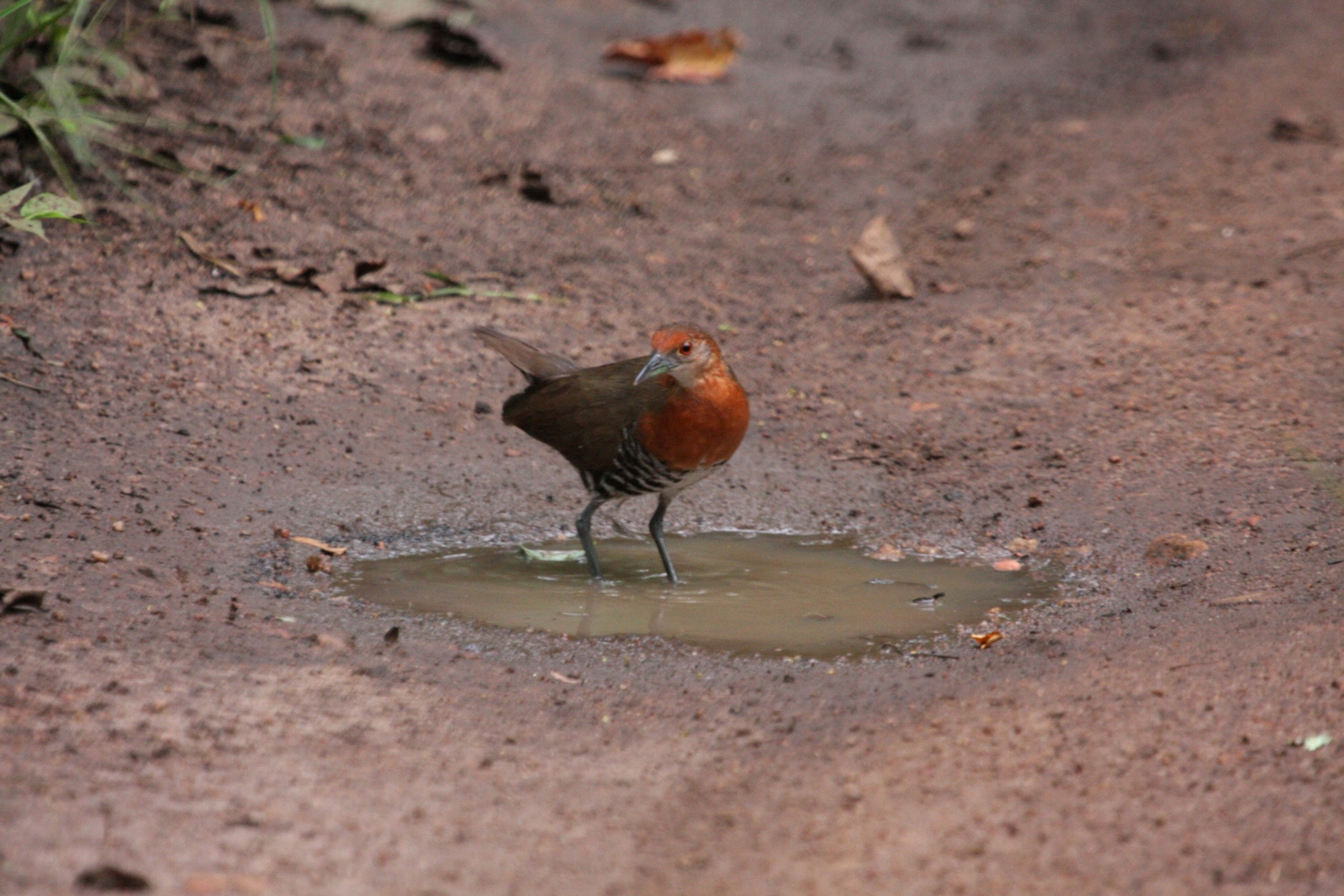
The highlight of the trip was a superb Slaty-legged crake sighting near Anni kere on day 1. I remembered that in August 2014 I had seen this bird, though indistinctly, in Anni kere. I asked Prasad about it as soon as I landed there, and he confirmed that sightings were happening every once a while. The bird stepped out on the track in front of the jeep and bathed in a puddle for a good five minutes, until it was disturbed by another jeep approaching on the opposite side. Very clear view. The light was bad though, as it was around 6 PM by then.

k-gudi-sep-16-040

k-gudi-sep-16-041

I also had a fleeting sighting of a tree shrew on the track.

k-gudi-sep-16-012

Birds

  1. Black-hooded oriole
  2. Brahminy kite
  3. Bronzed drongo
  4. Brown fish owl
  5. Common tailorbird
  6. Crested serpent eagle
  7. Drongo cuckoo (calls)
  8. Green beeeater
  9. Hill myna
  10. Indian treepie
  11. Golden-fronted leaf bird
  12. Greater flameback
  13. Grey junglefowl
  14. Grey wagtail
  15. Indian blackbird
  16. Indian scimitar babbler (calls)
  17. Jungle babbler
  18. Jungle myna
  19. Jungle owlet
  20. Lesser flameback
  21. Long-tailed shrike
  22. Magpie robin
  23. Malabar parakeet
  24. Mountain imperial pigeon
  25. Orange-headed thrush
  26. Orange minivet
  27. Oriental honey buzzard
  28. Pied bushchat
  29. Plum-headed parakeet
  30. Puff-throated babbler (calls)
  31. Racket-tailed drongo
  32. Red spurfowl
  33. Red-vented bulbul
  34. Red-whiskered bulbul
  35. Rufous babbler
  36. Rufous woodpecker
  37. Small minivet
  38. (Southern?) coucal
  39. Spot-bellied eagle owl (calls)
  40. Spotted dove
  41. Streak-throated woodpecker
  42. Tawny-bellied babbler
  43. Tri-colored munia
  44. Vernal hanging parrot
  45. White-bellied drongo
  46. White-browed bulbul
  47. White-cheeked barbet
  48. White-throated kingfisher

Mammals/Reptiles

  1. Barking deer
  2. Chital
  3. Elephant
  4. Gaur
  5. Pond terrapin
  6. Malabar giant squirrel
  7. Monitor lizard
  8. Ruddy mongoose
  9. Sambar
  10. Southern tree shrew
  11. Striped-necked mongoose
  12. Three-striped palm squirrel
  13. Tiger
  14. Tufted langur
  15. Wild pig

k-gudi-sep-16-797

Trip report: Sunderbans National Park, May 2015

Trip Report:        Sunderbans National Park

Dates:                   1-May to 3-May, 2015

Camp:                   Sunderban Jungle Camp on Bali Island

Who:                     VV and KB

Avicennea

Given the time that has passed, I’ll dispense with text and try to capture as much of the experience as possible via the images I can find. It is quite possible that between my patchy notes and patchier memory some errors have crept in.

I should mention that we were guided by a young and very competent naturalist called Animesh Manna who knows his stuff. Mangrove tree identification is a tricky animal for the unseasoned, and Animesh was exceptionally patient in helping us get the hang of it. He is a gifted spotter too and knows his birds.

Pictures are below the descriptions.

Flora

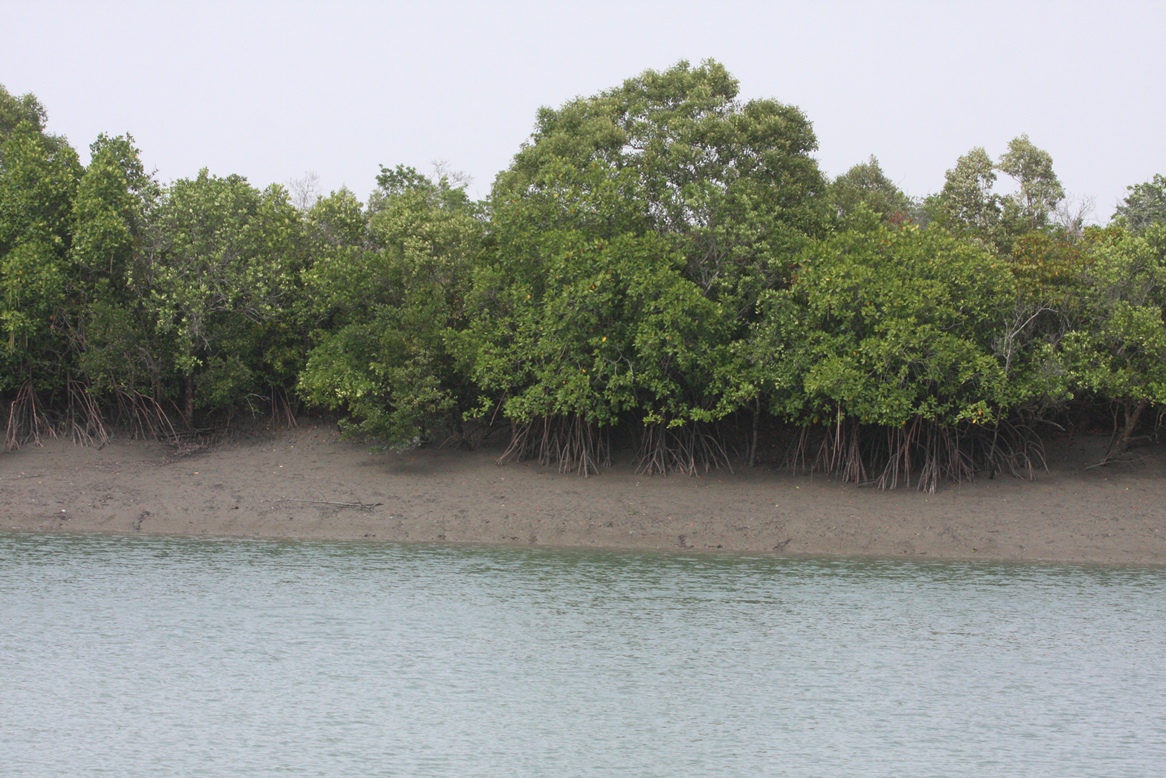
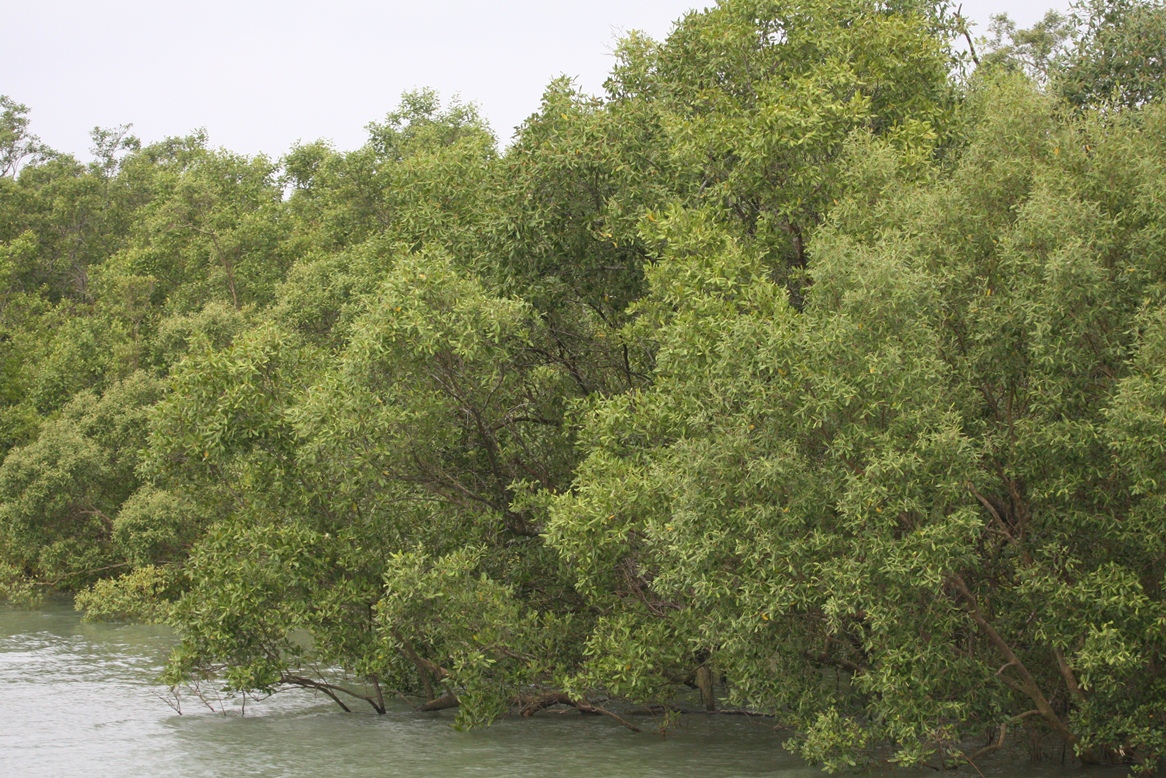
Avicennia marina. “Peara Bayen”. So named because the trunk is reminiscent of the guava tree’s blotchy, peeling trunk. This tree was extremely common.

Avicinnea marina

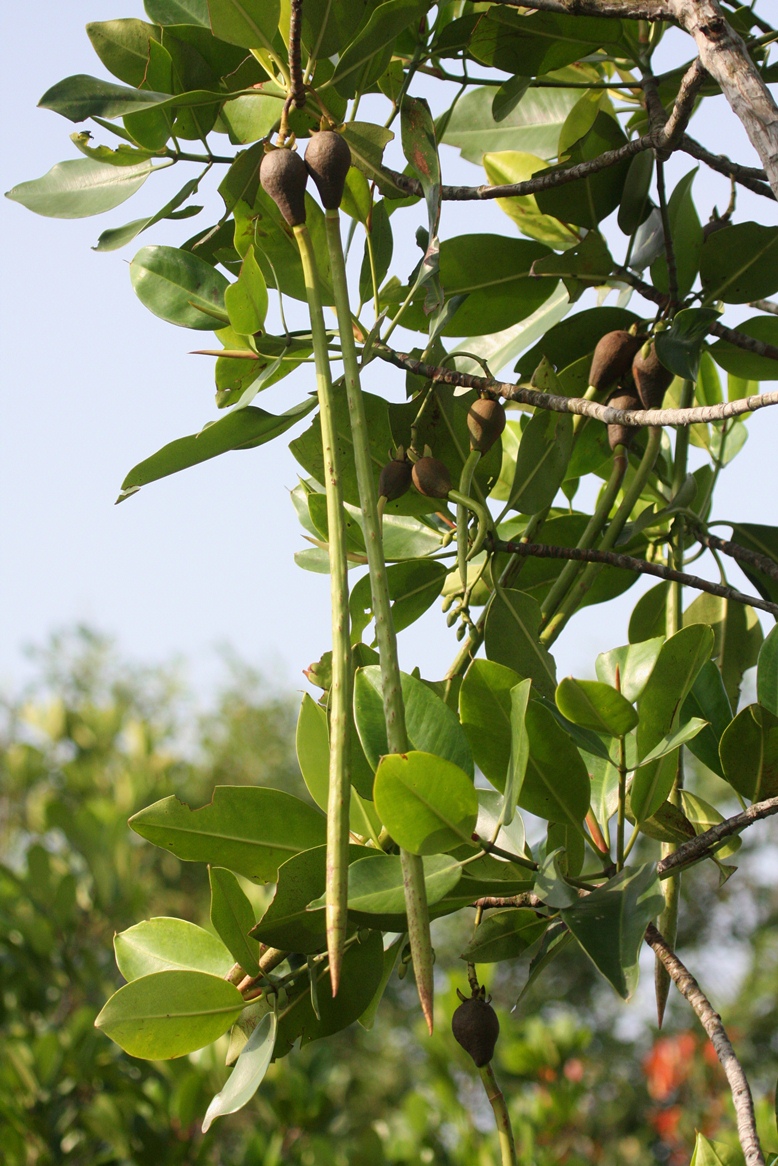
Rhizophora apiculata. “Garjan”. With its distinctive stilt roots.

Garjan

Garjan pods

Garjan pods 2

Bruguiera gymnorrhiza. “Kankra”. With its buttress roots.

Kankra buttress roots

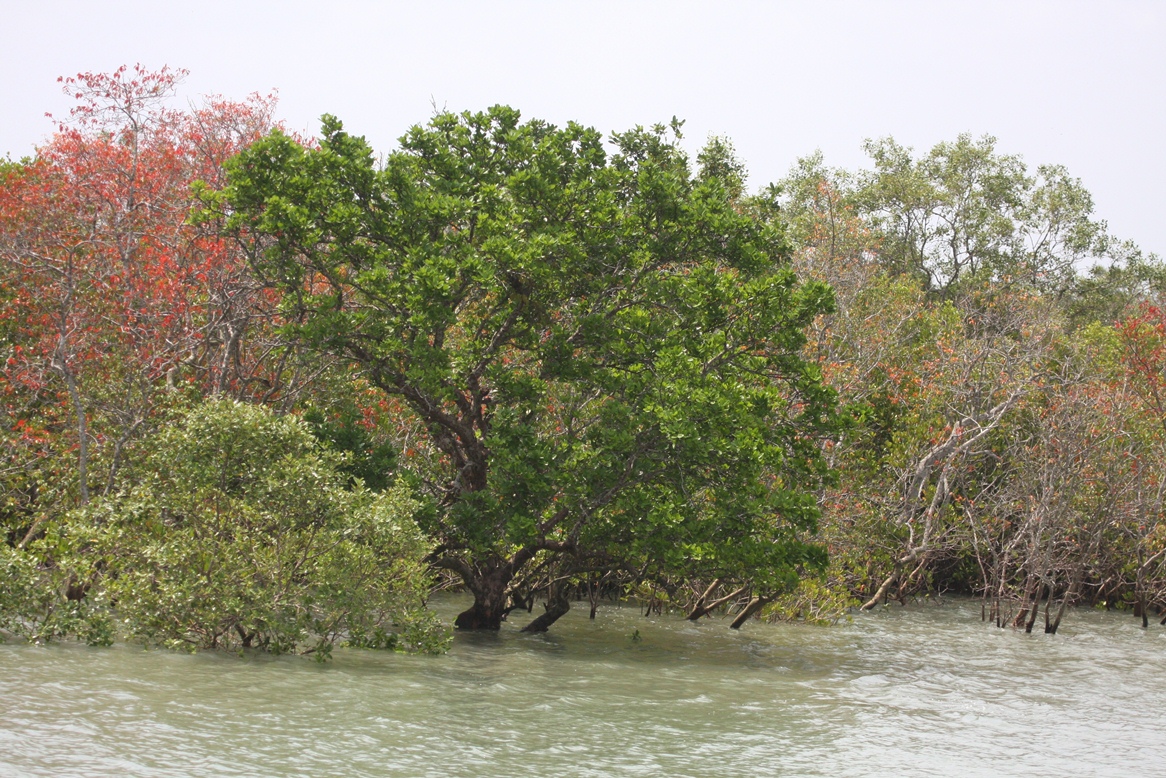
Excoecaria agallocha. “Genwa”.  Red-leaved at this time of the year. The roots are snake-like with bulbs at the base. The sap is reputed to cause blindness, and the leaves when dried and powdered serve as an effective fish poison.

Keonwa red leaves snake roots bulbs in base

Snakelike roots

Ceriops decandra. “Jhamti/Jale Garan”. Rounded leaves reaching up; broom-like roots. Ceriops tagal – “Math/Jat Garan” has buttressed roots I believe (although my notes describe them as dome shaped for some reason).

Goran upward round leaves broom roots

Suaeda maritima. “Giriya Sak”. A shrub.

Giria shrub

Spiky roots of Kaura/Keora. Sonneratia spp.

Kewr spiky roots

Sonneratia apetala flowers.

Kewra flowers

Kewra yellow flowers

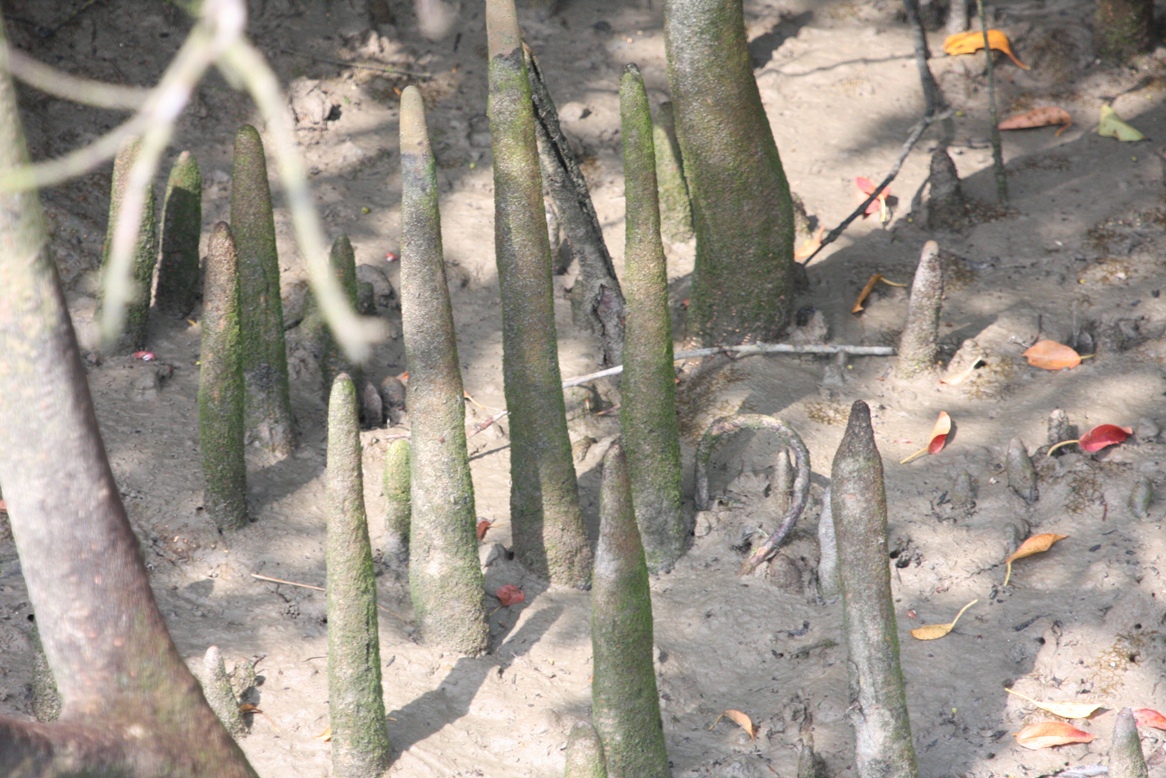
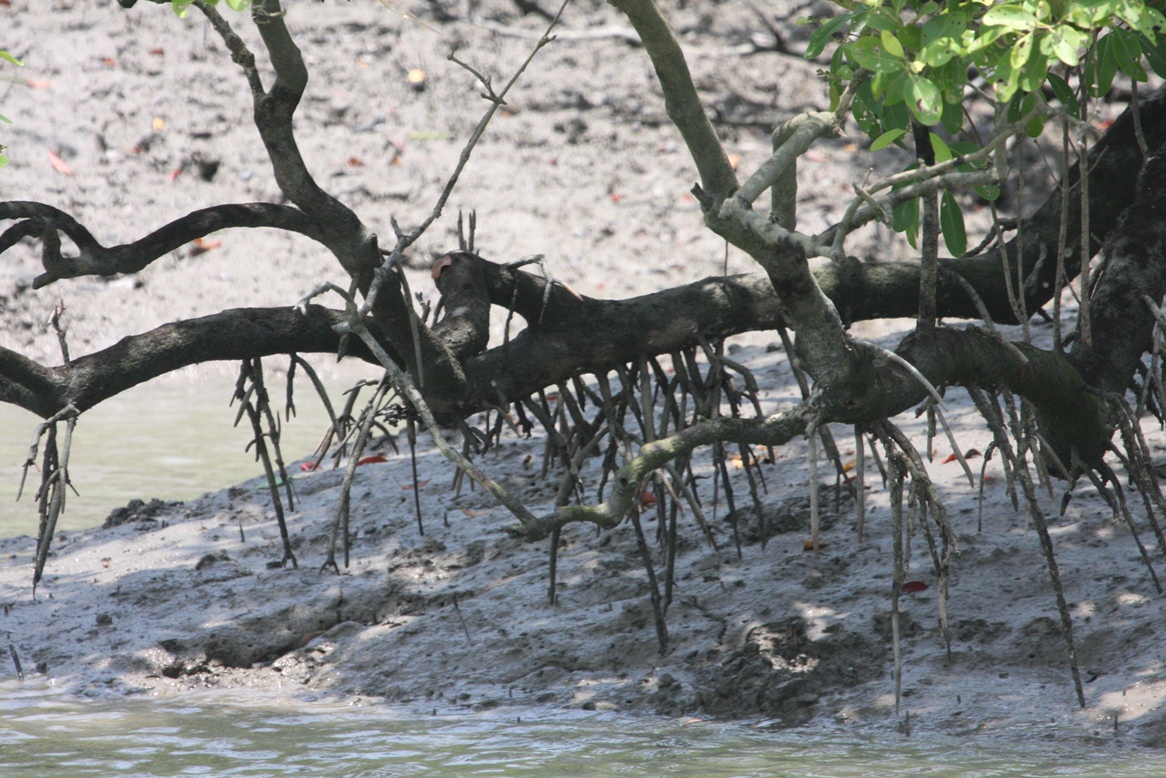
Pneumatophores reach out for air to compensate for the anoxic mud beneath

Garjan pneumatopores possibly

Aerial roots of Avicennia alba. There are three species commonly seen. Avicennia alba, A. marina and A. officinalis. Of these, only A. alba has aerial roots.

Bayan Avicennia aerial roots 2

“Dhundul”, Xylocarpus granatum

Dhundul, Xylocarpus zanata

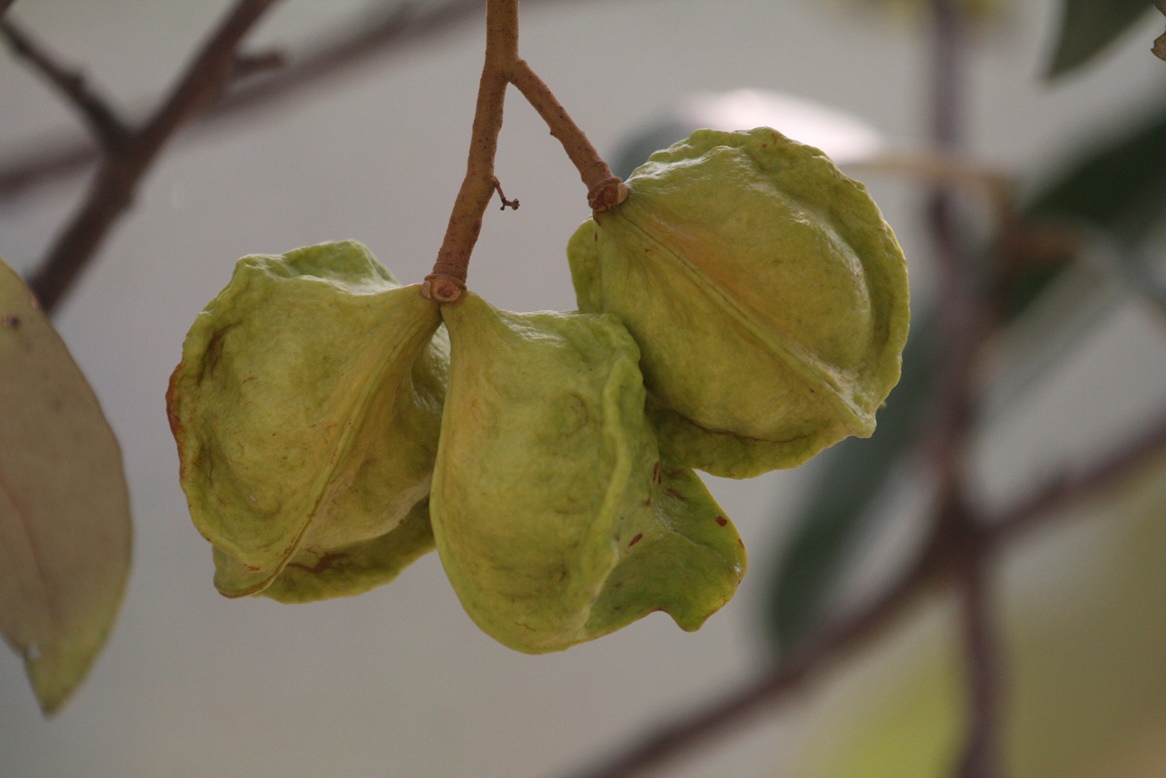
Fruit of Dhundul

Dhundul, Xylocarpus zanata

Tiger palm. Phoenix palludosa. “Hental/Bogra”. Fairly plentiful.

Tiger palm phoenix palludosa 4

Nypa fruticans. The Nypa palm. “Golpata”. Having seen pictures of large barges laboring under tons of fronds, it came as a surprise that this palm was sparingly seen. Turns out the large clusters are evidently all on the Bangladesh side.
Nypa palm

Fruit of Heritiera fomes. The “Sundari”. The tree for which the place is named. Another big surprise. Much of this occurs on the Bangladesh side. The few isolated specimens seen along the banks were slender and sickly looking.

Sundari flowers

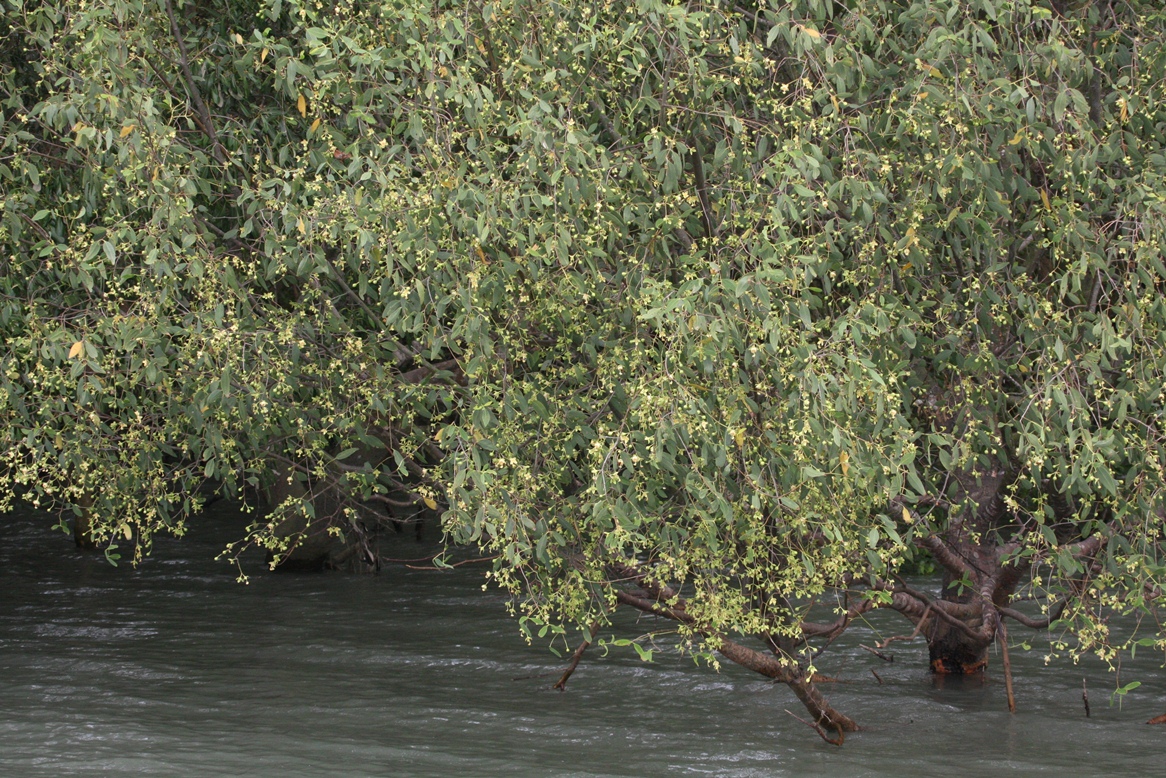
Aegiceras corniculatum. “Khalsi/Kholsi”. Typically seen leaning over the water’s edge. Bulk of the nectar that goes into making the famed honey that the Sunderbans produces is drawn from the flower of this tree.

Kholsi lean over water

Kholsi flowers most honey prod

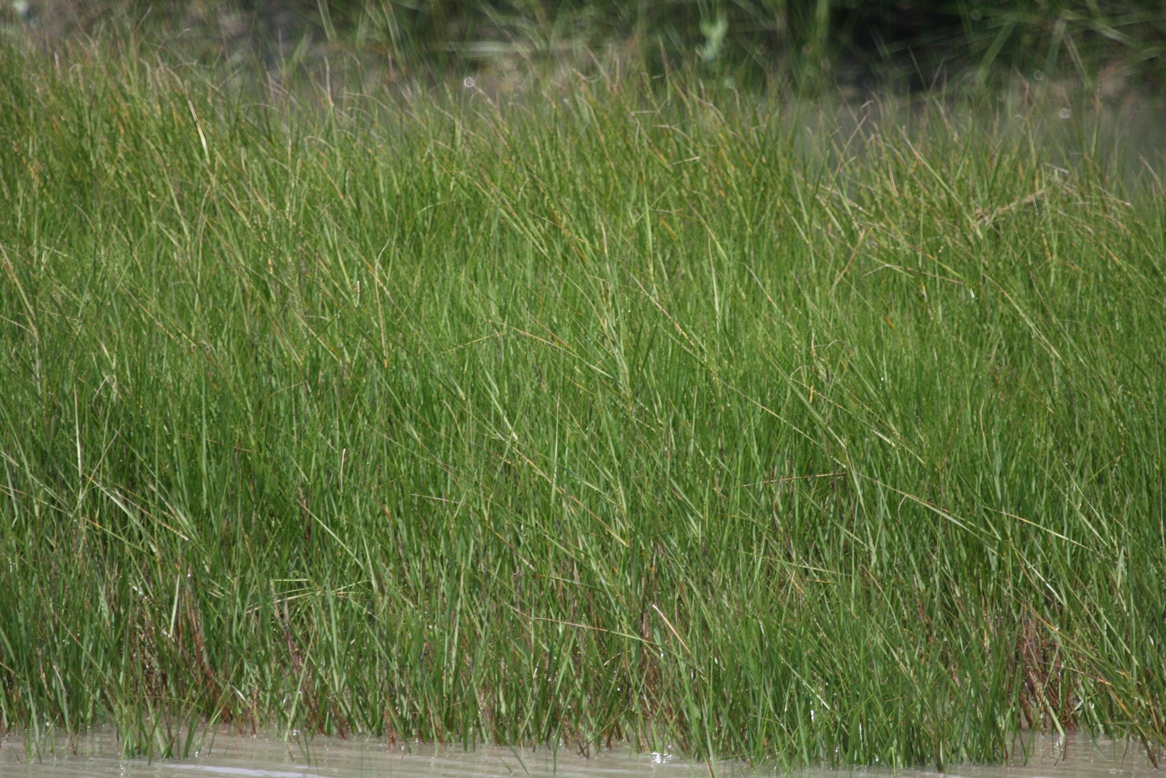
Porteresia coarctata. “Dhani ghas”, Mangrove grass or Paddy grass.

Paddy grass or Mangrove grass

Imperata cylindrical. Spear grass. I hope the identification was accurate.

Spear grass

Fauna

There was reasonable variety of avifauna. Collared kingfishers were commonly met with and their calls heard even more frequently. We saw the brown-winged kingfisher a few times. We heard the calls of the Mangrove pitta at the Sajnekhali watchtower many times, but didn’t catch sight of the bird. We thought we heard the Mangrove whistler once, but certainly did not see one. We also saw orange-breasted green pigeons at the same watchtower. The Pacific golden plover, Whimbrel and the Changeable hawk eagle (dark morph) were three other candidates on our list that we did get to see.

We were aware that chances of seeing either a tiger or a fishing cat were slim. Or the King cobra for that matter. We did want to see salties and saw just one individual. It would have been nice to see one of the dolphin species, but they are not easy to come by.

Large egret patrolling the shallows

Large egret

Lesser adjutant stork.

Lesser Adjutant

Whimbrel takes flight.

Whimbrel 3

Common kingfisher

Common kingfisher

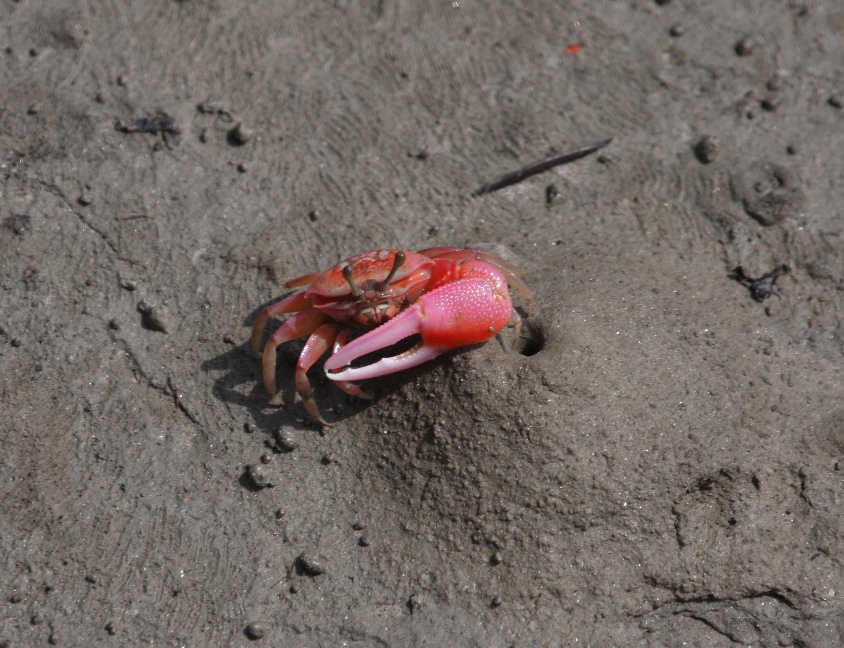
Red fiddler crabs

Fiddler crab3

Fiddler crab 4

Water monitors. We were eager to sight these creatures after reading about 9-foot long individuals gracing the place.

Monitor 2

Monitor 5

Salty! Poor shot of an Estuarine croc lying inert in the shade. These reptiles have the horrendous reputation of savaging people shrimping or crabbing in the shallows.

Estuarine croc

Mudskipper.

Mudskipper

Others

This is the standard configuration of tourist boats in the Sunderbans. A viewing deck on top; Beds, toilet and a galley below. The structure perched at the stern is an additional loo, for the crew presumably.

Boat

The Sajnekhali watchtower, where so many spectacular sightings happen. We heard a tiger call while there, but saw nothing.

Sajnekhali watchtower

The canopy walk around the Dobanki watchtower, surrounded by a sea of Avicennia marina in the main.

Dobaki watchtower

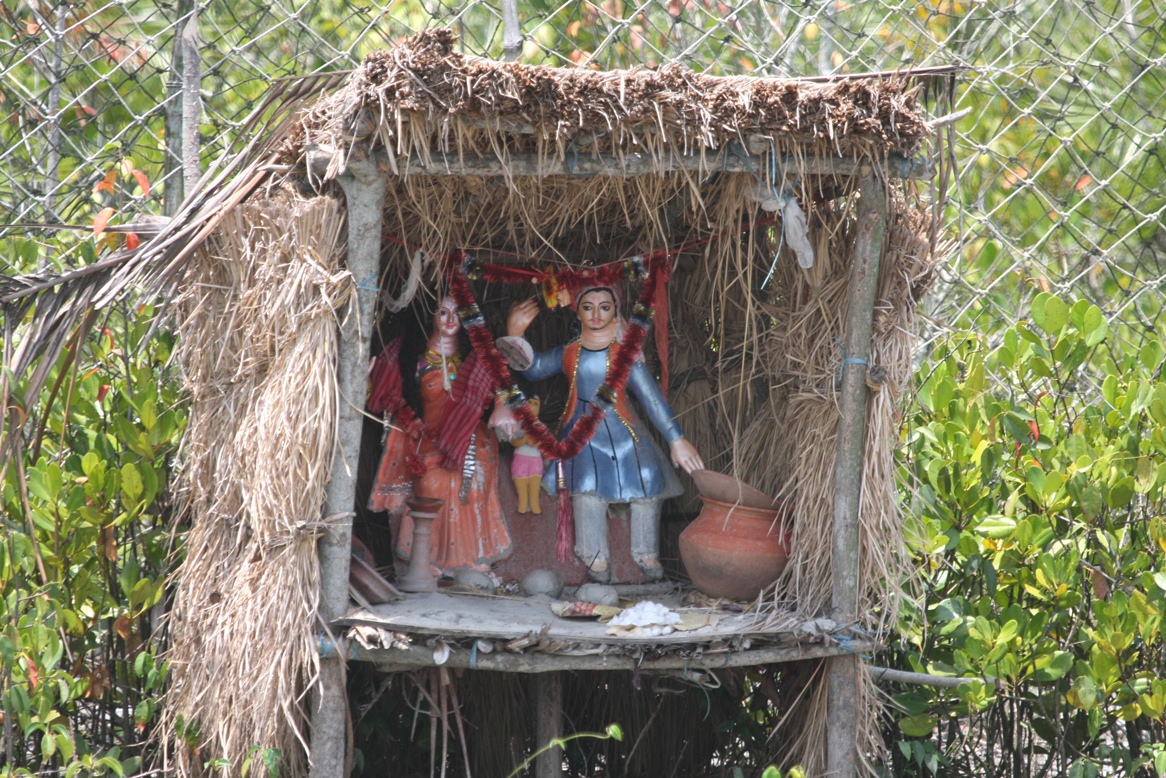
A little shrine to Bon Bibi, the goddess of Sunderbans legend. Honey and crab collectors fervently believe in her promise to protect anyone who steps into her realm unarmed and pure-of-heart. A necessary reassurance in a land where you take your life in your hands each time you step into the forest.
Bon bibi

The riversides along forest stretches that lie across habited areas are strung with rather flimsy-looking nylon nets, ostensibly to prevent tigers from swimming across. Apart from the tiger and the saltie, Black-tipped sharks are a danger to people in shallow waters – they evidently sneak up and bite a chunk of flesh off the calves, leaving the person bleeding dangerously before medical help can be reached.

Net

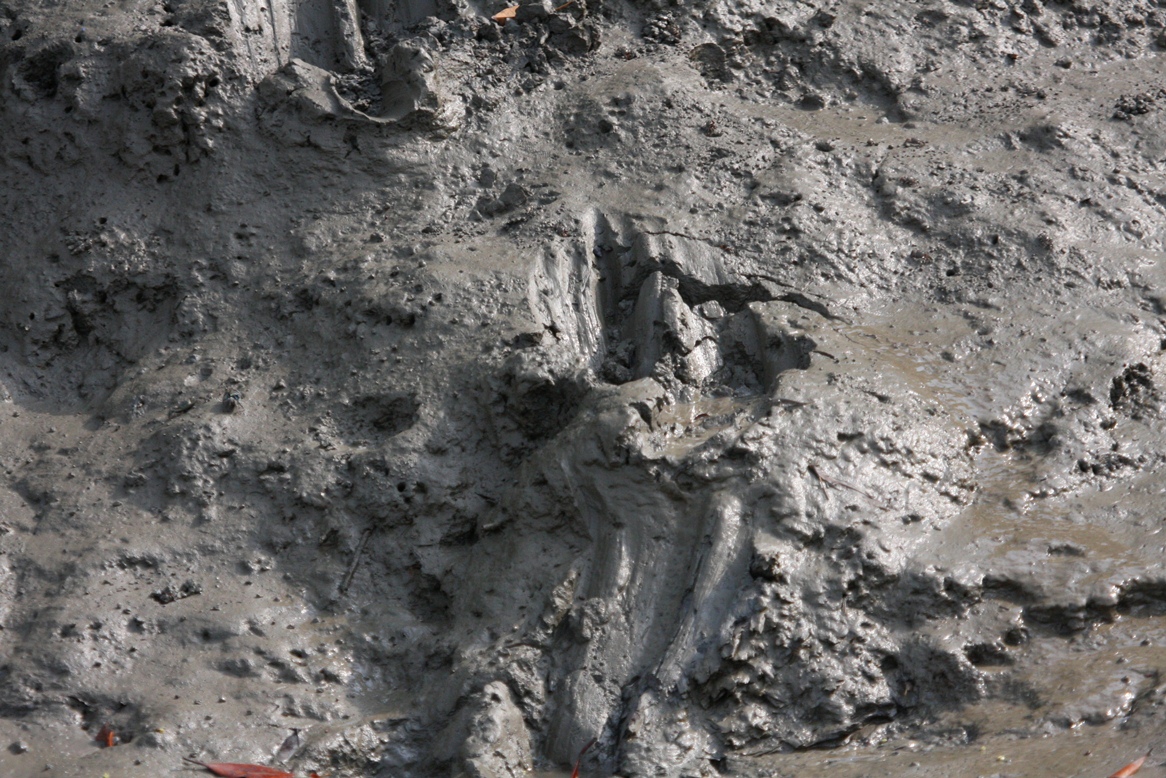
Tiger crossover, sometime that morning. We found the spoor on both banks and waited awhile in vain.

Pugmark

Ship laden with flyash crossing the vast Panchmukhani confluence, headed for Khulna in Bangladesh

Ships at Panchmukhani headed Khulna Bdesh flyash

So that’s what a Patton tank looks like. Someone has a sense of humor.

Patton tank

Birds

  1. Adjutant stork
  2. Ashy woodswallow
  3. Black bittern
  4. Black-headed cuckooshrike
  5. Black-hooded oriole
  6. Black-naped monarch
  7. Brahminy kite
  8. Bronzed drongo
  9. Brown shrike
  10. Brown-winged kingfisher
  11. Changeable hawk eagle (dark morph)
  12. Chestnut-tailed starling
  13. Collared kingfisher
  14. Common iora
  15. Common kingfisher
  16. Common myna
  17. Common sandpiper
  18. Eurasian collared dove
  19. Fulvous-breasted woodpecker
  20. Greater coucal
  21. Large cuckoo-shrike
  22. Large egret
  23. Lesser flameback (calls)
  24. Lesser whistling duck
  25. Lesser yellow-nape
  26. Little cormorant
  27. Little egret
  28. Loten’s sunbird
  29. Magpie robin
  30. Mangrove pitta (calls)
  31. Orange-breasted green pigeon
  32. Oriental honey buzzard
  33. Oriental white-eye
  34. Pacific golden plover
  35. Pied kingfisher
  36. Pied myna
  37. Pin-striped tit babbler (calls)
  38. Pond heron
  39. Purple-rumped sunbird
  40. Red junglefowl
  41. Red-whiskered bulbul
  42. Rose-ringed parakeet
  43. Scarlet-backed flowerpecker
  44. Short-toed snake eagle
  45. Small minivet
  46. Spotted dove
  47. Spotted owlet (calls)
  48. Stork-billed kingfisher
  49. Streak-throated woodpecker
  50. Tailorbird
  51. Whimbrel
  52. White-breasted waterhen
  53. White-throated kingfisher

Mammals

  1. Chital
  2. Rhesus macaque
  3. Wild boar

Reptiles

  1. Checkered keelback
  2. Estuarine crocodile
  3. Water monitor

Trip Report: Bandipur, Aug ’15

Trip Report:        Bandipur National Park

Dates:                   1-2 Aug 2015

Camp:                   JLR Bandipur Safari Lodge

This trip was done after a considerable gap – I’d not done anything after Sunderbans and that was months back. Other pre-occupations and procrastination also prevented me from posting on that trip and I’m not sure how much I remember of it anymore. My sister’s family had similarly gone for a long while now without any jungle visit and so we decide to take this weekend off. The two days afforded us just two safaris.

The weather was alright, cool without rain. The lantana had grown right upto the verges though, and visibility was poor in most places. It will now be cleared only after the monsoon I guess. Bomma drove us this time, and he is a magician although one who doesn’t speak very much.

The birding was not great, and we did not expect it to be. We didn’t make particularly strenuous efforts to bird-watch either.

The first safari puttered along unremarkably until we came across one of the safari vans stuck in slush. The entire van-load of chattering tourists and bawling kids was out by the roadside, while my old friend Pradeep attempted to rev the vehicle out of the mess. We waited awhile to help push, but were not able to rock in cadence sufficiently to tip the van out. Giving up, we moved on while the van-load waited for someone who’d been called.

Shortly after this, we ran into a herd of elephants first, and then into an impressive tusker by the roadside. This was one edgy elephant, going back and forth, clearly nervous about our presence and not knowing what to do about it. He didn’t show any aggression though so no charge, mock or otherwise.

Bandipur Aug 15 043

Bomma then received news of a tiger sighting in progress at Daid katte. I’m not sure that transliteration of the pronounced name spells right. We sped to the lake, to find five or so vehicles lined up, and an old male just having finished his dip. He rose out of the water just as we maneuvered into position, sprayed a tree and disappeared into the jungle.

Bandipur Aug 15 067

Everyone dispersed and so did we. Bomma said nothing, but took a route on which there was no one else until he stopped by another kere, this one called Venkatappana pala. He thought the tiger was likely to traverse by this lake and asked everyone to keep still. He’d hardy finished his sentence when a lone langur atop a nearby tree set up a hysterical alarm. A second later the tiger stepped into view, not far from us.

Bandipur Aug 15 076

A second jeep had meanwhile materialized behind us, and both jeeps backed up while the tiger walked nonchalantly, cutting across to step onto the road between the jeeps. Unfortunately behind us. He completely ignored our presence, and strode up the road, with both jeeps backing up in front of, and behind him.

Bandipur Aug 15 126

We followed him for a while before he stepped off the road and into the jungle.  This was possibly the closest I’ve seen a tiger pass by in South India – he was about fifteen feet away from where I sat as he passed.

Bandipur Aug 15 114

The morning’s safari was a quiet one, and I spend most of it looking at the Big Five – Kari mathi (Terminalia tomentosa), teak (Tectona grandis), axlewood (Anogeissus latifolia), FOTF (Butea monosperma), and Indian gooseberry (Phyllanthus emblica).

That tree in Bandipur which I am unable to ID continues to haunt me (I had mentioned it in a previous post). It is called Jaldha mara or Dhoopa locally. I checked with Karthik and with Nagendra (Kabini naturalist Ravi’s brother who is in Bandipur). My inadequate and possibly faulty description made it tough for them to figure out what I was seeing. Ailanthus malabarica and Vateria indica were suggested, but this seems to be neither.

Bandipur Aug 15 046

Bandipur Aug 15 048

Birds

  1. Asian paradise flycatcher
  2. Brahminy starling
  3. Brown shrike
  4. Changeable hawk eagle
  5. Coucal (calls)
  6. Crested serpent eagle
  7. Flameback (Lesser?)
  8. Green barbet
  9. Green bee-eater
  10. Grey junglefowl
  11. Indian blackbird
  12. Indian robin
  13. Jungle babbler
  14. Painted bush quail
  15. Jungle myna
  16. Magpie robin
  17. Malabar parakeet
  18. Peafowl
  19. Pied bushchat
  20. Pied kingfisher
  21. Pipit (species not recognized)
  22. Plum-headed parakeet
  23. Puff-throated babbler (calls)
  24. Purple-rumped sunbird
  25. Red vented bulbul
  26. Red whiskered bulbul
  27. Rose-ringed parakeet
  28. Spotted dove
  29. Spotted owlet
  30. White-bellied drongo
  31. White-breasted waterhen
  32. White-browed fantail
  33. White-throated kingfisher

Mammals

  1. Barking deer
  2. Bonnet macaque
  3. Chital
  4. Elephant
  5. Gaur
  6. Malabar giant squirrel
  7. Sambar
  8. Stripe-necked mongoose
  9. Three-striped palm squirrel
  10. Tiger
  11. Tufted langur

Trip Report: Corbett Tiger Reserve, Apr 2015

Trip:       Corbett Tiger Reserve

Camp:   Sultan FRH (2 nights), Gairal FRH (1 night)

Dates:   1 Apr – 6 Apr ‘15

Who:     VV, KB and my seven year old son

Corbett Apr 15 5 264This is going to be another long post. I guess it is deserved, considering that this was the best wildlife trip I’ve ever done, in terms of sheer sighting productivity.

VV and I had planned this trip well in advance and we were eager to get bookings at the famed Dhikala FRH. And VV had coordinated with Pavan Puri to put this trip together. Despite three people being poised to click exactly when booking opened 45 days in advance, we could not get Dhikala and had to be content with Sultan for the first two nights and Gairal for the third. I was contemplating canceling the trip and retrying our luck with Dhikala, but VV persuaded me to stick with the plan. The experience turned out to be completely unexpected (at least as far as we were concerned).

Dhikala was big and crowded, though there was the apparent advantage of being right where the sightings were (and thereby allowing guests to hang around the chaur until lockdown time at 6:30 PM, unlike guests staying at Sarapduli, Gairal, Sultan or one of the other places who needed to leave at 5 PM or whenever to reach their lodgings before 6:30 PM). Despite this, I would not like to stay at Dhikala when I go back. Sultan is the place to stay at.

Sultan was spectacular, nestling amidst a lovely stand of Sal, with just two rooms and no electric fencing (or electricity for that matter). The moon was nearly full at this time and the forest was expectedly ethereal in the moonlight. Chital alarm calls were heard around the FRH after dark. In addition to the persistent calls of nightjar – possibly Grey or Large-tailed – and of the Brown hawk owl.

Gairal FRH is much larger with nine rooms. It overlooks the Ramganga, but there is not much point to this as access to the river is cut off by electric fencing. Again not a patch on Sultan, in my admittedly dubious opinion.

This trip was restricted to the Dhikala safari zone. VV pointed out that the Bijrani safari zone was also worth exploration, and our quiet but competent driver Harish Patwal added that the Malani FRH there was a fair equivalent of Sultan. So those are the places I’ll head to the next time.

The weather at this time of year was interesting. It rained quite a bit. Mornings and evenings were cold while the rest of the day was hot. Nights were cool enough to sleep pleasantly through despite the absence of fans.

Corbett has a unique arrangement in terms of timings. Vehicles are allowed to leave the FRHs at 6 AM and have to be back by 6:30 PM. There is a lock-down in effect between 11 AM and 2:30 PM. All visitors have to be confined to one of the camps, or to one of the two watchtowers around Dhikala during this slot. We spent two of the four days on one of the watchtowers near Dhikala (the one near Sambar road I think) during the lockdown hours. The other two we spent doing lazy lunches at Dhikala and Gairal.

In terms of itinerary, we had initially planned to fly to Delhi and take the overnight train from there to Ramnagar. After some consideration, we changed our minds, advanced our air tickets to reach Delhi by 3 PM, and covered the 250 kms to Ramnagar by road, reaching there at 11:30 PM thanks to peak-time traffic in Delhi. On the way back, we took the train to Delhi and then took the morning flights out.

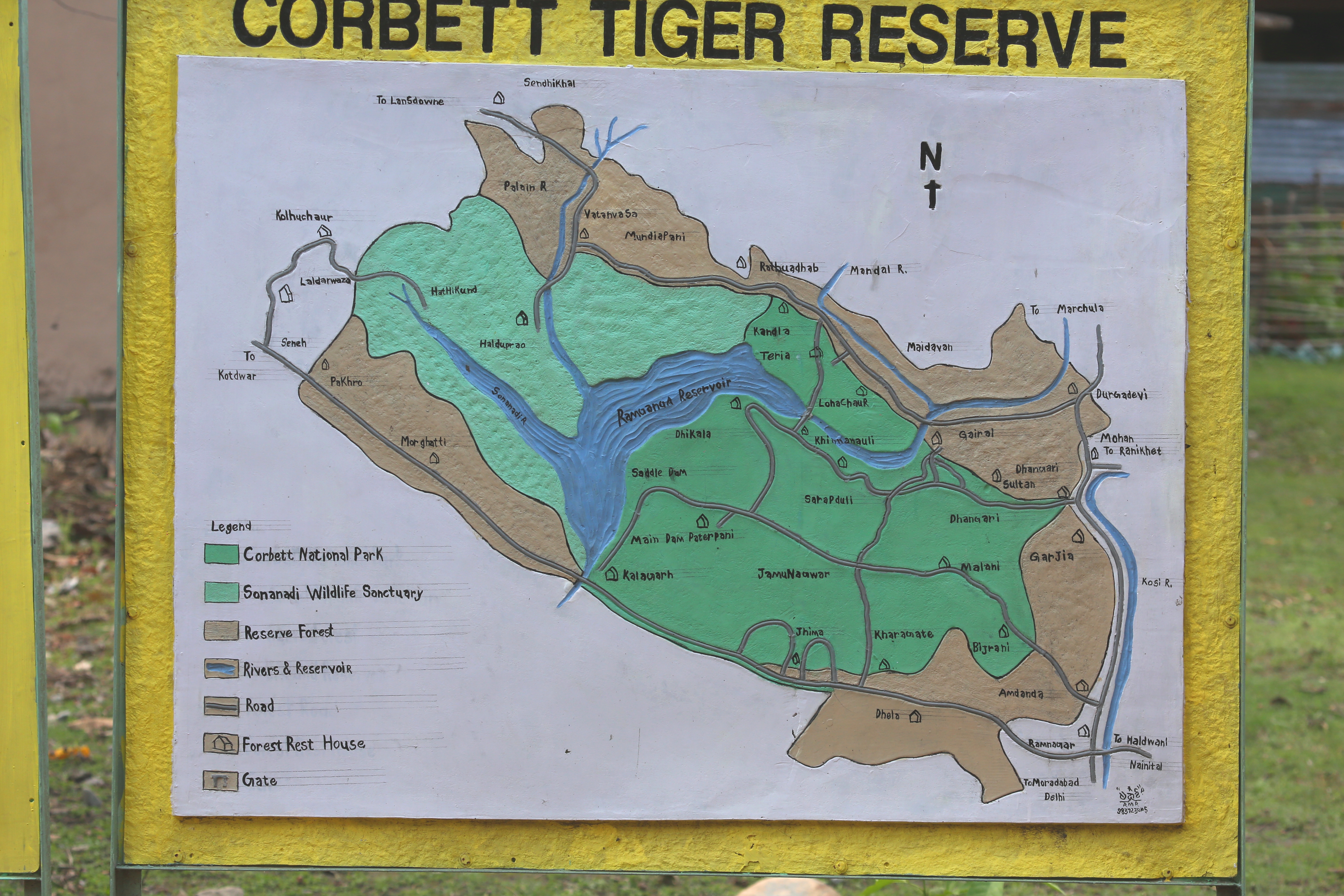
Some distances. The Dhangari gate is the gateway into the Dhikala safari zone and this is 18 kms from Ramnagar. Unless I got this wrong, Sultan is 6 kms from this gate, Gairal 15, and Dhikala 31 kms away.

Flora Corbett Apr 15 5 003 I spent quite some effort in identifying commonly seen trees and plants on this trip. It was a useful way to keep engaged whilst on the drive and between bird or mammal sightings. Time I’d otherwise have squandered away dreaming.

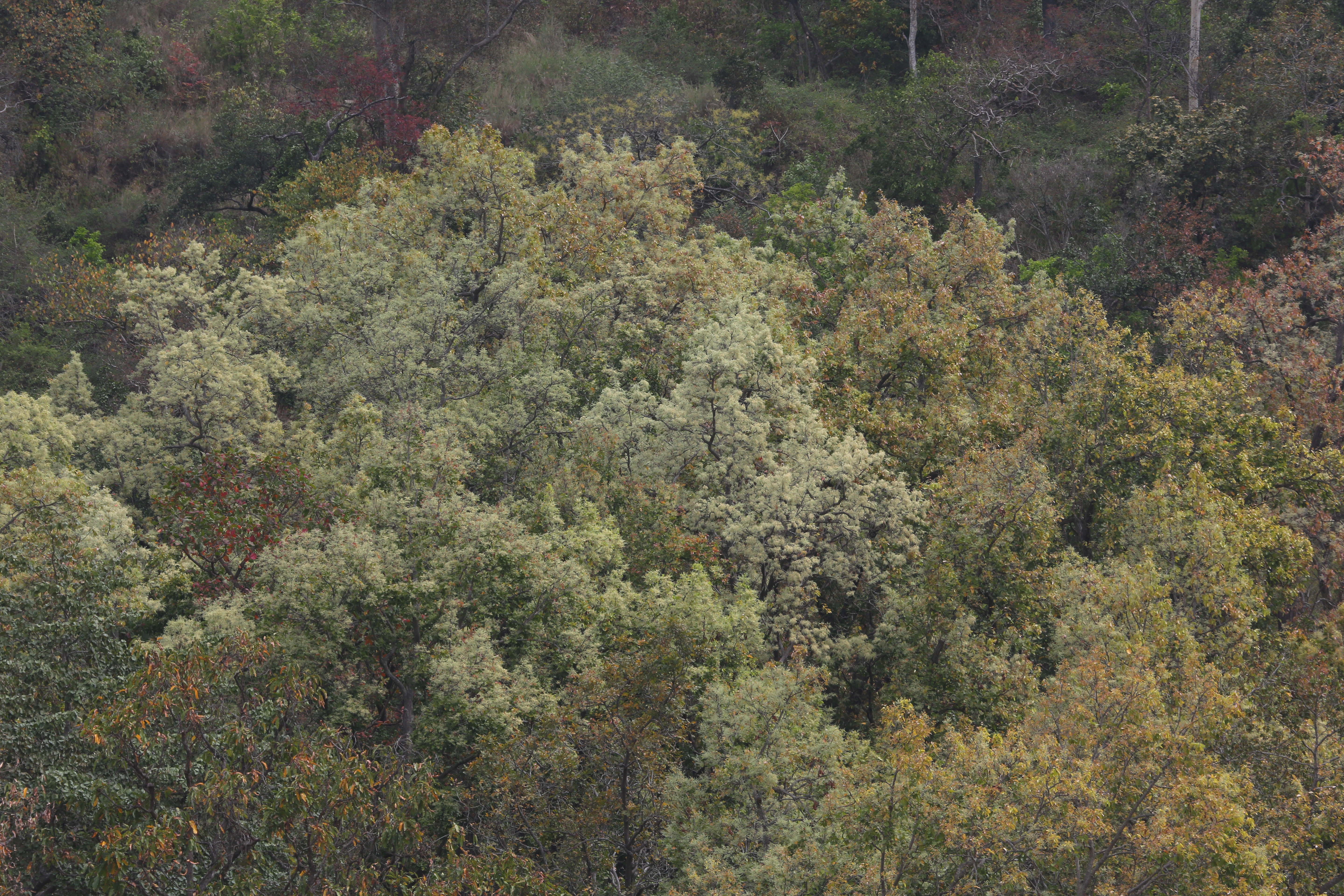
The landscape of Corbett TR is dominated by the Sal tree (Shorea robusta) to the extent of 73%. At this time of year, the trees were flowering and entire hillsides appeared dusted over with greenish white powder, contrasting with the dark green of the ribbed leaves below. Corbett Apr 15 3 124The Sal trees were also shedding heavily and the ground in many places was carpeted with rotting leaf litter. Corbett Apr 15 5 012In some stands of Sal, Rohini (Mallotus phillipinensis) grew in profusion in the understory. This is a diminutive tree bearing clusters of small, red fruit that find use in producing red dye and sindoor. The very picturesque last kilometer of road before Dhikala was reached boasted of plenty of these trees. Corbett Apr 15 4 027 Corbett Apr 15 1 056Terminalia elliptica, our Kari Mathi, was fairly common too. And I could occasionally spot Axlewood (Anogeissus latifolia). In some places, particularly around Dhikala, Indian gooseberry (Phyllanthus emblica) occurred.

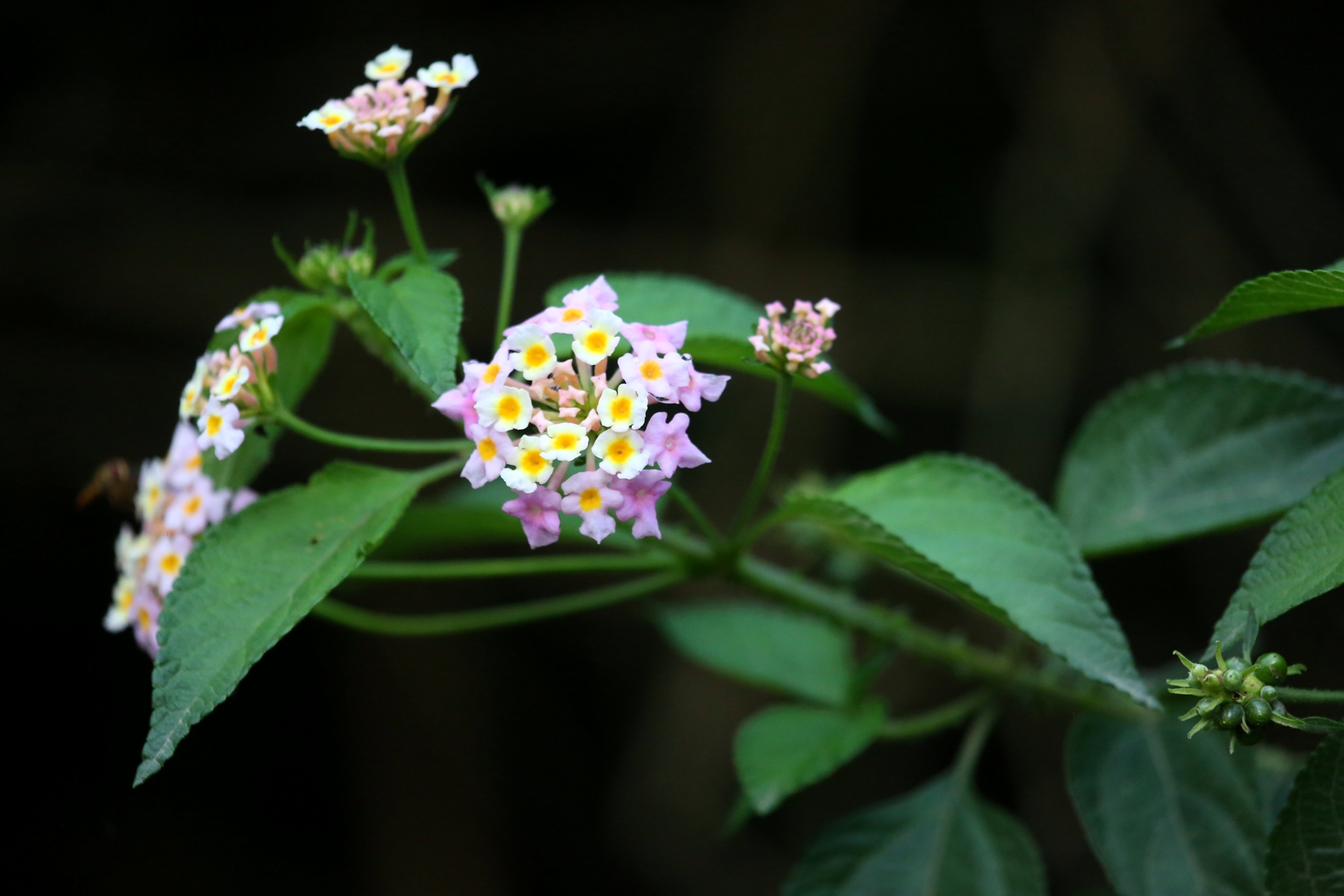
In several areas, Haldu (Haldina cordifolia) grew in profusion, with many specimens having attained impressive girths. Corbett Apr 15 3 338 Alongside the Ramganga, Jamun (Syzygium cumini) was occasionally seen. Corbett Apr 15 4 017 The Kusum tree (Schleichera oleosa) stood out at this time of year as its newly sprouted leaves were red in colour, the contrast rendering it rather pretty. Corbett Apr 15 1 013 At one of the stream crossings, Harish pointed out a few specimens of Chir pine (Pinus roxburghii). This is the lone coniferous species that occurs in Corbett. Corbett Apr 15 1 006 In terms of plants, the understory in the Sal forests was dominated by two species for most part – Hill glorybower (Clerodendrum infortunatum) and Lantana camara. Both were flowering in profusion, the former decked out in little, five-petaled white flowers, each sprouting four tendrilly stamens. And the latter blossoming in a riot of white, orange, yellow and violet.

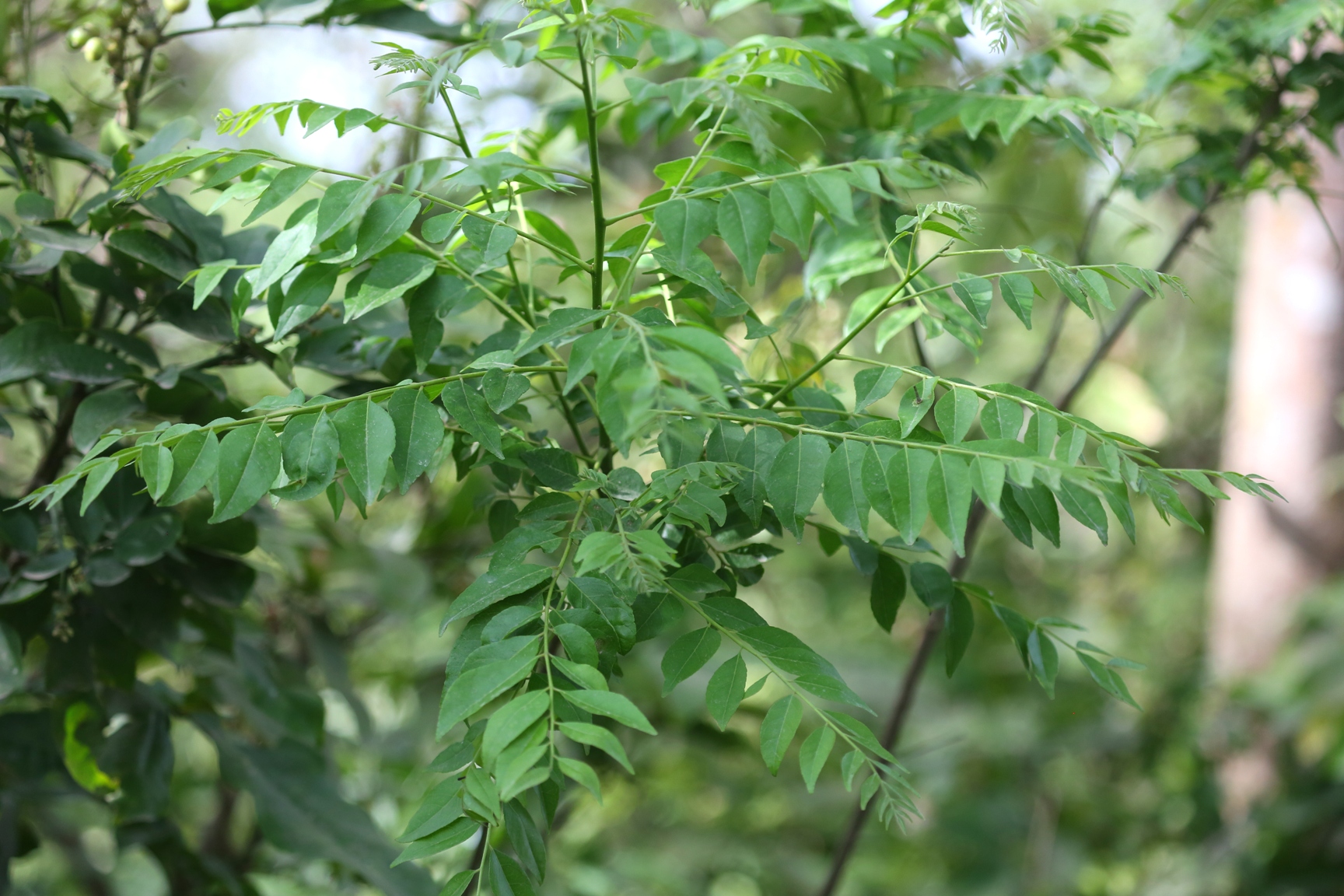
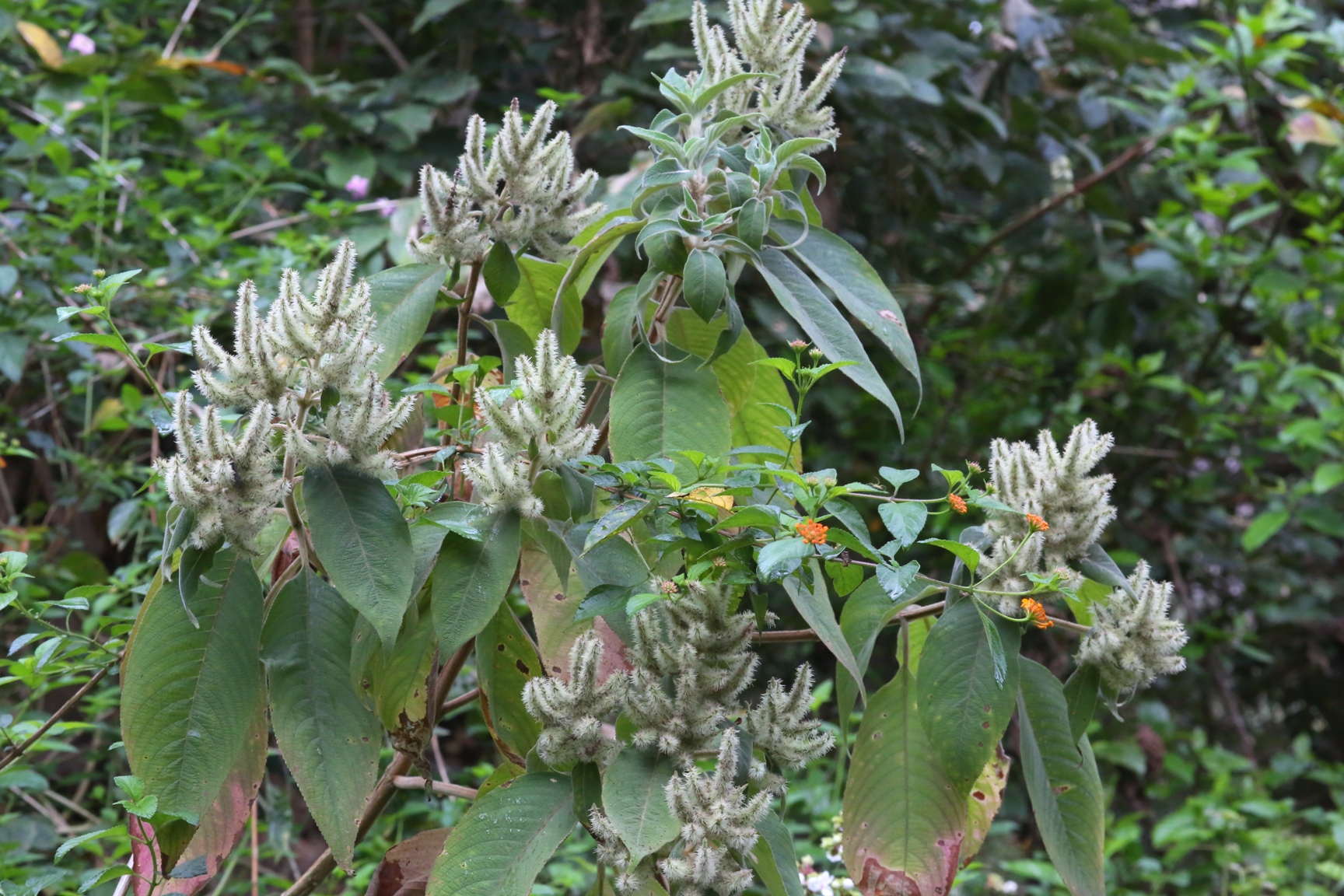
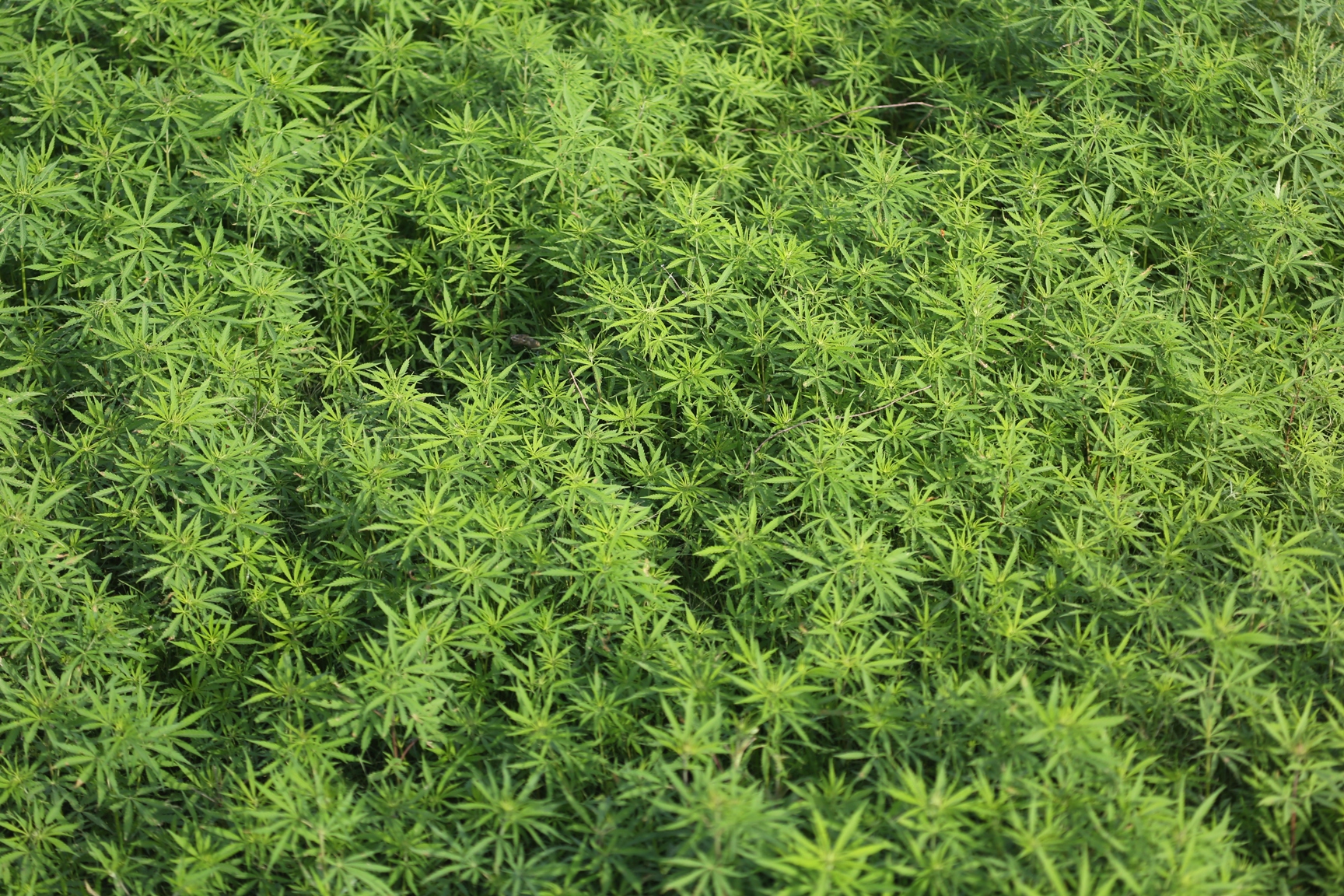
Clerodendrum infortunatum: Corbett Apr 15 1 002 The many hues of Lantana camara: Corbett Apr 15 5 026 Ageratum conyzoides, another exotic locally known as baansila also bore little white flowers and was very common. Corbett Apr 15 5 052 The Curry plant (Murraya koenigii) was seen in abundance, especially around Dhikala. The stretch of road known as Tunbhoji contains whole stretches of Curry plants. Corbett Apr 15 3 258 Colebrookea oppositifolia with its worm-like inflorescence was abundant in some places. Corbett Apr 15 3 012 In many areas Cannabis, possibly Cannabis sativa covered the ground in profusion. Corbett Apr 15 3 331 Ferns are commonly met with in the Sal forests. This one below is possibly Adiantum sp. Corbett Apr 15 4 013 And this one is possibly Pteris sp. Corbett Apr 15 4 007 These four species I am yet to identify – all four were very common.

This plant is locally known as Tun. It is laden with clusters of green berries, some turning purple. A track around Dhikala (which connects with the famed Thandi sadak) is lined with this species and is called Tunbhoji. Corbett Apr 15 4 052 This species of plant growing to around a foot in height packed the verges in many places. Harish identified it as Anjeer. Corbett Apr 15 4 073 Another plant very commonly seen, and most often in a tattered condition and sprouting buds. Perhaps it is Pogostemon amaranthoides, which is said to occur in Corbett TR. Corbett Apr 15 5 015 This is a very common concomitant of Baansila – Ageratum conyzoides. It has little lavender flowers which are similar to those of Ageratum. Harish maintained that it was another variant of the same species, but that is quite evidently not the case. The plant itself is much smaller, and so are the leaves. They are reminiscent of mint leaves. The specimen in this picture below has been drenched in rain. Corbett Apr 15 4 078 Birding It would be an understatement to say that birding in Corbett is breathtaking. Most wildlife spots boast of somewhere under 300 bird species in my experience. Corbett boasts of 600. Unless this claim is inflated. I exceeded a species count of 100 for the very first time, with around 30 lifers thrown in. And this despite the fact that we were not exactly birding with a vengeance – we let a bunch of sightings go unidentified. It did help that that VV was fairly expert at the local avifauna.

The calls of Black-hooded oriole, Red-breasted parakeet, Plum-headed parakeet, Common hawk cuckoo and Spotted dove were the typical sounds heard. We encountered the Blue whistling thrush and that most remarkable bird, the White-crested laughing thrush several times along the forest roads. Corbett Apr 15 3 019 Kalij pheasants gave us a couple of close and very patient photo ops, unlike their cousins the Red junglefowl which were considerably more nervous. Corbett Apr 15 3 373 Corbett Apr 15 6 416 Corbett Apr 15 5 087 A Great Indian hornbill swished past on our last day there. I finally managed to sight a bird that I’ve heard many times but have never managed to see – the Indian cuckoo. I also had the considerable satisfaction of spotting and later identifying the spectacular colours of the Rufous-bellied niltava. We spent many engrossing minutes from the Dhikala watchtower peeping on a pair of mating parakeets.

Red turtle doves frequent the Dhikala camp in large numbers, and were rarely encountered elsewhere. Corbett Apr 15 3 044 Corbett is a raptor-watcher’s paradise. Pallas’s fish eagle and Lesser fish eagle were commonly encountered. As were CSE, CHE and a host of vultures.Common kestrel and Shikra were also frequently seen.

Brown fish owl: Corbett Apr 15 3 315 On the chaurs, Paddyfield pipit, Pied bushchat and Common stonechat ruled. With some drongos thrown in for good measure. River lapwings and River terns were commonly seen along the water’s edge. Corbett Apr 15 3 148

Mammals and reptiles

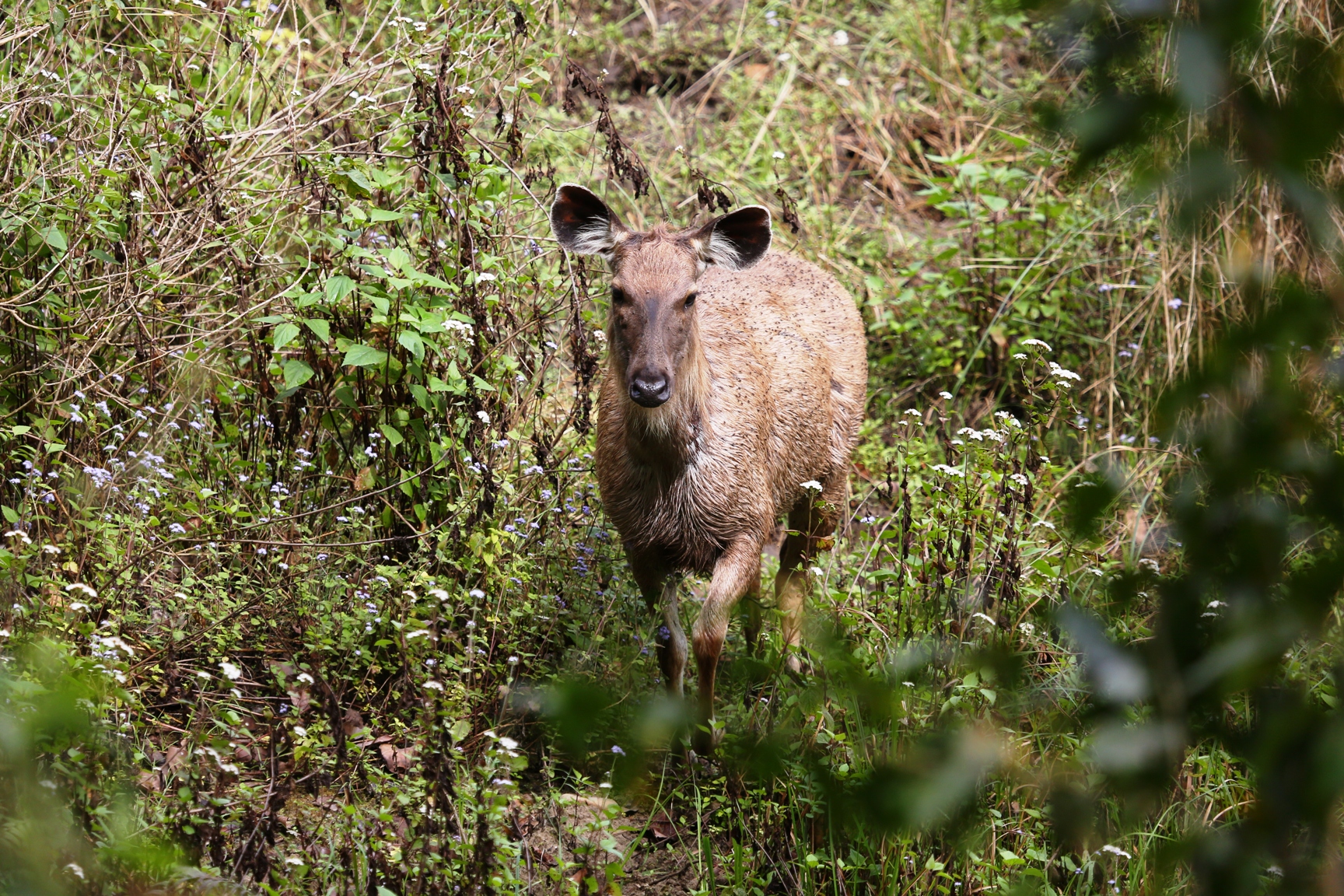
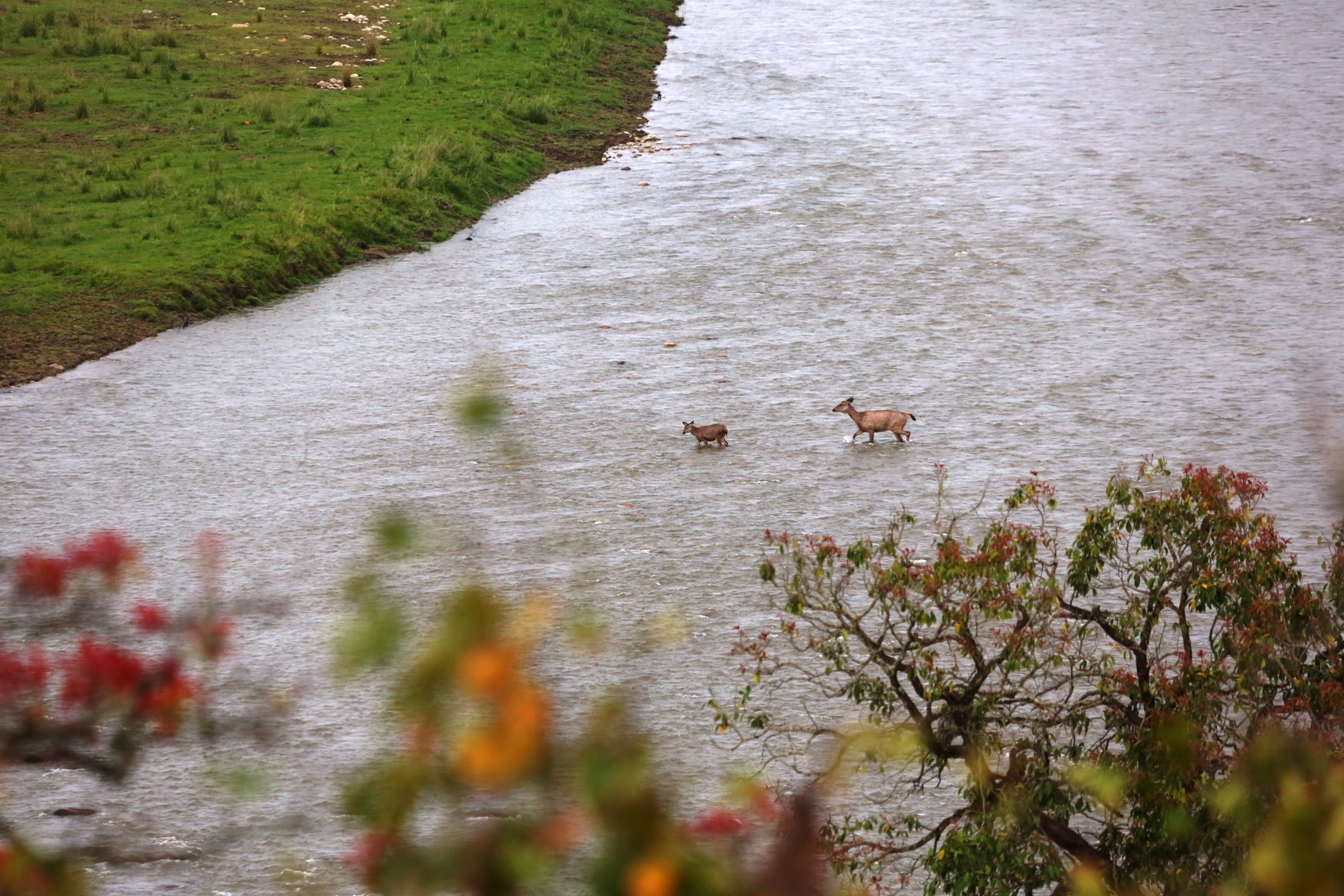
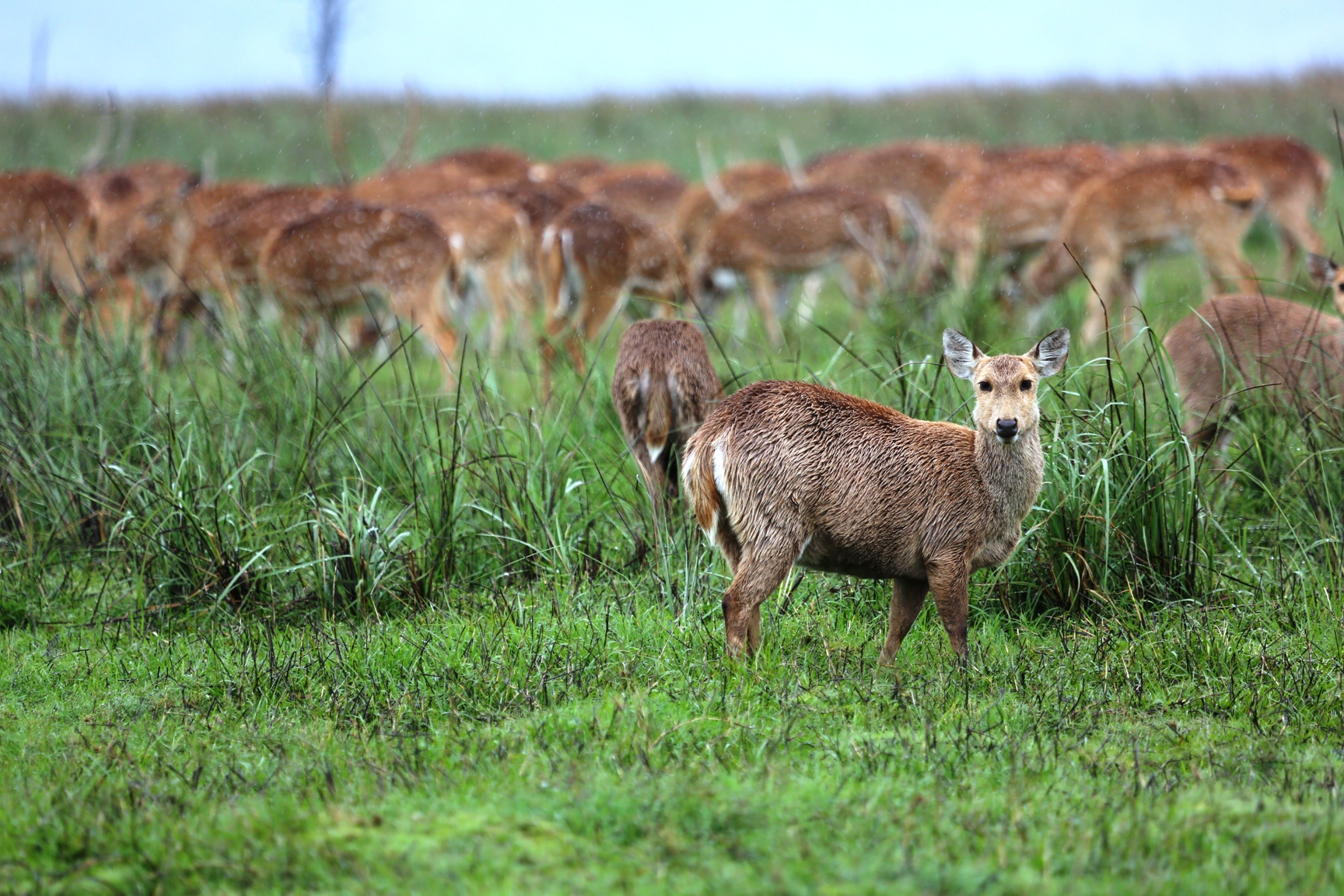
Sambar hind by the eponymous Sambar road. Corbett Apr 15 3 103 Sambar hind and fawn fording the Ramganga; photographed from the Dhikala watchtower. Corbett Apr 15 4 165 Wild boar at Dhikala. Corbett Apr 15 4 049 Hog deer hind by the Ramganga reservoir. Corbett Apr 15 4 153 Corbett Apr 15 4 110 Multiple herds of elephants were invariably at the Ramganga reservoir each evening. Corbett Apr 15 1 273 Corbett Apr 15 4 460 Corbett Apr 15 8 017 Corbett Apr 15 8 054 We saw this crippled calf and its herd on a couple of occasions. The mother’s handling of its inability to keep up was an object lesson in forbearance.  Corbett Apr 15 8 186 We invariably encountered jackal pairs in the picturesque stretch of Sal forest just before reaching Dhikala, and in the chaur around it. Here, doing it just like a dog. Corbett Apr 15 3 164 This python was stationed near Gorkha sot and sighted by most passing jeeps. It was most probably an Indian python, but could have been a Burmese python too. Yawning, in the second picture. Corbett Apr 15 5 173 Corbett Apr 15 5 199 At the point where a road branches off to the Khinnanauli FRH, we saw a pair of Yellow-throated marten dart across the road. The pair presently returned and recrossed again. This creature was on my wishlist for the trip. Harish noted that they were often seen in the vicinity. The weather was wet and presently the skies opened up. We waited a while longer before giving up. We then took to referring to the junction as ‘Marten point’ and looked for the pair each time we passed thereafter, with no luck however.

On day 3, we were rushing back to Gairal at sunset, being late for the 6:30 deadline. The light was rapidly fading. When we reached crocodile point, Harish slammed the brakes exclaiming “Tiger!”. Sure enough, a male got up and off the road, and wandered over into the bushes to our left (the viewpoint was to our left too, the tiger was in the bushes just past the viewpoint). Resenting our intrusion, the cat set up a series of growls while blundering through the thick undergrowth. I suggested that  we pull into the viewpoint to peep over the bushes he was in, but Harish felt the tiger would charge if provoked. In a few minutes, realizing we weren’t being driven away by the growling, the tiger re-emerged onto the road, crossed it, and stood on the verge for a minute staring fixedly at us, before disappearing into the undergrowth. Junior incidentally dived under his seat and stayed hidden there through the growling.

Here’s a picture I hurriedly clicked at an ISO of 25,600 in the failing light. Corbett Apr 15 5 032

Incidentally, Corbett doesn’t seem to be very big on naming individual tigers. However this particular male went by the moniker of Diwani Ram ka tiger, named after a fire watcher he killed three years back.

Our second tiger sighting happened the next morning. Alarm calls were reported from the stand of burnt trees near the reservoir. A tigress had evidently been spotted disappearing into the thickets by someone and the local phone tree was burning up. We reached there to join some eight or ten other Gypsies all lined up in the blazing sun on the chaur. A very large herd of chital grazed placidly nearby.

We’d just finishing admiring an osprey on a nearby tree when out of the thickets came the tigress, charging straight into the herd. She missed bagging anything and lost the advantage of surprise. The deer however went into milling confusion presenting another opportunity. She then made a second attempt, which failed too. After which she retired to the thicket, closely followed by the entire chital herd in formation, anxious not to lose sight of her.

Here’s a part of the sequence. Corbett Apr 15 5 115 Corbett Apr 15 5 116 Corbett Apr 15 5 117 Corbett Apr 15 5 120 Corbett Apr 15 5 121 Corbett Apr 15 5 123 Corbett Apr 15 5 127 ENGL2434 Corbett Apr 15 5 145

The list Birds:

  1. Ashy bulbul
  2. Ashy-crowned sparrow lark
  3. Ashy drongo
  4. Ashy prinia
  5. Ashy woodswallow
  6. Asian paradise flycatcher
  7. Bar-headed goose
  8. Black-hooded oriole
  9. Black redstart
  10. Black stork
  11. Black-shouldered kite
  12. Black-winged stilt
  13. Blue-bearded bee-eater
  14. Blue-throated barbet
  15. Blue whistling-thrush
  16. Brown-capped pygmy woodpecker
  17. Brown fish owl
  18. Brown hawk owl (calls)
  19. Changeable hawk eagle
  20. Chestnut-tailed starling
  21. Cinereous tit
  22. Cinereous vulture?
  23. Yellow wagtail
  24. Collared falonet
  25. Common green magpie (calls)
  26. Common hawk cuckoo
  27. Common iora
  28. Common kestrel
  29. Common myna
  30. Common sandpiper
  31. Common stonechat
  32. Coppersmith barbet
  33. Cormorant (?)
  34. Crested kingfisher
  35. Crested serpent eagle
  36. Egret (?)
  37. Eurasian collared dove
  38. Eurasian or Himalayan cuckoo (?)
  39. Fulvous woodpecker
  40. Gold-fronted leaf bird
  41. Great Indian hornbill
  42. Great slaty woodpecker
  43. Green bee-eater
  44. Grey-capped pygmy woodpecker
  45. Grey-headed fish eagle
  46. Grey-headed woodpecker
  47. Grey heron
  48. Grey wagtail
  49. Hen harrier?
  50. Himalayan bulbul
  51. Indian cuckoo?
  52. Indian grey hornbill
  53. Indian spotted eagle?
  54. Indian treepie
  55. Jungle babbler
  56. Jungle myna
  57. Kalij pheasant
  58. Large cuckooshrike
  59. Lesser fish eagle
  60. Lesser flameback
  61. Lesser yellownape
  62. Lineated barbet
  63. Long-tailed nightjar, or possibly Grey nightjar (calls)
  64. Long-tailed shrike
  65. Magpie robin
  66. Orange-headed thrush
  67. Orange minivet
  68. Oriental honey buzzard
  69. Oriental pied hornbill
  70. Oriental skylark?
  71. Oriental white-eye
  72. Osprey
  73. Paddyfield pipit
  74. Pallas’s fish eagle
  75. Peafowl
  76. Pied bushchat
  77. Pied kingfisher
  78. Plum-headed parakeet
  79. Purple sunbird
  80. Red avadavat
  81. Red-breasted parakeet
  82. Red-headed vulture
  83. Red junglefowl
  84. Red turtle dove/Red collared dove
  85. Red-vented bulbul
  86. Red-wattled lapwing
  87. Red-whiskered bulbul
  88. River lapwing
  89. River tern
  90. Rock dove/Blue rock pigeon
  91. Rose-ringed parakeet
  92. Rosy minivet
  93. Rosy starling
  94. Rufous-bellied niltava
  95. Ruddy shelduck
  96. Shikra
  97. Small minivet
  98. Spangled drongo
  99. Spotted dove
  100. Streak-throated woodpecker
  101. Striated grassbird?
  102. Striated laughingthrush
  103. Tailor bird (calls)
  104. Tawny fish owl
  105. Velvet-fronted nuthatch
  106. Warbler (?)
  107. White-browed wagtail
  108. White-crested laughingthrush
  109. White-eyed buzzard
  110. White-rumped vulture?
  111. White-throated kingfisher
  112. White-throated laughingthrush
  113. White wagtail
  114. Wooly-necked stork
  115. Yellow-eyed babbler
  116. Yellow-footed green pigeon

Mammals:

  1. Barking deer
  2. Chital
  3. Common langur
  4. Common mongoose
  5. Elephant
  6. Hog deer
  7. Rhesus macaque
  8. Sambar
  9. Tiger
  10. Wild boar
  11. Yellow-throated marten

Reptiles:

  1. Bengal monitor
  2. Gharial
  3. Indian or Burmese python
  4. Mugger

Trip Report: Ranthambore National Park, Jan ’15

Trip:      Ranthambore National Park

Camp:   Ranthambhore Regency

Dates:   23-26 Jan ‘15

Who:     GiK, Drs R and M and kids V and P

We should have flown to Jaipur and driven from there to Sawai Madhopur (150 kms). Instead we flew to Delhi, reached there an hour later than scheduled, at about 9:30 PM, dealt with the pathetic airport taxi system to get to Hazrat Nizamuddin station, and took the 11:40 PM Haridwar-Mumbai Bandra Terminus SF Express that ended up leaving Delhi at 1:45 AM. We reached Sawai Madhopur at sometime past 6 AM, a full ninety minutes past schedule and rushed to catch the morning safari. And all this with two kids and a cold wave in attendance. Flying to Jaipur would have been the sensible thing to do, even if it meant some loss of daytime.

The zones

Ranthambore 015

We spent four days in Ranthambore, doing seven safaris in all. Ranthambore has ten numbered tourist zones, with ten gypsies allowed into each zone at a time. On weekends, the FD allows a few more under pressure from VIPs. In fact the FD themselves possess safari-ready gypsies for ferrying their guests around. These gypsies have the triple advantages of no zone restrictions, no time restrictions and a ready information feed via radio.

Zones 1 to 5 are the sought-after ones, with zone 3 being the clear favourite at this time. It is evidently not easy to get the popular zones booked. Regency get an assortment of zones booked daily and ration them among their guests to ensure everyone gets a fair share of the more productive zones. And so we did three safaris in zone 3, two in zone 4 and one each in zones 2 and 6.

Entry to zones 2 and 3 is via the Jogi Mahal gate. The picturesque zone 3 route winds past the Padam talao (on the banks of which the famed Jogi Mahal is sited) and onto the vast Raj Bagh lake. The abandoned hunting lodge on the latter has produced some fine images of tigers on its balcony framed by its structure and shot from across the lake. Finding tigers in this structure is evidently a summer phenomenon.

20150123_092207

Zone 2 is magnificent too, with the road winding by the towering Ranthambore fort and then past another long range of cliffs. However twice a month on chaturdashi days of the Hindu calendar, pilgrims troop through this zone barefoot to worship at a Ganesh temple somewhere. The resultant ruckus effectively puts paid to any decent sighting possibilities. That’s what happened to us on day 1 in the afternoon.

GiK and I thought zone 4 was the best of them all in terms of its beauty. At this time of year, it has several stunningly beautiful spots, especially large patches of bright, finely textured grass. A tiger on this grass in mellow morning light will make for a dream photograph. Zone 4 also has a large lake teeming with aquatic birds, muggers and sambar – Malik talao.

Ranthambore 173

This zone  is accessed via a gate placed to the left of the approach road some distance before the Jogi Mahal gate is reached.

The anicut in zone 4 in the morning mist:

20150124_082705

In contrast with these three zones, zone 6 is a drab and dreary affair, with no impressive landscapes or features – just dusty tracks winding through unprepossessing, stunted jungle. To make matters worse, this zone is accessed after negotiating the sewer-lined, congested bazars of old Sawai Madhopur. If this route is bad in winter, I shudder to think what it’ll be in the heat of summer. But to be fair, we did sight a tiger in zone 6, and a magnificent male in his prime at that.

Tiger centricity

Ranthambore Day 1 AM 186

At the outset, our very competent naturalist Satish Upadyay suggested that we get the tiger sighting out of the way before turning our attention to birding. GiK, my kid P and I were in one Gypsy and we started with zone 3. We reached Rajbagh and struck luck. Three 10-month cubs gamboling in the grass, the litter of the tigress T-19 or Krishna. This tigress is Machli’s offspring and the reigning queen tigress of Ranthambore. We didn’t see the mother though, just the cubs. They were some 40-50 feet from the jeep, by the water and we watched them for twenty minutes or so before they headed back into taller khus grass where a sambar kill was hidden.

Ranthambore Day 1 AM 122

Ranthambore Day 1 AM 141

Ranthambore Day 1 AM 147

As often happens, this spectacular start was followed by muted follow-through, with plenty of alarm calls but no sightings fructifying until the evening of the next day. That was the afternoon safari of day 2, in zone 6. A passing Gypsy reported seeing a tiger cross a nallah and disappear into the jungle. Scouting around we finally came to a cluster of jeeps with the tiger barely visible some two hundred meters away. This was T-34 or Kumbha, a tiger with a colourful reputation for intimidating behavior. He was lying on his back with his paws in the air.

Ranthambore allows safaris in Gypsies and Canters. The latter contain five seats to a row and it mustn’t be great fun to be stuck in the middle. Anyway there were plenty of noisy tourists in attendance and the din disturbed the animal enough to make him roll over one side to the other occasionally and lift his head up to see what the racket was all about. This went on for about fifteen minutes after which he was disgusted enough to rise and stalk away. The horde then started up to chase him, but by the time the jam could be sorted out and the vehicles turned around, a good ten minutes was lost. Meanwhile the cat disappeared without a trace.

Satish had predicted a success rate of 30%. We did a little better than that, with three sightings in seven safaris. On day 3 in the evening safari, we had spent the evening chasing alarm calls in vain all over zone 4. Often being in the unenviable situation of having calls emanating from two different directions.

An interesting feature of tiger tracking in Ranthambore is that when alarm calls are heard, whether chital or langur, Satish listened to see if multiple individuals were calling. Calls by single individuals evidently lack credibility and were actually ignored a couple of times, even when persisting for a while. Satish also mentioned that while chital or sambar calls may sometimes mislead, the nilgai’s alarm call, if heard, is a certain indicator of the tiger’s presence.

Exit time was at 5:30 and we’d spent much of the evening rushing from one set of calls to another. While we were stopped in one of the meeting points for a quick bio break, a gypsy rolled in and the woman in it asked why all of us were hanging around there while there was a sighting in progress elsewhere. Satish and the driver jumped like they were bee-stung and we began a crazy, careening hurtle at mad speed towards the spot indicated. This was quite a distance away and we had just about half an hour to go before exit time, with the exit gate a long way off.

Reaching the place we found that it was hardly a kilometer’s distance from where we’d waited a while earlier listening to chital calls. Some jeeps had gone ahead from that point but had returned without having spotted the tiger. Given the late hour, all the vehicles there were FD Gypsies, with our Gypsy and a canter that arrived later being the only commercial tourist vehicles. The tiger was sprawled on the grass across a ravine amidst some very pretty scenery. This was T-6 or Romeo a fine six year old male. We had around five minutes to take a good look and finish clicking pictures before it was time to hurtle back towards the exit gate. The driver incidentally clocked 85 kmph on that crazy drive and we spent much of it in the air, holding on tight to keep us from bouncing right off the jeep. Admittedly illegal but incredible fun though.

Leopards are at least as numerous as tigers in Ranthambore but as is typical of tiger-infested areas, rarely show themselves.

Both chital and sambar were numerous and the long-drawn rutting calls of chital stags reverberated through the forests at this time of year, sometimes startling innocent tourists who mistook them for the agonized screams of some animal being done to death.

Upwardly mobile chital stag:

Ranthambore 601

Sambar stags sparring:

Ranthambore 085

Nilgai are also fairly numerous in places, and GiK and I got some pictures.

Nilgai doe and buck in the mist:

Ranthambore 443

Nilgai buck:

Ranthambore 614

We also saw the Chinkara or Indian Gazelle for the first time, a very satisfying experience. Mugger are commonly seen on all the lakes.

There were several palm squirrels in the forest. After a desultory glance at one of them, I concluded that they were of the three-striped variety. Dr. R later told me that we were probably looking at Five-striped palm squirrels. I resolved to look more carefully and get a picture if possible on the next outing, but this slipped my mind and I didn’t see any more squirrels.

Ranthambore Day 1 AM 152

Birding

Most remarkable are the Indian treepies. They are exceedingly common all through the forest, and are inured to tourists feeding them, although that is supposedly banned now. We did see some tourists feeding the birds at the rest points though. The birds however have lost their fear of people and freely perch on heads and hands. They are fearless enough to hop into the gypsies and onto the floor right around our feet, hunting for crumbs. Stop at any spot and in all likelihood, a couple materialized, heads cocked greedily, inspecting us closely for signs of anything edible.

20150123_162258

Ranthambore Day 1 AM 364

20150123_153928

Peafowl are numerous as you might expect, and the persistent, two-note calls of Grey francolins rent the air frequently.

Ranthambore 030

Babblers, especially jungle babblers are numerous too and make it noisily evident. Large grey babblers are easily met with and I initially mistook them for jungle babblers until Dr. R pointed this out. Rose-ringed parakeets are another noisy, frequently encountered bird. We met spotted owlets around half a dozen times, so they are not uncommon here.

Ranthambore 065

Long-tailed shrike:

Ranthambore 133

Hoopoe on a Dhok tree:

Ranthambore 479

In the waters of the lakes were Ruddy shelducks, Wooly-necked storks, Grey herons, Common snipes, egrets, cormorants, darters, White ibis, Openbill storks, River terns, dozens of Common moorhen, plenty of Black-winged stilts, more White-breasted waterhen than I’ve cumulatively seen so far and intrepid Red-wattled lapwings that stalked right up to the jeeps hunting for insects dislodged by the tyres.

Wooly-necked stork:

Ranthambore 126

Black-winged stilt:

Ranthambore Day 1 AM 292

Black-capped night heron:

Ranthambore 577

We noted that barbets were strangely absent, although Dr. R’s naturalist pointed out that Coppersmith barbets did occur and were heard in the summer. Junglefowl are conspicuously absent.

Indian Scops owl:

Ranthambore 225

On the drive from Sawai Madhopur to Jaipur (we took the more sensible route on the way back), we saw Bank mynas for the first time whilst stopping for chai.

Crested serpent eagle:

Ranthambore 289

Flora

The landscape of Ranthambore is dominated by the tiny-leaved Dhok tree (Anogeissus pendula). This species comprises a good seventy or eighty percent of the forest’s tree-count and is therefore ubiquitous. Next in terms of frequency are Babul or the Gum Arabic tree (Acacia nilotica) and the Flame of the forest (Butea monosperma).

Acacia nilotica:

20150123_154803

20150123_154832(0)

Stunted Khair trees (Acacia catechu) are also frequently encountered.

Ranthambore 275

On rocky slopes, the striking-looking Karaya Gum tree (Sterculia Urens) is commonly seen.

20150123_165644

Several fine specimens of banyan (Ficus bengalensis) are found throughout the park including the iconic one draping the entrance a little before the Jogi Mahal gate. An exceptionally large specimen occurs near the Jogi Mahal, but is out of bounds for tourists.

20150123_145024

Indian date palms (Phoenix sylvestris) are frequently met with. Tendu (Diospyros melanoxylon) is also encountered occasionally. Adusa (Adhatoda vasica) occurs in clumps in many places. The leaves, flowers and bark of this shrub find medicinal uses chiefly in the treatment of asthma.

Ranthambore 001

Large clumps of the cactus-like Euphorbia plant are also seen.

20150124_080752

A very common shrub in the Dhok forests is Grewia flavescens. At least that’s what I think it is. Our naturalist Satish identified the plant as Chameni in Hindi. I struggled to locate the binomial name and after considerable search, am leaning towards Grewia flavescens. This Grewia species is reputed to be a frequent associate of the Dhok and is supposedly commonly found in Ranthambore. The plant we saw is certainly found all over the place.

20150124_080353

The lakesides are lined with the aromatic Khus grass (Vetivaria zizznioides). Large patches of striking red Water velvet (Azolla pinnata) were found on the surfaces of some lakes. This is a species of tiny-leaved aquatic fern.

Birds:

  1. Asian pied starling
  2. Ashy-crowned sparrowlark
  3. Bank myna
  4. Long-tailed shrike
  5. Black-capped night heron
  6. Black drongo
  7. Black-shouldered kite
  8. Black-tailed godwit
  9. Black-winged stilt
  10. Blue rock dove
  11. Bluethroat
  12. Brown rock chat
  13. Cinereous tit
  14. Common iora
  15. Common kingfisher
  16. Common moorhen
  17. Common snipe
  18. Crested serpent eagle
  19. Darter
  20. Eurasian thick-knee
  21. Greater cormorant
  22. Greater coucal
  23. Grey francolin
  24. Grey heron
  25. Grey wagtail
  26. Hoopoe
  27. Indian Scops owl
  28. Indian vulture
  29. Long-tailed shrike
  30. Indian treepie
  31. Jungle babbler
  32. Large egret
  33. Large grey babbler
  34. Lesser flameback
  35. Little brown dove
  36. Little green heron
  37. Magpie robin
  38. Oriental honey buzzard
  39. Osprey
  40. Painted stork
  41. Peafowl
  42. Painted spurfowl
  43. Pied kingfisher
  44. Plain prinia
  45. Red-breasted flycatcher
  46. Red-wattled lapwing
  47. River tern
  48. Rose-ringed parakeet
  49. Ruddy shelduck
  50. Spotted dove
  51. Stonechat
  52. White-belloed drongo
  53. White-breasted waterhen
  54. White-browed fantail
  55. White-browed wagtail
  56. White ibis
  57. White-throated kingfisher
  58. White wagtail
  59. Wooly-necked stork
  60. Yellow-footed green pigeon

Mammals:

  1. Chinkara
  2. Chital
  3. Common langur
  4. Nilgai
  5. Ruddy mongoose
  6. Sambar
  7. Tiger

Reptiles:

  1. Marsh crocodile

Trip Report: Wild Valley Farm/Sathyamangalam TR

Trip Report:        Wild Valley Farm, Germalam/Sathyamangalam TR

Dates:                   30-31 Aug 2014

Camp:                   Wild Valley Farm, Germalam

GiK and I drove to the farm for a quick weekend trip. We had not sought prior permission, so driving through Sathyamangalam TR was not on the cards. We thought we’d spend some time around the farm, do some birding, and some walking through the surrounding forests. Moreover, GiK was just recovering from a fever.

View from the dining porch; the fencing in the distance demarcates the forest boundary. Bilbo in the foreground.

IMG_5316

The weather was lovely. There was intermittent drizzling, but never lasting more than a few minutes each. Strangely, it was colder now in August than it was in October last when I was there. Germalam is evidently well known for its wind at this time of year, and wind there was. Gusty spells that swept screaming across the forest and farms.

I renewed my acquaintance with my canine pals on the farm – Bilbo the GSD/lab mix, his brother Rover. Spike the deceptively intimidating looking Dobermann. And Patch, one of the two Lhasa Apsos. The farm is worth visiting just for this reason alone. As also for relaxed conversations with Mr. Daniel, these can be extremely pleasant as well. The story of his life is a truly remarkable one.

Bilbo and Patch. “The better I get to know men, the more I find myself loving dogs” – Gen Charles de Gaulle

IMG_5314

Giving Spike a rub-down.

IMG_5329

Reaching by the forenoon of Saturday, we pottered around the farm until lunch, and then went on the “short” trek. We crossed the stream that marks the boundary for a loop through the forest, Shankar the guide intently and ceaselessly scanning the route ahead for any sign of elephant. This area comprises stunted tree and scrub vegetation. Except by the streams, where towering riverine trees occur. Barring a solitary Asian paradise flycatcher and a herd of chital, we were the only souls around. Not counting a herd of cattle grazing in the forest that went crashing away in panic at the sight of us. The trail wound back and intercepted the same stream we crossed at some point and at this place was a Terminalia arjuna tree with very distinct (but old) leopard claw marks on it.

Since the trek was a short one, we were back on the farm in a couple of hours. We spent the time until dark tramping around the periphery of the farm, skirting the tiger reserve. On one side, the farm borders the main road, across which lies the reserve. There is a rocky outcrop on this edge that offers a sweeping vista of the landscape, all the way to the cloud-shrouded BR hills in the distance. Mr. Daniel talked of putting some sort of observation deck around this point, as the view is very pretty.

Dinner done, we tried driving on the road for a five kilometer stretch in the direction we hadn’t been on. The drive was a cropper, and all we did was roll through a few modest settlements on that side. And a very small stretch of deafeningly silent forest. The only fauna visible was tethered and ruminating cattle in these villages, bedded down for the night.

We spent the next morning hanging around the farm and with the dogs, taking in the Waldenesque charms of the place before it was time to leave. The best places on the farm to watch birds from are the dining area patio, and atop the work-in-progress roof of Mr. Daniel’s house.

Gooseberry

IMG_5298

Sitting by the tent, we watched a pair of caterwauling grey cats flush a francolin from the shrubbery, sending it sailing over a rubble wall to safety.  And a foraging pair of Scaly-breasted munias that came very close if we sat still. A little to our left was a pair of robins apparently nesting in a mud embankment, and a solitary Red-wattled lapwing. Bulbuls were all over the place, both red vented and whiskered varieties. Malabar parakeets were also numerous, rocketing overhead while screaming hysterically. As were spotted doves, with their soporific hooting. We crossed into the forest to sit on some rocks in the stream-bed along with Bilbo, savoring the lush silence. Mr. Daniel later told us that he discouraged the dogs from crossing the fence and that the ones that got into the habit of doing so never lasted more than a few months thanks to leopards. We should’ve shooed Bilbo back into the farm.

IMG_5336

I should note that what wasn’t very Waldenesque about the trip was the food. It was delicious and I stuffed my face at every meal, making up for GiK’s tiny, fever-stricken appetite.

GiK tries his hand at silhouettes.

_MG_4762

The list

  1. Ashy-crowned sparrow lark
  2. Ashy prinia
  3. Asian paradise flycatcher
  4. Baya weaver bird
  5. Black drongo
  6. Bushlark
  7. Common hawk cuckoo
  8. Common iora
  9. Coppersmith barbet
  10. Coucal (calls)
  11. Grey francolin
  12. Grey hornbill (calls) – Indian or Malabar I couldn’t see
  13. House sparrow
  14. Indian nightjar
  15. Indian robin
  16. Indian roller
  17. Indian treepie (calls)
  18. Little brown dove
  19. Magpie robin
  20. Malabar parakeet
  21. Oriental white eye
  22. Peafowl
  23. Pied bushchat
  24. Purple-rumped sunbird
  25. Red-vented bulbul
  26. Red-wattled lapwing
  27. Red-whiskered bulbul
  28. Scaly-breasted munia
  29. Spotted dove
  30. Tailor bird
  31. Velvet fronted nuthatch
  32. White-bellied drongo
  33. White-browed wagtail
  34. White-cheeked barbet
  35. White-headed babbler
  36. White-throated kingfisher

Trip Report: Bandipur National Park, March 2014

Trip Report: Bandipur National Park 

Dates:           29-31 Mar 2014

Camp:           JLR’s Bandipur Safari Lodge

This trip was organized by a bunch of us from the Nov ’13 NTP batch. It was open to the batch, but just four of us ultimately signed up. With the temperature rising, we were hopeful of productive mammal sightings; the forest fire which broke out a little before the middle of March threatened to put paid to our plans, but the safaris resumed after 4-5 days of disruption. We drove through some of these charred forests on one of the safaris, and the affected swathes can also be seen by the Ooty highway a little beyond the Bandipur reception area. A thousand acres were impacted by the fire, although this is perhaps not necessarily the tragedy it is made out to be. If you want to know why I say so, this is a very insightful piece to read.

Bandipur Mar 14 327

We did four safaris and I wouldn’t exactly say that the outings were brimming over with sightings, in terms of birds or mammals. Certainly not a patch on my last trip to Bandipur just before the south-west monsoon, when the safaris were vibrant with encounters every few minutes. That was in fact one of the best trips I have ever done (three tiger sightings, ten minutes spent backing up right besides a magnificent and very tolerant tusker, a Black naped hare, Ruddy and Stripe-necked mongooses that permitted prolonged and close observation, and plenty of birdlife).

This time in stark contrast, most of the time was spent in driving through a silent forest shorn of leaves (and completely infested with lantana), the jeep throwing up a pall of fine dust which settled on and fouled everything. Despite the subdued productivity, it was nevertheless time well-spent for us, with some intense birding and an interesting tigress sighting.

There was a tree spreading over our rooms, and weighed down with hundreds of golden-orange figs. Naturally, this was a magnet for frugivores of all hues and we spent a considerable amount of time between safaris under this tree and around the camp. Red-vented bulbuls, Plum-headed parakeets, Asian koels, Coppersmith barbets and palm squirrels were probably the most common gourmands – we found these on the tree with near-certainty at any point. Red-vented bulbuls were in force and aggressively so, and given to relentlessly harassing their more timorous red-whiskered cousins. Indian grey hornbills appeared fairly frequently.

Elsewhere in the camp, there were plenty of Purple-rumped sunbirds, Cinereous tits, Blyth’s reed warblers, Asian brown flycatchers, Common ioras, Oriental white-eyes and White-bellied drongos. A coucal was a constant (and constantly calling) fixture right outside our door, where we also spend an enthralling few minutes watching a flock (murder is the correct albeit awkward term) of crows mob a Shikra which had settled down to partake of something dead and delicious clutched in its claws. Unfazed, the Shikra decamped only after consuming its meal entirely, leaving nothing for the crows.

On the safaris, the first and last threw up elephant sightings, something that I was looking forward to. A small herd of three each time. In terms of birds, most common were hoopoes, Grey junglefowl, Brahminy starlings, Red-vented bulbuls, Magpie-robins, Flamebacks, Streak-throated woodpeckers, Jungle mynas and babblers (both Jungle and White-headed).

The tiger sighting happened in the third safari (evening). Our driver got a call and headed to a waterhole called Kadamatur Katte, where a couple of vehicles waited by the bank. Alarm calls were strangely absent though a langur foraged nearby. Deer were missing in the vicinity. A lapwing was calling hysterically though, punctuated by peacock calls. A few minutes later, a tigress walked out of a game trail on the opposite bank, and descended to the water to drink. However she seemed uneasy with the presence of the jeeps and wandered away to the right, disappearing into the undergrowth. Our jeep cranked up and moved in the same direction hoping for another interception when the van behind us, still parked at the same spot, signaled frantically. Backing up, we found that the tigress had returned to the water hole, slid into the shallows, and was lying with her haunches submerged. We spent some time watching her until she hauled herself out of the water and stalked away into a game trail in the shrubbery, to our left this time. Turning around, we drove some distance and parked near a spot where the drivers judged her likely to emerge. Five or six vehicles had congregated by this time, and we all waited in expectant silence.

The keyed-up tension settled in a few minutes, and we were trying to determine whether a flock of babblers we could see on a forking track ahead was common or white-headed when the tigress abruptly emerged and cantered across the track a short way ahead, much in the manner of a startled cow. We turned into another road in the same direction and some distance ahead, again found a likely spot where she might emerge. A few more vehicles had added on by this time and a long line waited in patient silence.

line

Eventually our patience ran out and concluding that we’d lost her, we started on our way and had hardly gone fifty meters ahead when she was spotted sitting amidst the lantana, a short way off the road. Our screeching to a halt however alarmed her and rising, she finally turned around and disappeared into the lantana.

Dr. R had stayed on to do an additional safari after we left, and an interesting sidelight is that he returned to the same waterhole the next evening and noticed that in our excitement, we had probably missed spotting a carcass floating in the water. There was evidently some flutter at the human-like appearance of the carcass, but the forest department staff were informed and presently fished out a dead langur.

(Pic by Dr. R).

_MG_9221 jpg-LANGUR

Here are a few more pictures.

Grey junglefowl, Mr. and Mrs.

Bandipur Mar 14 158

Bandipur Mar 14 422

White-browed fantail:

Bandipur Mar 14 212

Grey francolin:

Bandipur Mar 14 371

Paddyfield pipit:

Bandipur Mar 14 483

Sambar, note the hairless patch on the neck – this is found in adult males and in pregnant or lactating females, sometimes oozes liquid, and is postulated to be glandular in nature:

Bandipur Mar 14 262

Peek-a-boo:

Bandipur Mar 14 292

Common mongoose on the main road:

Bandipur Mar 14 267

Stripe-necked mongoose, this is the largest species of mongoose in India:

Bandipur Mar 14 092

Elephant herd in the grass:

Bandipur Mar 14 512

Unnerved by the presence of the jeep, this nervous matriarch turns to flee:

Bandipur Mar 14 076

Tiger tiger burning bright, pic by Dr. R:

_MG_8803tiger

Here is the complete list of sightings.

Avifauna

1. Asian brown flycatcher

2. Asian koel

3. Ashy drongo

4. Ashy prinia

5. Asian paradise flycatcher

6. Bay-backed shrike

7. Blue-faced malkoha

8. Blyth’s starling

9. Blyth’s reed warbler

10. Brahminy starling

11. Brown fish owl

12. Brown shrike

13. Chestnut shouldered petronias

14. Cinereous tit

15. Common hawk cuckoo

16. Common iora

17. Common kestrel

18. Common myna

19. Coppersmith barbet

20. Coucal

21. Crested serpent eagle

22. Eurasian collared dove

23. Greater flameback

24. Green barbet

25. Grey francolin

26. Grey heron

27. Grey junglefowl

28. Grey wagtail

29. Hoopoe

30. Indian grey hornbill

31. Indian robin

32. Indian treepie

33. Jungle babbler

34. Jungle myna

35. Large cuckooshrike

36. Lesser flameback

37. Little brown dove

38. Little egret

39. Long-tailed shrike

40. Magpie robin

41. Oriental white-eye

42. Paddyfield pipit

43. Pied bushchat

44. Pigmy woodpecker

45. Plum-headed parakeet

46. Purple-rumped sunbird

47. Racket-tailed drongo

48. Red spurfowl

49. Red-vented bulbul

50. Red-wattled lapwing

51. Red-whiskered bulbul

52. Rose-ringed parakeet

53. Shikra

54. Sirkeer malkoha

55. Small green bee-eater

56. Spotted dove

57. Streakthroated woodpecker

58. White-bellied drongo

59. White-browed fantail

60. White-browed wagtail

61. White-headed babbler

62. White-throated kingfisher

63. Yellow-footed green pigeon

Mammals

64. Barking deer

65. Chital

66. Common mongoose

67. Elephant

68. Gaur

69. Malabar giant squirrel

70. Ruddy mongoose

71. Sambar

72. Stripe-necked mongoose

73. Tufted langur

74. Wild boar

75. Tiger

Others

76. Terrapin

Trip Report: Tadoba Andhari Tiger Reserve, Dec 2013

Trip Report:        Tadoba Andhari Tiger Reserve (TATR)

Dates:                   21-23 Dec 2013

Camp:                   Svasara Jungle Lodge

As I start typing this post, we’re just about to leave for Nagpur. It is 2 PM and the flight back to Bangalore is at 8 PM. Nagpur is some 100 kms away, and we’ll have time to kill at the airport. Meanwhile, there’s a long-tailed shrike brooding on a perch that a green bee-eater habitually sallies from. A large flock of chestnut shouldered petronias skulks in a bush a little to the right. A pair of little brown doves, and a pair of sparrows are starting to nest in two tiny ficus shrubs on the lawn outside. There’s a pair of red vented bulbuls that haunts a bamboo thicket a little to the left. And finally, there’s a tailor bird that is a very occasional visitor to the shrubbery. These are the regular habitués around my room in the Svasara Jungle Lodge. Not an unpleasant place to stay in at all.

TATR

Not that we’ve had much time to keep track of the local avifauna. It’s been a hectic three days. We did four safaris in all, but the remarkable thing about TATR is the time allowance. The morning safari starts at 6:30 AM and goes on until 11:30 AM. Back for a quick lunch at noon and barely enough time for a battery recharge (cameras’, not ours), and off again for the second safari which starts at 2 PM (gate opening time) and goes on until 6 PM. So five hours in the morning and four hours in the afternoon. Nine hours of safari time each day, with little time for anything else. It is rather tiring.

TATR is 650 sq kms of dry deciduous forest, and a dry, warm place. Even in December the days are sultry, though evenings and especially mornings are cold. The teak trees are shedding prodigiously, and the ground in many places is carpeted with the large rotting leaves. Many of the Mahua trees are bare, as are the Indian ghost trees (in pic below). Crocodile bark and tendu trees still retain their green, as do the jamun trees by the waterlines. After having read about the place lacking the magnificence of Kanha or Corbett, I guess my expectations had been tempered down significantly; Happily, the forest seemed pretty enough in compensation. And the safaris are very productive.

Image

The safaris

We did four safaris in all. Svasara Jungle Lodge is sited a couple of hundred meters from the Kolara gate, which in turn is on the north-eastern periphery of TATR. This gate opens into the Tadoba range. Three of our four safaris were limited to the Tadoba range. For our second safari (yesterday AM) alone, we passed through the Tadoba range to reach the Katoda gate, and thereon into Andhari (Moharli range).

The first safari was an evening one. A short while into it, we sighted a ratel – Mellivora capensis. None of us had ever seen one before, and we were elated. We then reached Panderpauni, with its pretty little lake and vast meadows teeming with chital, langur and wild boar. Tree swifts in large numbers hawked insects on the wing. There was quite a bit of birdlife in the waterhole.

A short distance from Panderpauni, on the way to Tadoba lake, we ran into a bunch of Gypsies clustered at a crossroads. One of them had spotted a tigress disappearing into the underbrush. The Gypsies hung around with hopes of the tigress re-emerging for a while, but eventually people started giving up and moving on. Around six Gypsies stayed on, and our patience was finally rewarded. Someone spotted a movement at the far end of the arrow-straight road to our left. Turned out to be P2, a four-year old tigress in fine fettle. She strode down the road unmindful of the cluster of Gypsies, skirted right around us, and ambled into the one road where entry was forbidden. Some of the Gypsies scrambled to loop back for another interception, but the tigress had other ideas. She stepped off the road, into the thickets and disappeared. But P2 was not done with us. In the three remaining safaris, we experienced close encounters with her twice more.

Image

Tadoba lake is a large natural reservoir, with flocks of lesser whistling ducks lining its banks, interspersed with the occasional basking croc. Black headed ibis call noisily from a heronry on the opposite bank. On all visits to this lake, we looked for but failed to spot the grey headed fish eagle and the brown fish owl that were reputed to haunt its banks. Nearby is the little shrine dedicated to the eponymous Gond diety Tadoba or Taru (which is apparently out of bounds to tourists). From here we took the chital road to the Jamunbodi loop, where we spotted a sloth bear about fifty feet off the road – in the late afternoon atypically, and well before sunset.

Image

On day two we covered the Moharli range. On the Tadoba-Moharli tar road, we stopped by a pack of five dhole cavorting by the roadside. They appeared relaxed, stretching, rolling in the grass and frisking around as these creatures are wont to do, but when a couple more Gypsies piled in, they withdrew a short distance away. We proceeded to the Katoda checkpost (which delineates the Tadoba and Moharli ranges) for a breakfast break, and by the time we were done and resuming our way to Telia lake, they had brought down a chital just beyond the checkpost. The kill lay in high grass, and little could be seen beyond one or the other dog’s head bobbing above the stalks as it dipped into breakfast.

Image

The area around Telia lake on the Jamunjhora loop presents picturesque dark bamboo forests. Thirty percent of Tadoba’s greenery comprises bamboo and there is bamboo everywhere, but Jamunjhora has especially heavy growth.

The third safari (evening) was a quiet one, with much of the time spent on birdlife, but in the last half hour, we ran into P2 again, on another arrow-straight road. This time she walked towards us, with one Gypsy ahead of, and three vehicles tailing her. Since among the occupants of these vehicles were the field director and the ranger, we were waved off the road. She marched past our Gypsy and away down the road, completely ignoring everyone around.

Image

On the way back, we found an Asian palm civet on a bole a few feet from the ground (I had earlier described this as a small Indian civet, but S. Karthikeyan  noticed and was kind enough to point this out). Being a little too early in the civet’s day, it was evidently groggy; at any rate, it did nothing for a long while, sitting with somnolent eyes while we sat and watched it. It finally roused itself to do something about all the attention and clambered up the bole and out of sight.

Image

The last day’s safari was a morning one. We had covered pretty much all the local megafaunal attractions barring the nilgai and the leopard. Navegaon is a village on the northern periphery that has been relocated out in the past six months.  As in Kanha, the sites of relocated villages serve as excellent grassland habitats, supporting a healthy ungulate population. So off we went to Navegaon, looking for nilgai and birds. On the road from Panderpauni to Navegaon, who should we run into but P2. It started off with chital alarm calls. We had stopped over at the Panderpauni waterhole to check on the birdlife when calls started from the other side of the lake. We took the road that loops around the lake and stopped over on another side of the water. A brief flash of stripes, and it was another hurtling ride further down the road to try and intercept her. P2 finally emerged and did her thing – the walk on the road unmindful of the gawking audience. She walked towards us, past us and then away, and two columns of Gypsies, perhaps twelve to fifteen in all tailed her at walking pace. The tigress sauntered along unconcerned, stopping by select trees to mark her scent. This went on for the next fifteen minutes, until she turned off the road and disappeared. The Gypsy mobbing phenomenon of the popular tiger reserve is undoubtedly unseemly and downright ugly, but I’m not sure what exactly should be done about it. And Tadoba is undeniably tiger-centric. Guides and drivers do not expect tourists to come looking for much else, and at times it almost feels like they have difficulty mentally processing asks for lesser creatures.

Image

Having touched on the topic of relocated villages, I should not omit to mention Jamni, which is the first landmark after entering from the Kolara gate. The village is in the process of being relocated, and appears largely deserted. The recently harvested paddy fields around boast of a high incidence of tiger sightings – with the beats of two tigresses P1 and P2 cleaving across this area.

Anyway, we did eventually get to Navegaon, and we did see all the nilgai we could have wished for. And a few herds of gaur thrown in to boot. And plenty of birdlife.

Image

Image

I was hoping to meet the couple that has been doing splendid conservation work in Tadoba – Harshawardhan and Poonam Dhanwatey (their organization is called TRACT – Tiger Research and Conservation Trust) – but this privilege will have to wait for the next trip.

The list

Here’s the full list of sightings from three remarkable days:

Avifauna

  1. White eyed buzzard (fairly frequent sightings)
  2. Sirkeer Malkoha
  3. Common pochard
  4. Lesser whistling duck (plenty of them)
  5. Black headed oriole
  6. Indian treepie (everywhere)
  7. Crested serpent eagle
  8. Orange headed thrush
  9. Plum headed parakeet
  10. Rose ringed parakeet
  11. Tickell’s blue flycatcher
  12. Tree swift
  13. Black drongo
  14. Brahminy starling
  15. White wagtail
  16. White browed wagtail
  17. Red wattled lapwing
  18. Common myna
  19. House sparrow
  20. Asian koel
  21. White browed bulbul
  22. Yellow footed green pigeon
  23. White breasted waterhen
  24. White throated kingfisher
  25. Purple heron
  26. Grey heron
  27. Peafowl
  28. Longtailed shrike (plenty of them, especially outside the reserve)
  29. Pond heron
  30. Common sandpiper
  31. Shikra
  32. Coucal
  33. Chestnut shouldered petronias
  34. Spotted dove
  35. Little brown dove
  36. Eurasian collared dove
  37. Pied bushchat
  38. Leaf warbler
  39. Black redstart (female)
  40. Indian robin
  41. Magpie robin
  42. Black shouldered kite
  43. Plain prinia
  44. Tailor bird
  45. Black headed ibis
  46. Asian open billed stork
  47. Black ibis
  48. Egrets
  49. Indian roller
  50. Jungle babbler
  51. Lesser flameback
  52. Green bee eater
  53. Grey junglefowl (calls only)

Mammals

  1. Ratel/Honey badger
  2. Panthera tigris (3 of 4 safaris, few feet away each time)
  3. Ruddy mongoose (couple of comfortable sightings)
  4. Sambar
  5. Sloth bear
  6. Barking deer (couple of close sightings, quite unmindful of us)
  7. Wild dog/Dhole
  8. Asian palm civet
  9. Nilgai
  10. Gaur
  11. Wild boar
  12. Chital
  13. Common langur

Others

  1. Mugger
  2. Olive keelback (at the resort, rescued with injuries)

Tadoba 555

Image

Trip Report: Sathyamangalam Tiger Reserve Oct ’13

Trip Report:        Sathyamangalam Tiger Reserve

Dates:                   26/27/28 Oct 2013

Camp:                   Wild Valley Farm, Germalam P.O.

Companions:       GK and VR

Photos:                 http://www.flickr.com/photos/72698571@N06/sets/72157637122198774/

——————————————————————-

STR: Wikipedia Abstract

Sathyamangalam Tiger Reserve (STR) was declared as a PA in 2008 with 524 sq kms of area. In 2011, another 887 sq kms were added, bringing the size to 1,412 sq kms – which makes it the largest wildlife sanctuary in Tamilnadu. STR is a part of the Nilgiri Biosphere Reserve, and is contiguous with BRT Tiger Reserve, Mudumalai National Park, Bandipur National Park and Masinagudi (Sigur Plateau). Sathyamangalam falls under Erode district, overlaps two taluks (Sathyamangalam and Gobichettipalayam) and is the fourth Project Tiger reserve in TN (after Mudumalai, Anamalai and KMTR).

The topography varies from scrub and thorn jungle in the plains, to lush shola forests at higher altitudes. A December ’11 camera trapping study estimated the presence of 28 tigers. In the same year, the population of elephants was estimated at 850. A 2009 wildlife survey had estimated 10 tigers, 866 elephants, 672 gaur, 27 leopards, 2,348 chital, 1,068 blackbuck, 304 sambar, 77 barking deer and chausingha, 843 wild boar, 43 sloth bears and 15 striped hyenas. Mr. Daniel (see later) mentioned a tiger scat study that had enumerated some 46 tigers in the area.

Paranormal Phenomena

The area is infamous as being the haunt of the sandalwood and ivory smuggler Veerappan for years.  You can find online references to STR as one of the most haunted spots in India after his slaying. Strangely, four people we separately asked were puzzled or amused by the question and seemed to be completely unaware of any such reputation the place possessed. We went looking for spooky stories, but this came a cropper. So much for the supernatural.

Wild Valley Farm

We stumbled on the place online and it turned out to be a great choice. The farm is near a village called Germalam, exactly 205 kms from my home in Bangalore, via Kanakapura road/NH209. To get there, you drive to Kollegal and ask for the road to MM Hills/Udayarpalya. Some 20-30 kms down this road, you see another road forking off to the right, with a large signboard that reads “Wildlife…” something (“Wildlife Conservation Society”?) This road leads straight to Germalam, where you’ll need to turn left to get to the farm. Germalam is 60 kms from Kollegal, and is a very short distance from the Karnataka border.

WVF is owned by S.R. Daniel, a very amiable and interesting man who lives on the place. He is one of those rare people who’re actually living out their dreams, having bought 100 acres of uncultivated land  at the back of nowhere in his late twenties, and then having settled there and learned to farm successfully. We had some very interesting conversations with Mr. Daniel. His love for the place, its people and the animals came through very clearly. Especially memorable were his anecdotes about the relentless struggle to keep wild elephants out of the farm.  This quest to elephant-proof the farm seems to be a big part of Mr. Daniel’s life and he talked about the big bulls that aren’t deterred by the electric fencing.

These elephant fences are single wires strung out at heights varying from 6.5 feet to 7 feet or so, and connected to an electric fence machine that spits out a pulse of high voltage (4,000 volts) and low wattage (Ampereage?) at intervals of about a second. The pulsing and low wattage ensure contact doesn’t kill. Getting entangled in the wires however can, and we heard of cattle as well as inebriated men getting killed this way.

Coming back to the topic of the bull elephants, Mr. Daniel spoke of them hurling a branch or trunk to get the wire to sag, and then flooring the entire contraption, fence post, wire and all by stamping down on the live wire with their forelegs, notwithstanding the shock of the electric current. Alternatively, they’d get hold of one of the posts with their trunk, and heave it right out of the ground, uprooting poles for 50 meters or so on either side in the process, and bringing the whole arrangement crashing. I was reminded of Dr. Lucy King’s experiment with beehive fences in Kenya (see Sanctuary Asia, October ’13 issue). These fences have wires between posts from which the hives are suspended, and if the pachyderm attempts to dismantle or even touch the fence, it sets the hives swinging. Dr. King found that the resultant angry buzz the bees make is enough to get the elephant to back off. The hive fence also generates an additional income for the farmer. I did mention this to Mr. Daniel, though I’m not sure if he found the idea convincing enough to attempt.

We crossed under the live fence-wires a couple of times, gingerly stepping across, bending much lower than was required, and staying low well after the wire was passed. For all the caution exercised, we discovered later that we had been trudging right under one of these fences strung between our tent and the toilets, blissfully unaware of its electrifying presence a few inches above our heads.

The staff on the farm is polite and hospitable, and the frosting on the cup-cake is the dogs – five of them – Bilbo the lab/GSD, Rover his brother, Spike the Dobermann and a couple of Lhasa Apsos. They are, especially the first three, delightfully friendly. Bilbo slept on the grass outside our tent once he figured we liked dogs as much as he did. And the cherry on the frosting is the Red Spurfowl calls in the darkness that resound through the forests around the farm, vaguely reminiscent of something plopping into water. Grey junglefowl call too, and so do peafowl – all of which are very pleasant sounds to those of us who love our forests. And during the day, bulbuls, sunbirds and other birds set up a cacophonic chatter. The farm is verily a birder’s paradise, at least in winter.

Accommodation is by way of fabric tents pitched on grass plots near the forest edge, with no power supply. The tents overlook a patch of turmeric and gooseberry beyond which lies the forest’s edge. Each tent holds upto four camp cots, and little else. The farm has a total of 20 such tents, and they are erected when booked and dismantled after. Toilets and bathrooms are in a regular, electrified facility about 50 meters away. The arrangements are not luxurious by any stretch, but certainly clean and functionally adequate. Dining arrangements are a little way off, near a large kitchen constructed for the purpose – there is a little al fresco dining area with a delightful view. No, not quite al fresco, but you can eat on the porch whilst looking at the forest with the ever-present elephant fence-wire in the foreground. We must say we quite enjoyed the simple south-Indian fare. All the wandering in the forests and the clean air helped sharpen our appetites too.

The weather in October was warm and dry during the day for most part (though it must have been cool enough on the farm), with a nip in the air come evening. Nights are pleasantly cold.

The one inconvenience we faced staying on the farm was the distance from there to the starting point for our drives – Hasanur – 23 kms away. This required a headstart, which meant leaving at 5 AM to link up with our guide at 5:45 AM. In the evenings, this distance had to be factored to ensure we returned to the farm in time to get our dinner (latest by 9:30 PM or so). But despite this constraint, there are enough reasons to visit the farm again and we would recommend it to anyone wishing to visit the area.

The Outings

VR had discovered a most resourceful fellow who was a driver to the ranger for 9 years and consequently knew the topography of the place intimately. We covered as much ground as we did because of this. And cover ground we did. In the two days on which we drove into the forests, we covered 400 kilometers, much of it over boulder strewn stretches, dry stream crossings and generally rubber-ripping non-roads. In any event, the Scorp (“Vanessa”) held up her end of the bargain remarkably well in these proceedings.

So this is what we broadly did:

Day 1:

Germalam-Hasanur-Thalavady-Chikkahalli-Thalaimalai-Begaletti-Mavanattam-Dimbum-Hasanur

This is a delightful stretch of wilderness. Mixed deciduous and shola forests, with ample roadside sightings in the late evenings. The road is tarred and in grand condition.

We came upon a sloth bear in the fading light, intent on digging out what were presumably termites. Enormous male in his prime. He sniffed and snorted around a circle some 10 feet in dia, completely ignoring us as we sat with the engine turned off, hardly 10 feet away – except for one irritable moment when he rose on his hind legs and flashed the white V on his chest as he warned us off. We watched him in silence for a good ten minutes before he made off into the undergrowth. That’s the longest I’ve ever watched a sloth bear for, not counting the Daroji Bear Sanctuary sightings where one can watch sloth bears at one’s leisure and often for hours, but from a very long way off. (I did hear recently that the Daroji sightings are now a thing of the past, with the elimination of the stone-crushing units that dot that landscape – and that they have now apparently dispersed across a much larger area).

This must have been the Night of No Fear, since we also came across a pair of Indian Civets cavorting on the roadside in the darkness, quite unmindful of our presence.

A short while later, on the drive back to Germalam, we ran into another bear, a much smaller one, but this one fled as soon as it spotted us.

Day 2:

First leg: Germalam-Hasanur-Dimbum-Bhavani Sagar-Sujilkuttai-Kulithurapatti-Karavanrayan Koil-Alli Mayar-Dimbum

To traverse this route, one needs to first tackle the 29 hairpin bends down the Dimbum escarpment (including an infamous one called the raikal bend which spirals up seemingly interminably and then abruptly spins out in the opposite direction). There is a lot of heavy lorry traffic on this stretch, and the narrow road, steep inclines, hairpin bends and heavy loads make for a potent combination.

Re-entry into the forest then is beyond Bhavani Sagar (with its lower Bhavani Sagar dam), and the trail meanders through dry scrub jungle where Blackbuck can be sighted, until the Moyar/Mayar river is reached. This is the Moyar river valley and you can spot White-rumped and possibly other vultures patrolling the skies in this area. I am confused by the differing spellings for this river – Mayar and Moyar. Our guide’s take was that the original/correct name is Moyar, but that it has morphed into Mayar or the enchanted river on account of its vagaries, coming into flow suddenly and unpredictably.

At Alli Mayar, the road ran into the river quite literally, and diagonally at that, requiring a crossing through rushing waters 2.5 to 3 feet deep, for a distance of around 100 feet. I didn’t have the nerve to attempt the crossing (in my defense, the Scorp was hardly three months old), and we turned back to Dimbum, wisely I think. I don’t believe there are too many options for towing a Scorp with a flooded engine block out of the Moyar in the middle of that forest.

The roads on this outing varied from poor to worse, inside the forest. The boulder-strewn slopes that flank stream crossings tend to be especially vicious as far as tyres and underchassis are concerned. You cannot attempt this route in a vehicle with inadequate ground clearance.

Second leg: Dimbum-Mavanattam-Begaletti-Thalaimalai- and then a u-turn shortly before reaching Chikkahalli, at a place called Dasarapallam, to return to Dimbum via the same route and thence to Hasanur.This Dasarapallam is reputed to be the stretch of forest where Veerappan had secreted his celebrity abductee Dr. Rajkumar for several months.

This was a repeat of the previous day’s route. While passing the spot where we’d had the stretched bear sighting the previous evening, I remarked that this was the spot and turned to point and as luck would have it, the same sloth bear was in the exact same spot. And curiously, this time accompanied by a Grey Junglefowl cock, pursuing him for any stray, wholesome insects he was dislodging. The sun was just starting to set and mellow evening light still suffused the forest, so we could see him much more clearly than on the previous occasion. We screwed up with the camera, having forgotten to reset the exposure comp a few minutes earlier. The images we got were frame-filling, but irredeemably blurred and overexposed. Yet another lesson to promptly return the exposure comp setting to zero if it is ever tinkered with – this is not the first image to be ruined on account of this oversight.

This was déjà vu day, as after Bruin, we again ran into a civet on the way back, perhaps one of the same pair we ran into the previous evening.

The highlight of the evening however was a glorious Makhna mock charge. A Makhna, for the uninitiated, is a tuskless male elephant (unlike the African elephant, only the males carry tusks in case of the Asian Elephant, and that too not all of them). Shortly before we reached Chikkahalli, we came across a massive tuskless bull feeding right beside the road. I was intent on my driving and drove right past, missing him completely. The guide urgently whispered and we slammed to a stop, backed up and sat watching him in silence. He was hardly 40 feet away and we were obviously way too far into his comfort zone (do I correctly remember the recommended safe distance for motorists as 100 feet?).
The elephant then started showing signs of agitation, decided to get his retaliation in first (a la Jack Reacher), and came hurtling towards the Scorp with a short warning trumpet. There was a shallow rainwater ditch between us, but it was hardly designed as an elephant barrier. The animal stopped some 15 feet away after effortlessly snapping a 6-inch wide bamboo stem with his trunk in a demonstration of disgust, and I dutifully moved the car a short distance ahead to pacify him. He then resumed feeding, still showing signs of agitation. We left in a short while to avoid precipitating a second charge.

I’ve seen plenty of mock charges, but they were all with the perceived comfort of having a professional safari driver at the wheel. This was the first time I’ve experienced a charge while at the wheel myself, and this ups the feeling of anxiety. In any case, I’ve found mock charges at close proximity to be intimidating enough to send my pulse racing in each case. I think I’d freeze in place if I were on foot instead. We read about the signs of mock charges vis a vis intent to make contact – flaring of ears, outstretched trunk, trumpeting – but I somehow lose the capacity to assess these the moment that grey-brown mass comes hurtling through the lantana.

After this incident, I remembered what I’d read as a child about Makhnas in E.P. Gee’s The Wildlife of India; Gee surmised that Makhnas tend to be larger and stronger than tuskers as a rule, to compensate for their lack of in-built weaponry. Elephants are large, Makhnas are larger, and all objects appear larger than they are in the dusk!

It should be noted that most of the routes described here are closed to the public, and that there is no organized tourism in STR. Permission to enter the jungle has to be obtained from the forest department.

Hasanur figures on the itinerary not because it lies en route to Germalam (it does not), but in order to pick up and drop our guide who lived there. It is a short way ahead from the Germalam turn-off.

There would be broadly three categories of visitors to this forest I’d imagine, excluding the politico-VIP-types who’d get in anyway. Bands of men or youngsters out to drink, hoot at elephants, maybe bathe in the river, and generally have a jolly good time. Families, out to look at some wildlife, with someone who can get them into the forests. And then amateur naturalists with a serious interest in the forest and its wildlife. It makes a lot of sense for the forest department to find a way to encourage the latter category, and to make some money in the process. Look at what Jungle Lodges & Resorts has done in Karnataka. The Kerala Forest Department does this in some limited way I assume, from what we’d seen in Gavi/Periyar TR earlier. I haven’t seen meaningful eco-tourism deployment anywhere in TN, and that is a pity. We were refused entrance in KMTR, and met with a very lukewarm response in Top Slip, and these are all places with tremendous ecotourism potential.

Day 3

We dispensed with the drives on day 3 and opted for a “long” trek organized by Mr. Daniel. Slipping under the electric fence below the dining area, we entered the bamboo forests by the Moyar with two guides, one a short distance ahead and another just behind us. Mr. Daniel repeatedly warned us against trying to catch up with the leading guide, as he might make himself scarce in a trice in the event of an elephant charge, leaving us at the mercy of the elephant. The lag would give us a head-start if we were to encounter an angry elephant. The reason for his caution became apparent very soon, with large deposits of elephant dung appearing just about every ten feet in the forest. This area is quite obviously infested with elephants, though there was some temporal respite in the fact that their movement in this area was almost always nocturnal. There was not much birdlife active in the jungle in the forenoon, and the forest was largely silent barring some junglefowl calling dispiritedly at intervals.

We climbed for a distance of around three kilometers and then descended by another route. The trek was moderately easy, with a little bit of clambering up rocky slopes. What was surprising was the unlikeliness of the places where we found elephant dung – on steep boulder-strewn slopes where it was hard to imagine an elephant making his way.

Mr. Daniel had told us about a Brown Fish Owl that we might encounter, we did see a large bird beside the Moyar that took to flight at our approach, but we couldn’t determine if it was this worthy or a CSE/CHE. GK found a discarded Chital stag’s antler that I carried home with me – it is much heavier than you’d imagine and I pity the stag that carried two of these around on his head. Incidentally, I read somewhere that deer seem to use their antlers solely for sparring with other stags of their own species, and do not even attempt to use them in any manner of self-defense when confronted with a predator or other assailant.

Overall as far as the trek was concerned, we got ourselves some good exercise on our feet and the delight of being in the forest, but not much by way of sightings. And no elephants either despite all the signs scattered everywhere. Thank God for that, I suspect both GK and VR would easily outrun me, not to mention our two guides (note to self: restart the thrice-a-week running schedule before venturing into elephant-infested forests again).

Post script: Kenneth Anderson aficionados will find bells ringing a chorus in their heads with all the place-names that leap straight out of his stories – Gedesal, Thalavady, Thalaimalai, Dimbum and so on.

Sightings:

Avifauna:

  1. Asian Blue Fairybird
  2. Ashy Crowned Sparrowlark
  3. Asian Koel
  4. Barn Swallow
  5. Bay-backed Shrike
  6. Blue-faced Malkoha
  7. Blue Jay
  8. Brahminy Kite
  9. Brahminy Starling
  10. Brown Rock Chat
  11. Brown Shrike
  12. Changeable Hawk Eagle
  13. Chestnut Headed Bee Eater
  14. Coppersmith Barbet (calls)
  15. Crested Serpent Eagle
  16. Drongo
  17. Chestnut-headed Bee-eater
  18. Eurasian Collared Dove
  19. Golden Oriole
  20. Green Bee-eater
  21. Grey Headed Fish Eagle
  22. Grey Junglefowl
  23. Grey Francolin
  24. Grey Tit
  25. Hoopoe
  26. Hovering raptor – unidentified, with rapid fluttering of wings while hovering in place
  27. Indian Bushlark
  28. Indian Grey Hornbill
  29. Indian Robin
  30. Jungle Bush Quail
  31. Jungle Prinia
  32. Lesser Flamebacked Woodpecker
  33. Little Brown Dove
  34. Long Tailed Shrike
  35. Magpie Robin
  36. Owl (unidentified/indistinct in the morning darkness)
  37. Peafowl
  38. Pied Bushchat
  39. Purple Sunbird
  40. Purple-rumped Sunbird
  41. Red-rumped Swallow
  42. Red Spurfowl
  43. Red Vented Bulbul
  44. Red Wattled lapwing
  45. Red Whiskered Bulbul
  46. Rufous Treepie (calls)
  47. Shikra
  48. Small Green Barbet
  49. Small Minivet
  50. Spotbilled Duck
  51. Spotted Dove
  52. White-browed Wagtail
  53. White-throated Kingfisher
  54. White-rumped Vulture

Fauna:

  1. Blackbuck
  2. Blacknaped Hare
  3. Bonnet Macaque
  4. Chital
  5. Common Langur
  6. Elephant
  7. Gaur
  8. Indian Civet
  9. Malabar Giant Squirrel
  10. Sambar
  11. Sloth Bear
  12. Star Tortoise