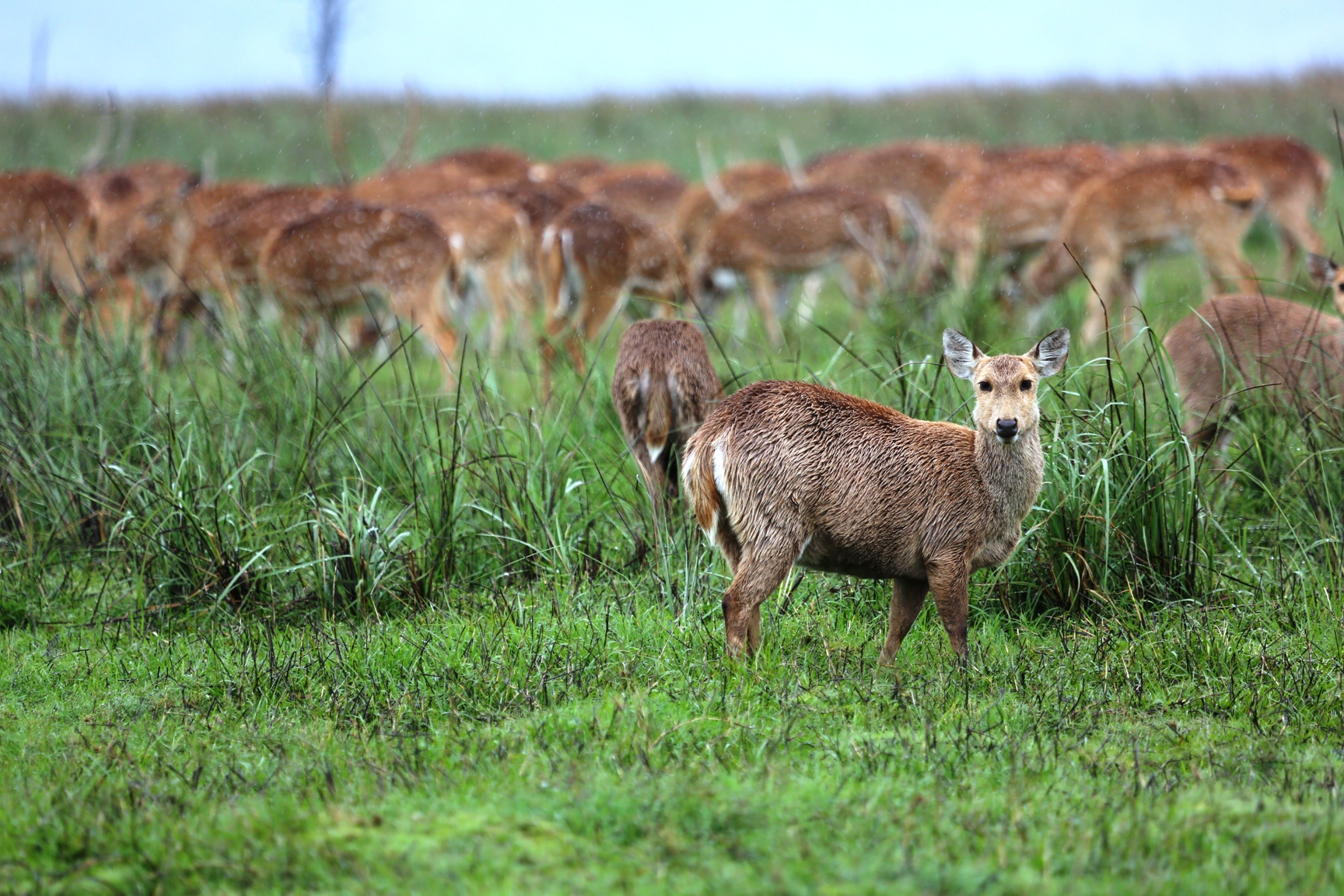
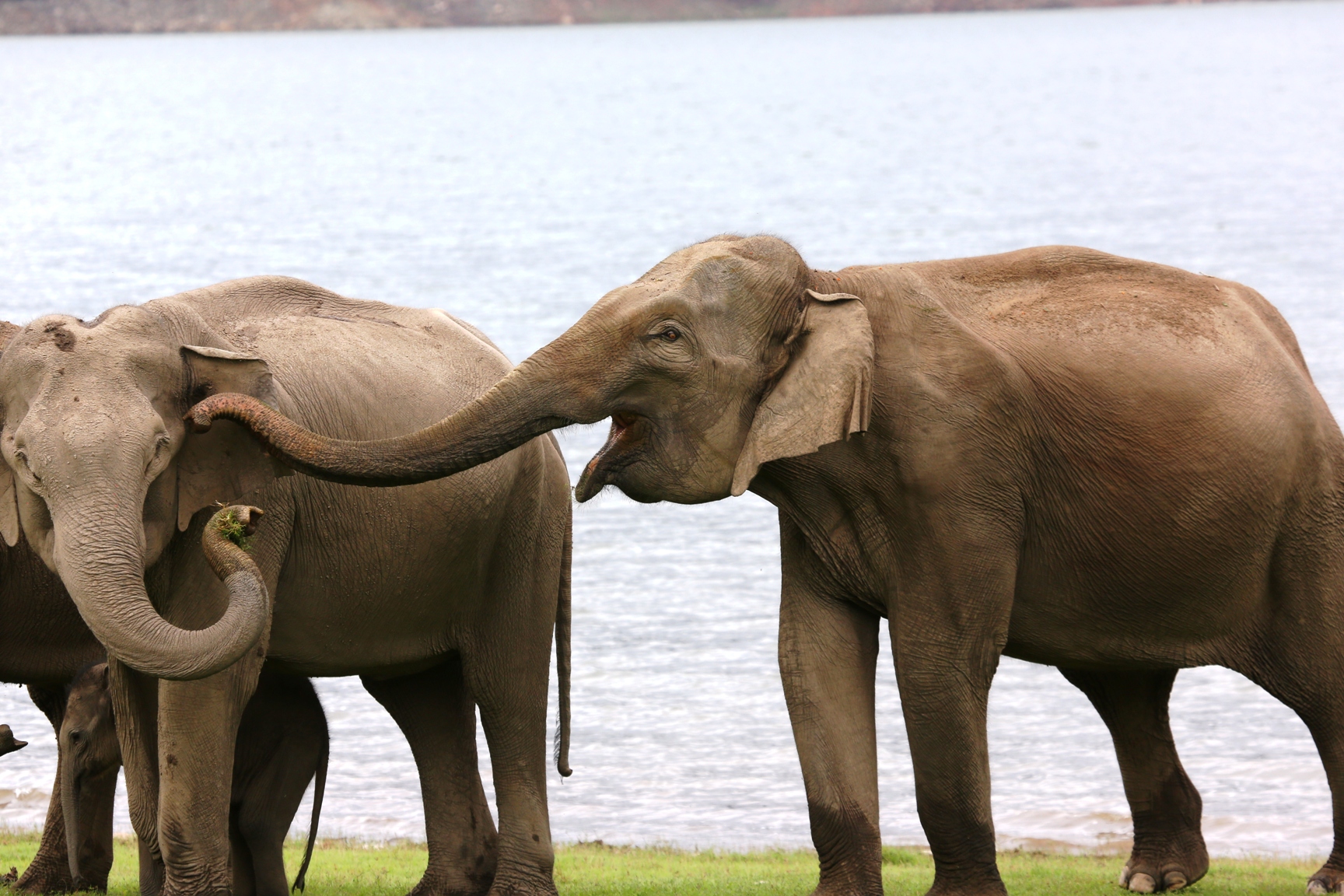
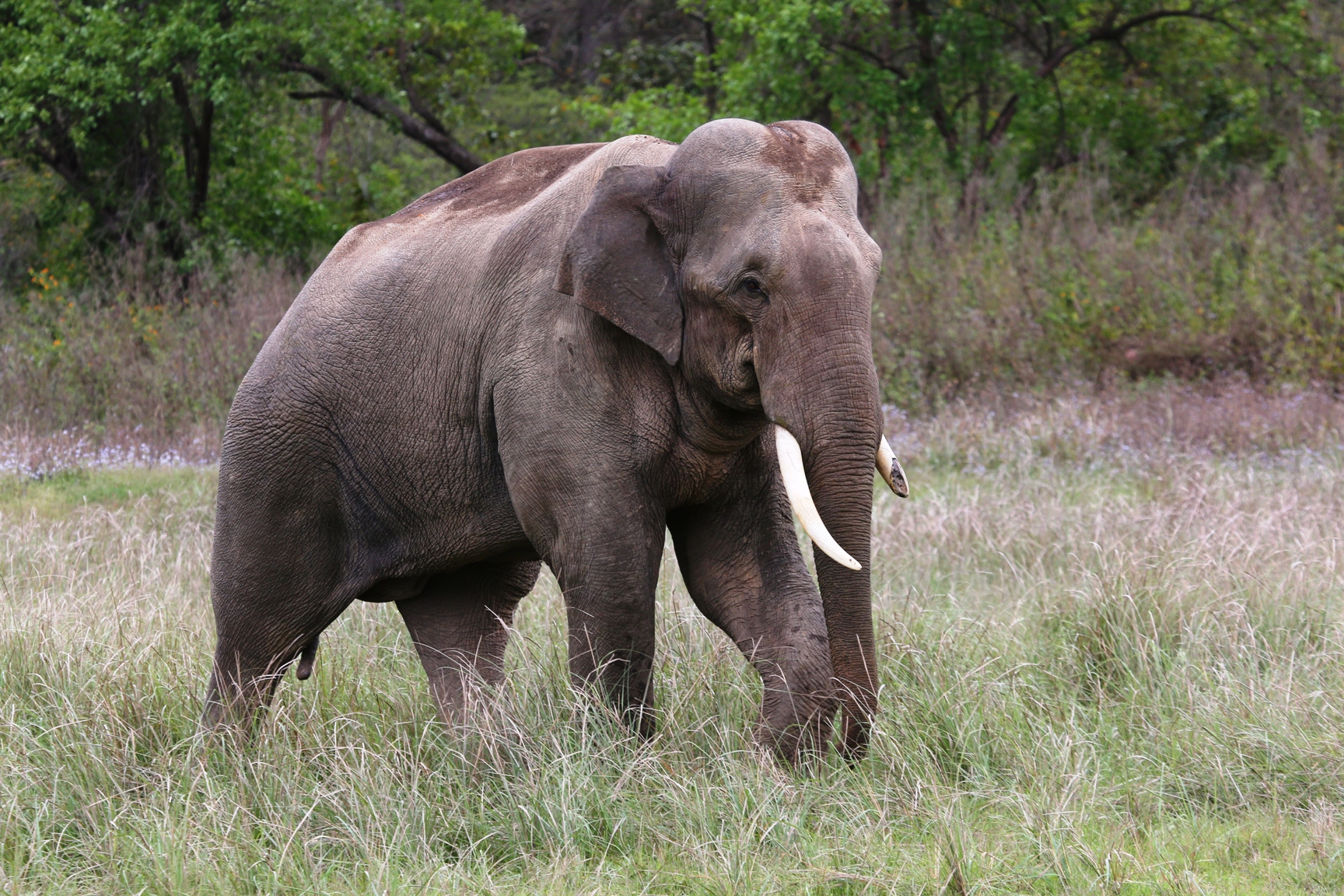
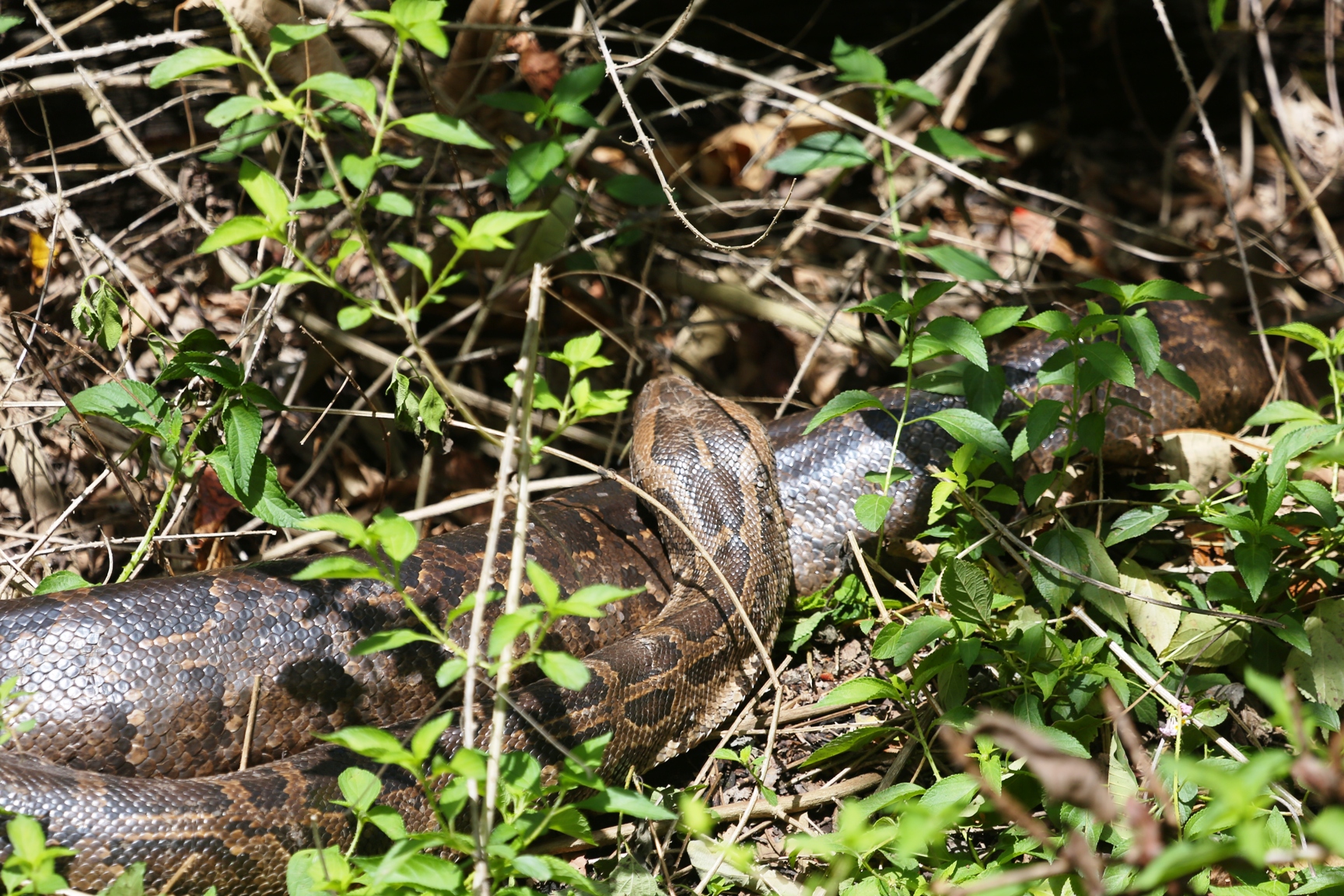
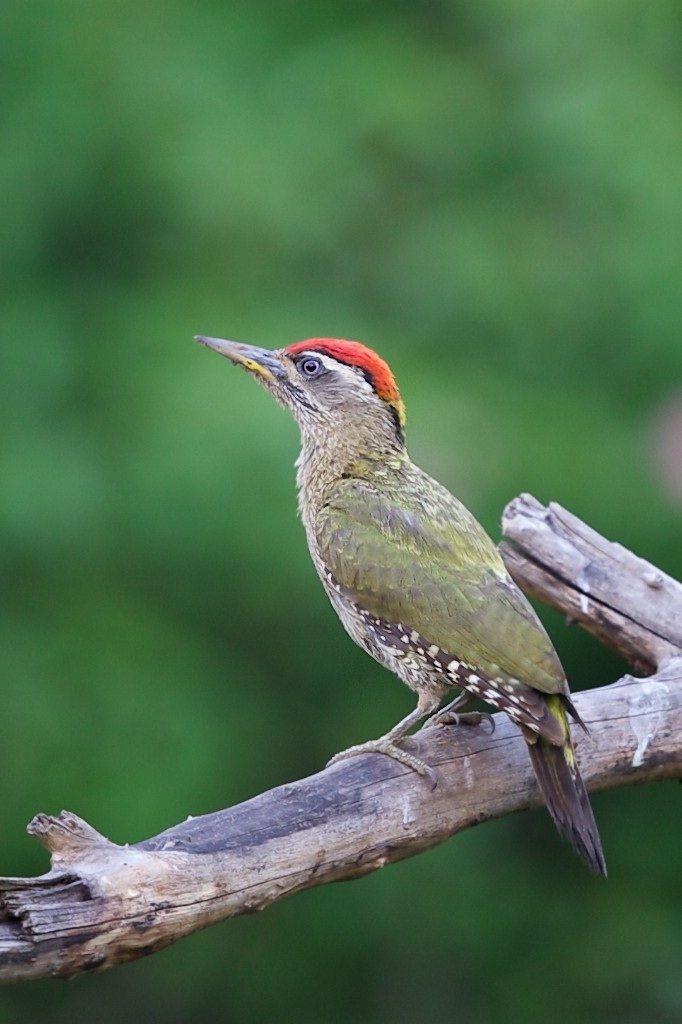
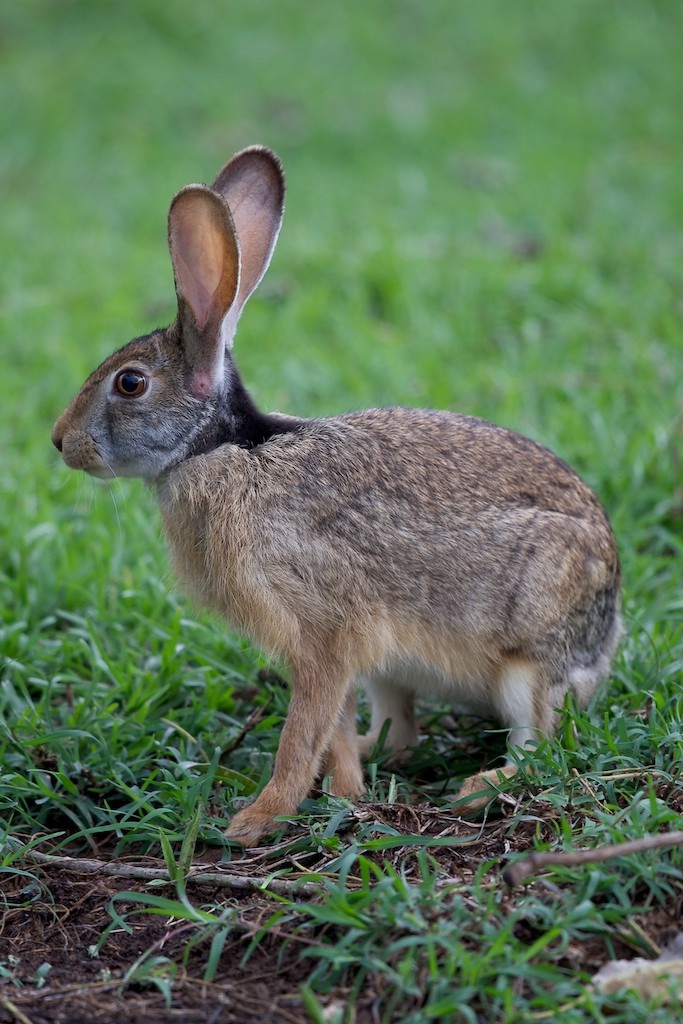
Trip Report: Shivaliks/Rajaji N.P.

Dates:                   8-13 Dec ‘17

Camp:                   Bayali

Who:                     A

A and I spent five days at a tiny settlement called Bayali in the Shivaliks. Although it was a family outing, we did get considerable time to savour the wildlife in the area.

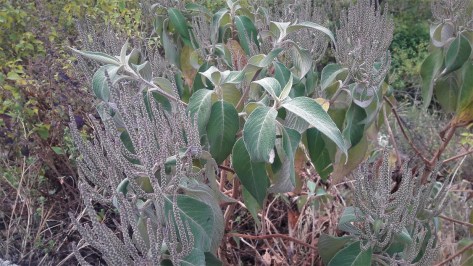
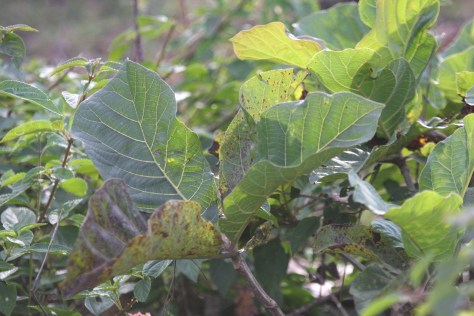
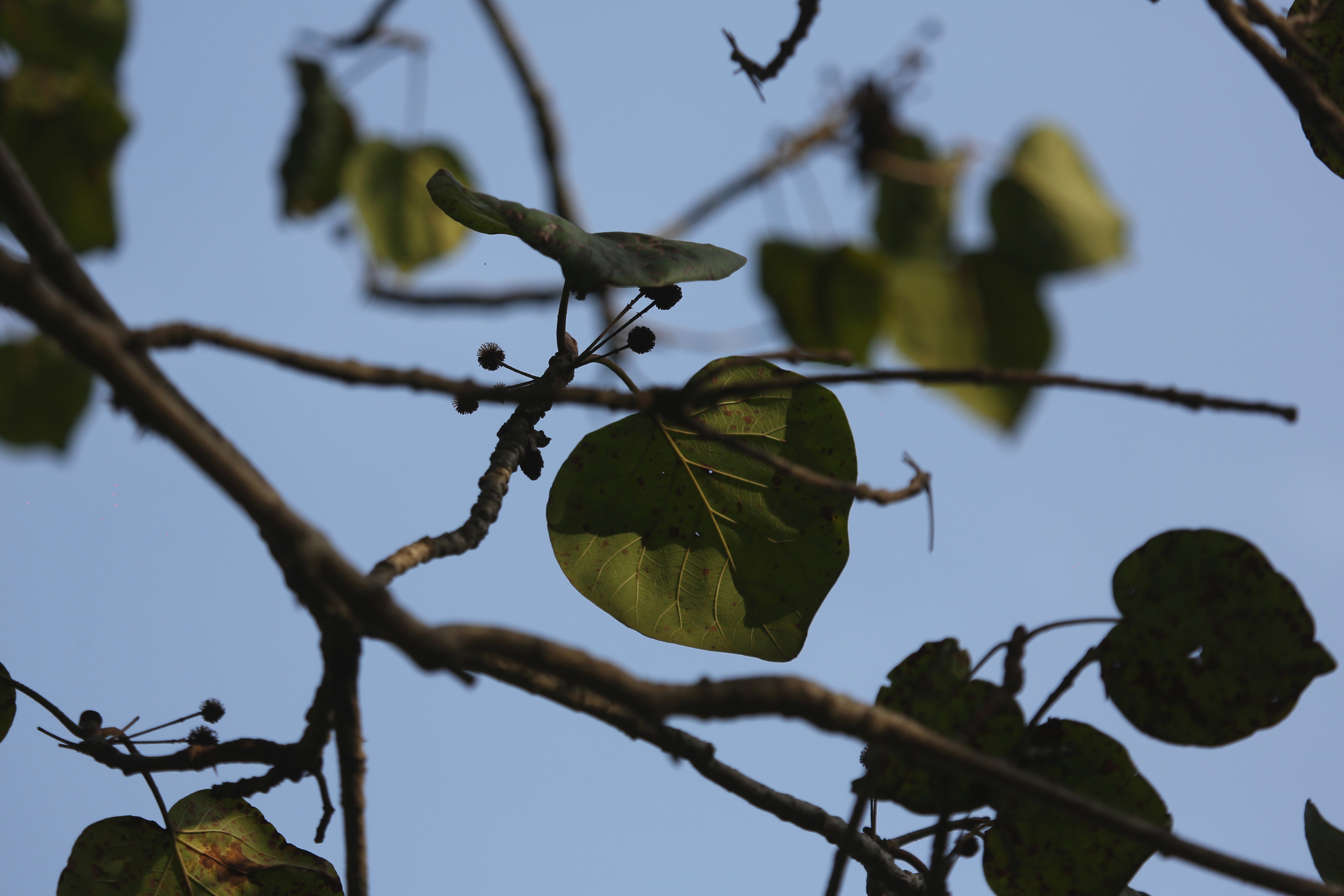
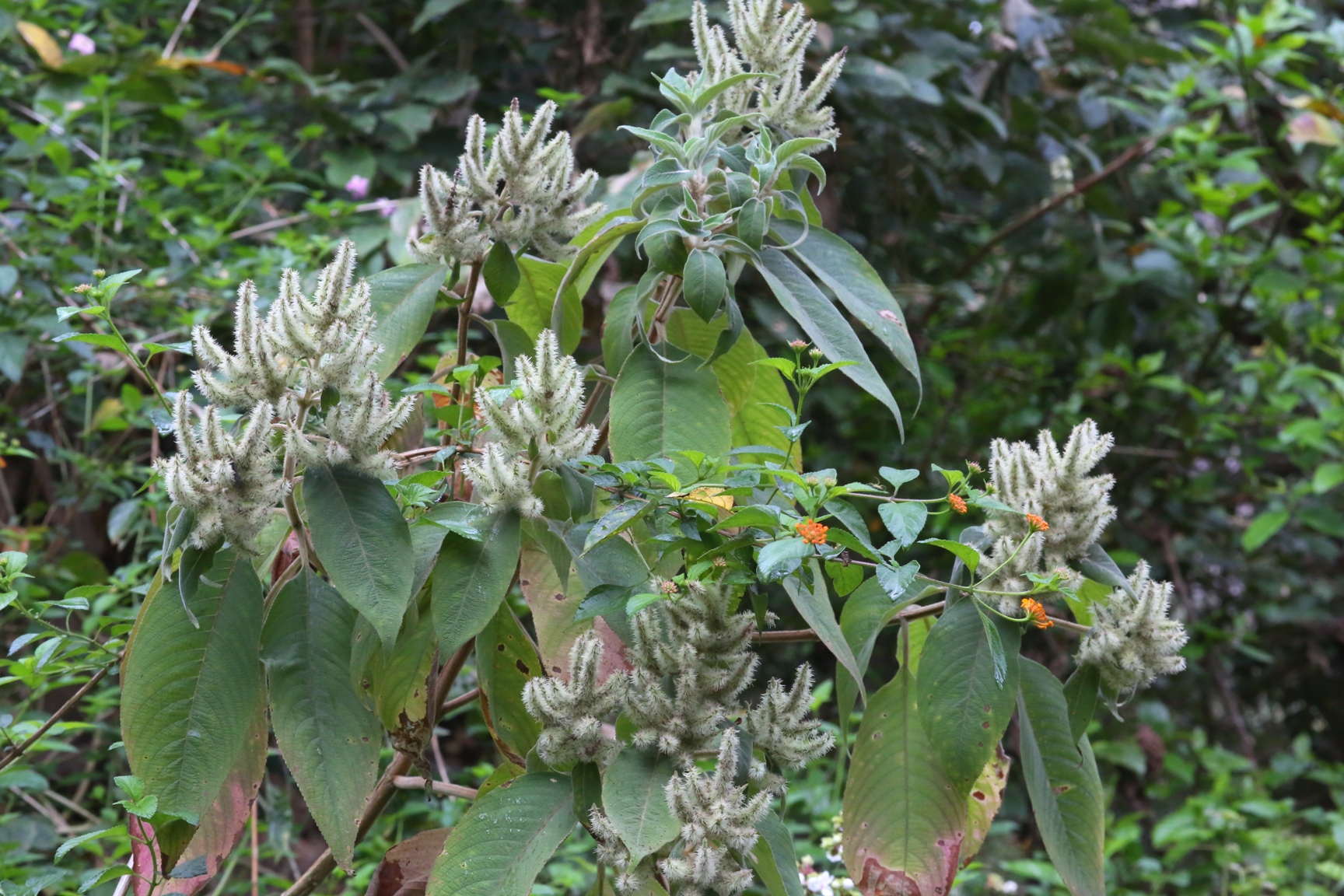
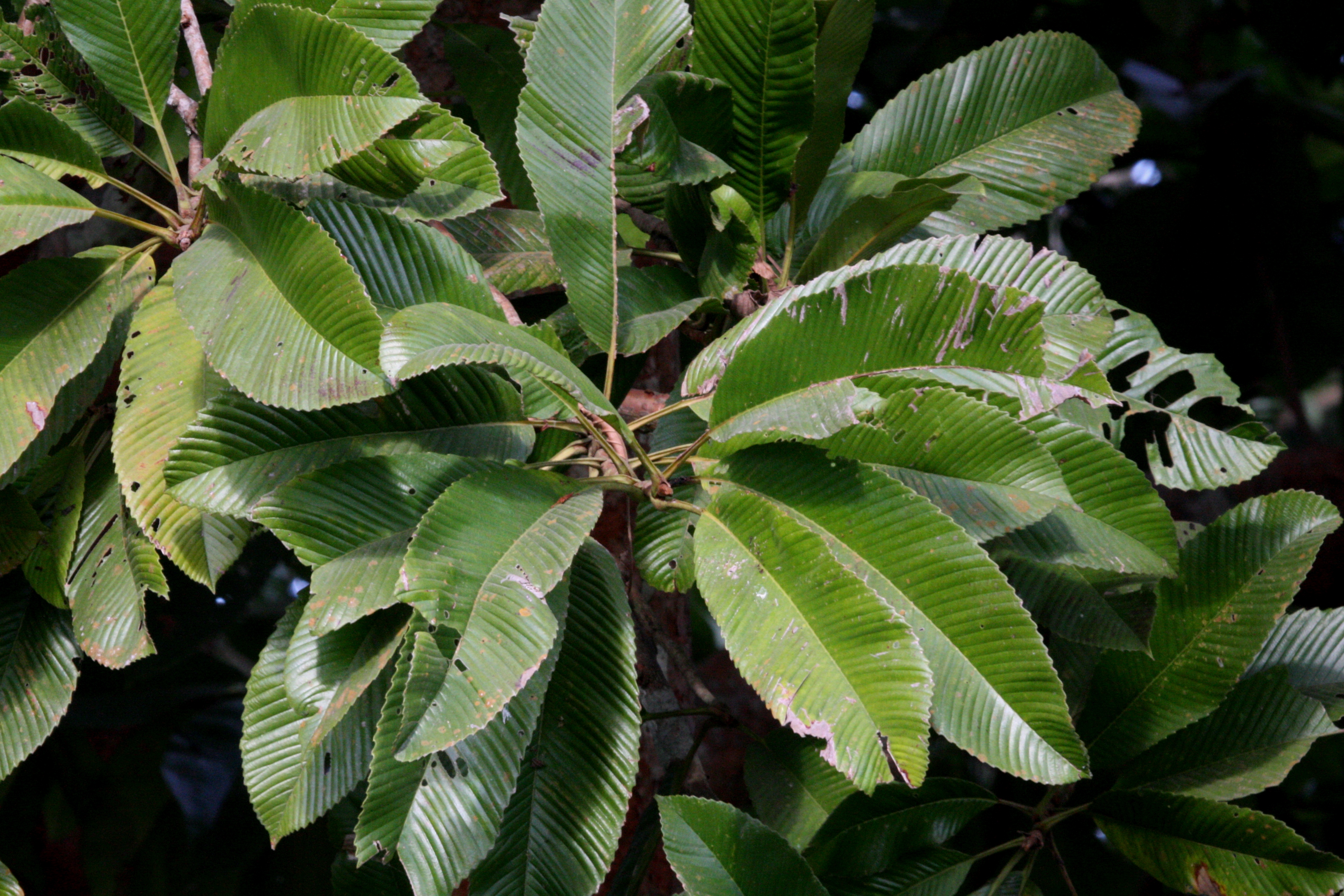
Colebrookea oppositifolia

Colebrookea oppositifolia – the woodsman’s toilet paper

The mornings were bitterly cold and eschewing Gypsy drives through the forest, we chose instead to bird around the settlement. Evenings were spent driving down through the forest, towards the Vindhyavashini temple some fifteen or twenty kilometres away.

C44A2531

Wild mushroom, possibly Ganoderma lucidum (Reishi)

We set out one forenoon to a place called Kanda Khal – which is essentially a little cluster of shops lining the road – and took a path that plunges into the valley from here. A grueling climb up the opposite slope took us through some spectacular birding spots, to a sparse cluster of homesteads called Basaan and then to a slightly larger village called Kasaan, before descending via a circuitous route to meet the waiting Gypsy on the road. The trek lasted a few hours and took us past a grim scar on the hillside where in the July of 2006, two cloudbursts triggered landslides that destroyed a homestead, killing five people in the process.

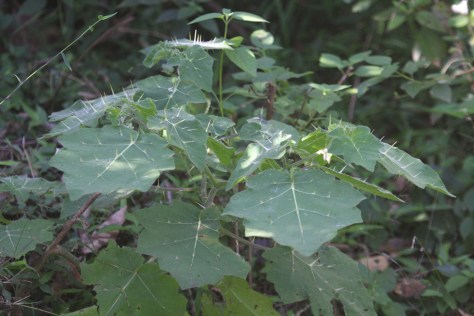
C44A2547

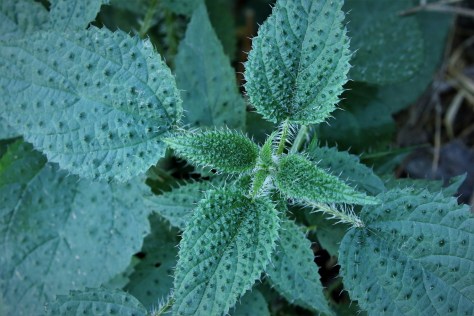
“Bicchu ghas” – Common nettle – Urtica dioica. Frequently seen lining paths. A brush with this plant can cause considerable discomfort as the fine thorns inject histamines.

On another afternoon, we drove down to the Tal river valley and spent a while sighting goral on the surrounding slopes. We saw a small Accipiter here which we initially assumed to be a Eurasian sparrowhawk – but I’m not certain now after checking. We flushed a small flock of quail which promptly disappeared into the lantana before they could be identified.


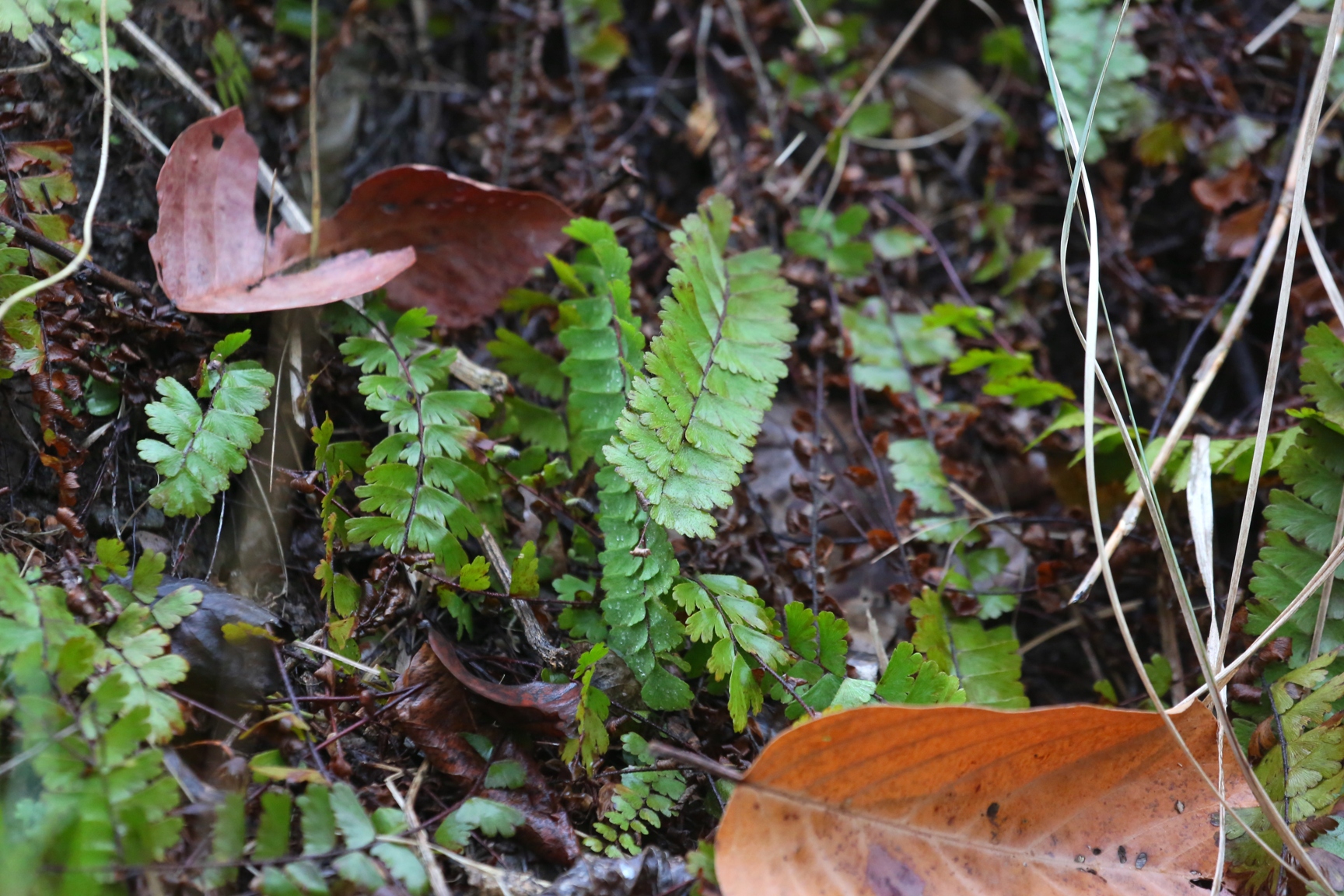
Tattoo fern, possibly Pteridium sp. Leaves a delightful white print on the skin.

Birding

C44A1991

Great barbet at dawn

Commonly seen species included Great barbet (whose call was often heard), Lineated barbet, White-throated and White-browed fantail, Grey bushchat, a Tree-creeper (we didn’t know which), Grey-headed woodpecker, Himalayan flameback and Black-chinned babbler. There was a species of prinia (possibly) in gregarious flocks around Bayali, greenish brown in the upper parts, with a pale supercilium, white underparts, a prominent white throat and black barring on the underside of the tail. We were not able to conclusively ID this bird (non-breeding form of the Grey-breasted prinia?). We made the mistake of not noting the call – this would have made the task easier.

There were enormous flocks of Eurasian tree sparrow (or maybe Russet sparrow) in the lantana thickets. Vultures (& eagles on occasion) were seen overhead several times but we were unable to ID them. Plumbeous and White-capped water redstart were seen by the streams and rivers. In and around Kasaan were several flocks of Streaked laughingthrush. We spotted what appeared to be a Brown fish owl in flight once.

C44A2590

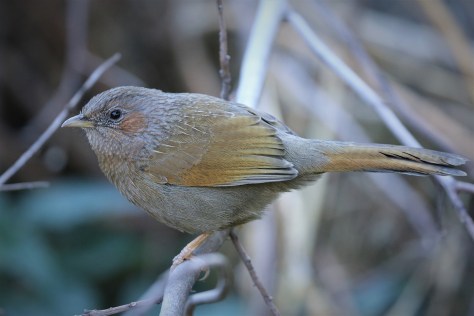
Streaked laughingthrush

We also saw Black-lored tit, Lemon-rumped warbler, Grey treepie, Blue whistling thrush, Mrs. Gould’s sunbird, Grey-hooded warbler and the spectacular Yellow-billed blue magpie.

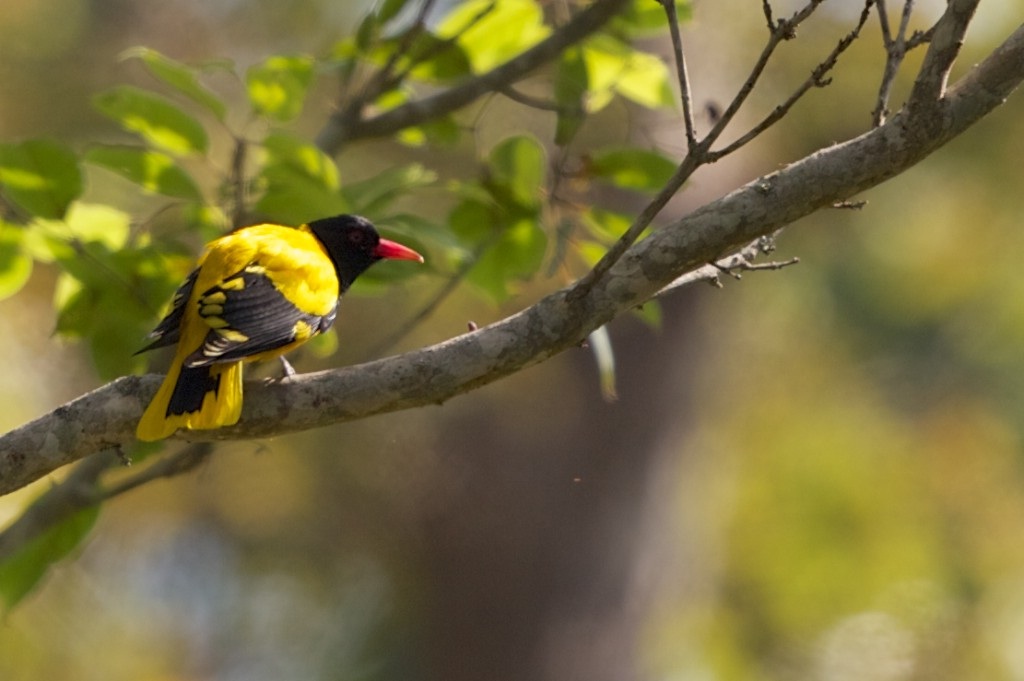
More pedestrian species (if I dare call them that) included Oriented turtle dove, plenty of Indian treepie & bulbul (Himalayan, Red-whiskered and Red-vented in equal measure), Cinereous tit, Velvet-fronted nuthatch, Oriental white-eye, Indian robin, River lapwing, White and Yellow wagtail, Ashy-crowned sparrowlark, Long-tailed shrike, Coppersmith barbet, Plum-headed parakeet, Paddyfield pipit (I think), Greenish and Dusky warbler, Magpie robin, Tailorbird, White-throated kingfisher, Jungle owlet, Orange minivet, Red junglefowl (hens only, for some reason), peafowl, Black-hooded oriole, Jungle babbler and Asian pied starling.

C44A2016

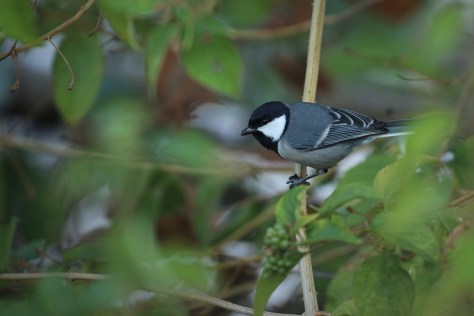
Cinereous tit

Forest drives

The drives turned up some interesting experiences. We were on our way to the Vindhyavashini temple one evening when we stopped to look at a flameback (Himalayan I think). The woodpecker fled to a tree some distance away. All of a sudden, a shikra swooped in out of nowhere and barrelled straight for the flameback, which in turn squealed and dived for the undergrowth. This set off an excited chattering amongst the other avifauna around, which subsided once the shikra exited the scene as rapidly as it had entered it.

C44A2526

Orb weaver spider web

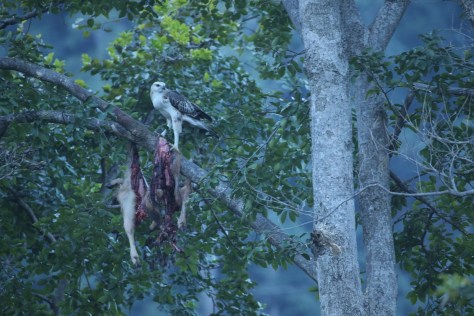
There’s a sharp turn to the left at one point, angled at almost ninety degrees. We were approaching this turn when the sharp, ascending notes of a Changeable hawk eagle shattered the stillness of the forest. We found the raptor feeding off a chital kill, on a branch some twenty feet up and not too far from the roadside. The kill appeared fresh and we bookmarked the tree for a dekko on the return journey.

C44A2628

Changeable hawk eagle scavenging off leopard’s kill at dusk

It was well after dark when we made our way back and we swerved the jeep at an angle and climbed the gentle embankment by the roadside to light up the branch broadside on. Sure enough, the owner of the kill was there, feeding greedily on the carcass. So sharp was his hunger that the leopard didn’t glance our way once. We watched for a while and then left him to his meal.

C44A2711

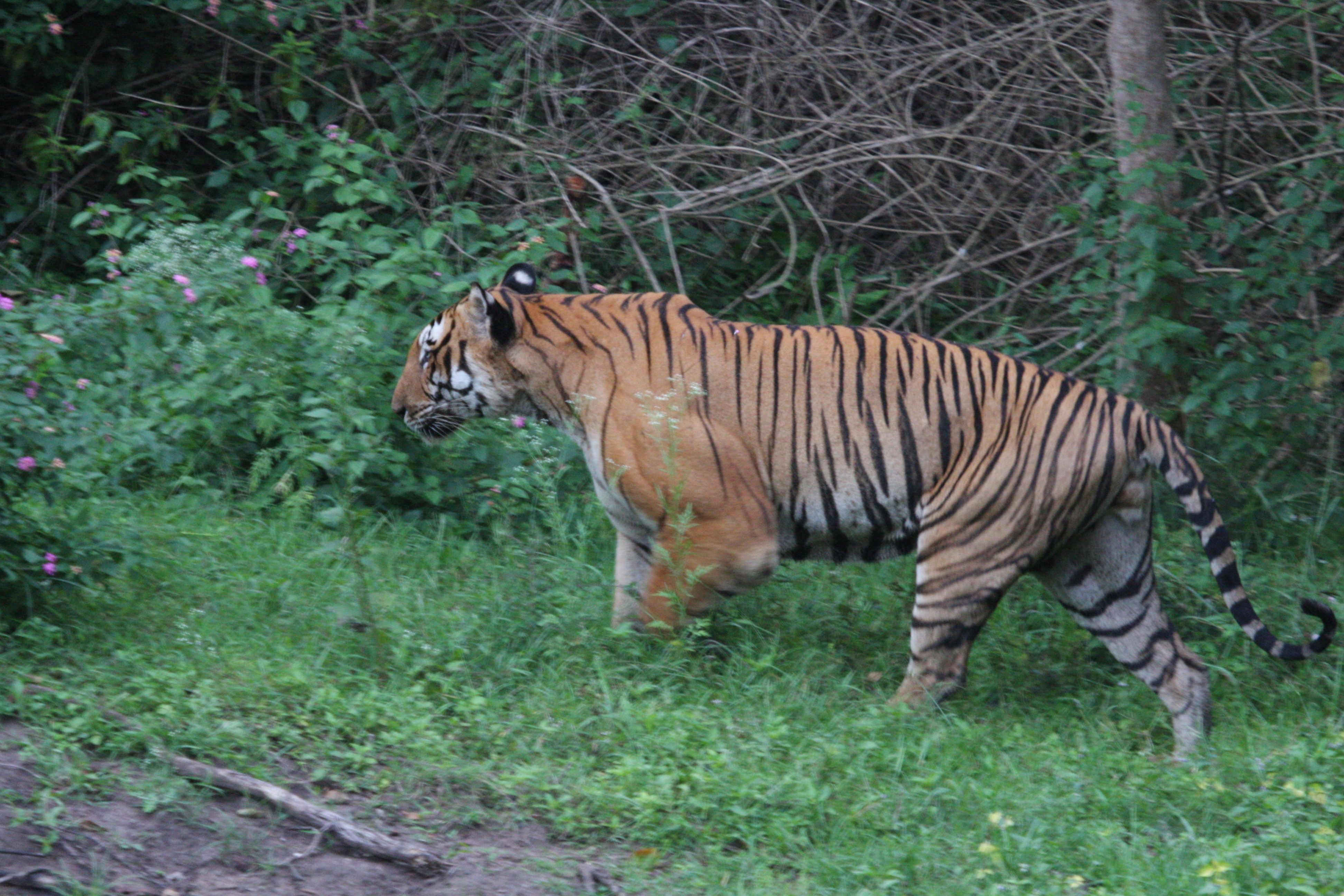
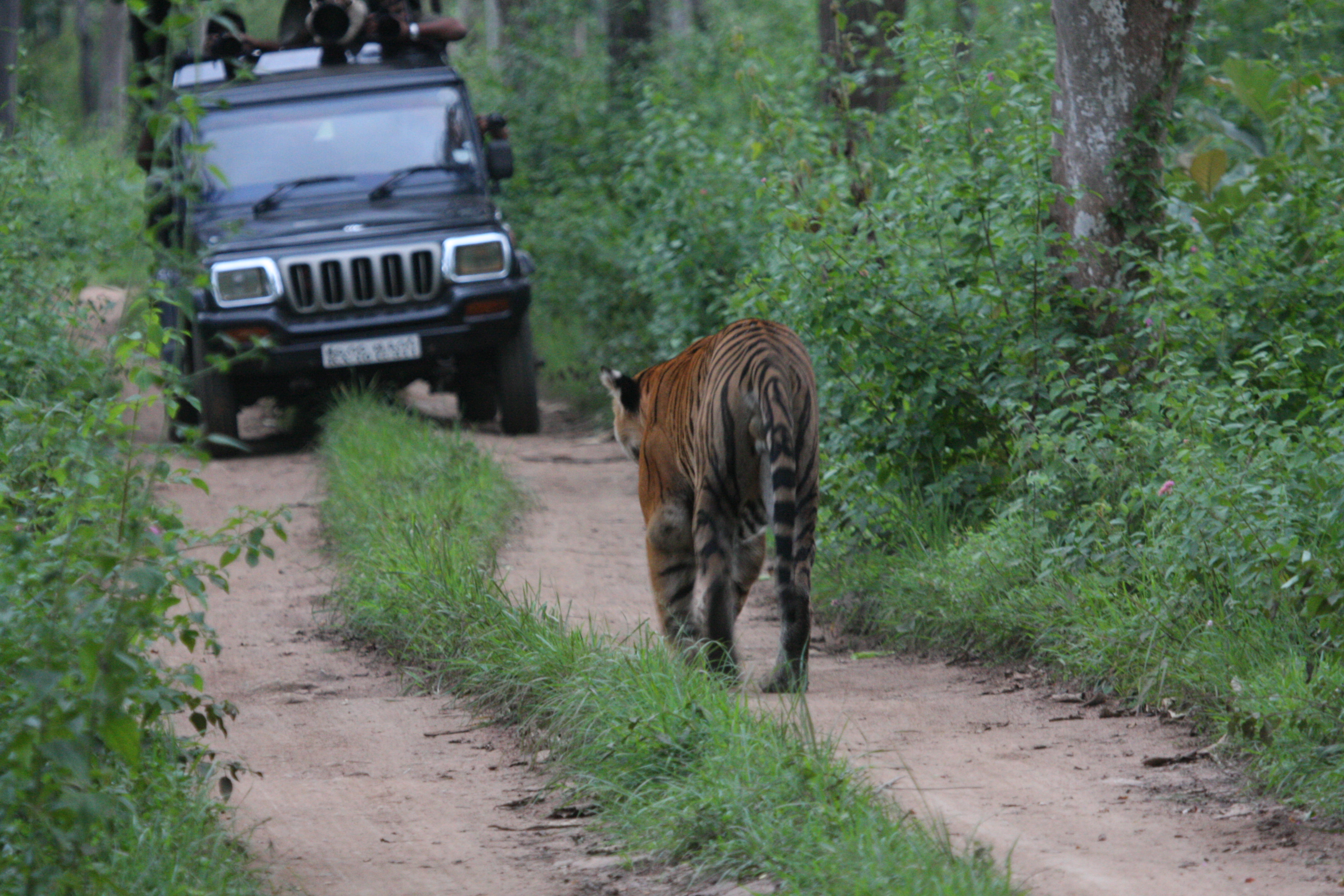
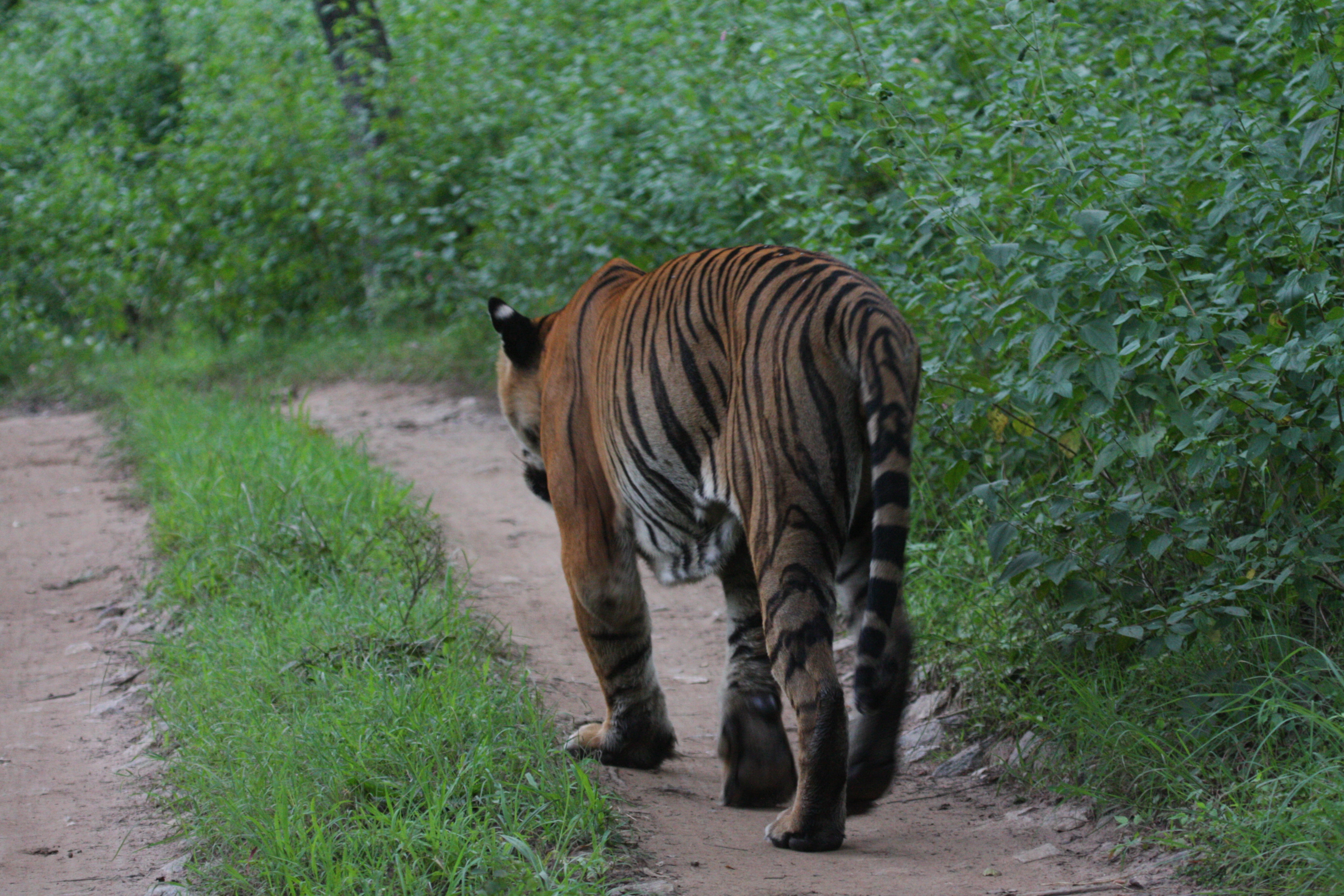
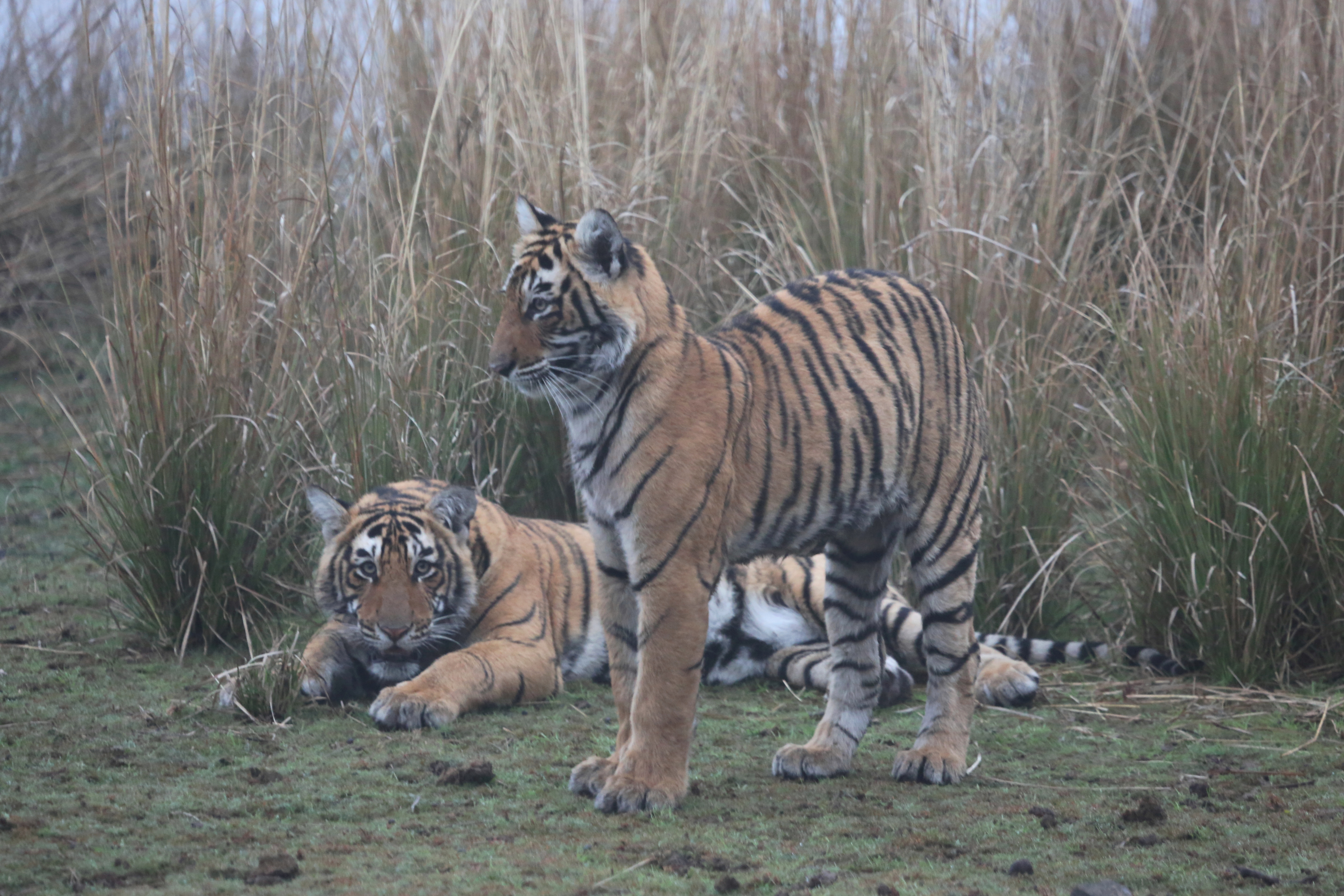
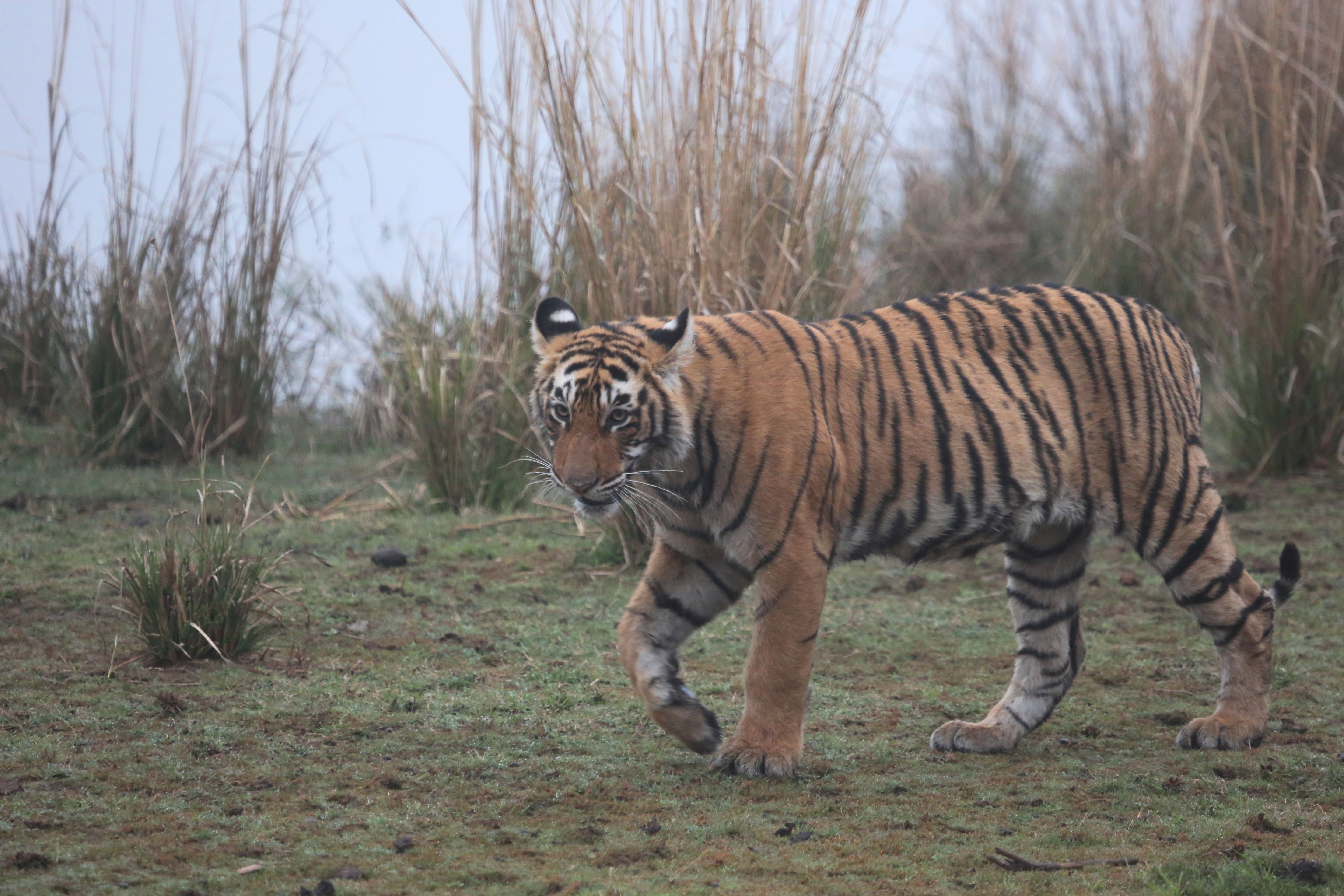
On crossing the Kaudia checkpost, the road winds through flat land for a few kilometres before it begins its ascent into the hills. The forest here is old growth Sal, with Rohini (Mallotus phillipinensis) and Hill glorybower (Clerodendrum infortunatum) among others in the understorey. A and I were being driven back along this road well after dark one evening when she caught fleeting sight of a large feline on the road ahead. Our driver Suraj caught sight of it a second later. With the Gypsy approaching, the cat nimbly stepped off the road and into the dense thickets. I had my eyes on the undergrowth on the far side and by the time I was alerted, all I could see were swaying branches with the cat out of sight. Suraj surmised that it was a leopard, but based on its size and behaviour, A felt she’d sighted her first wild tiger.

C44A1995

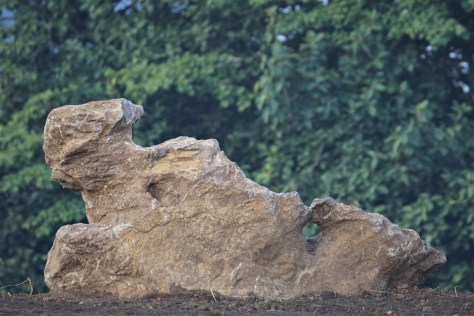
The Nandi stone!

K. Gudi/BRT Tiger Reserve: Sep ’16

Dates:                   2 – 5 Sep ’16

Camp:                   K. Gudi Wilderness Camp

Who:                     P

k-gudi-sep-16-612

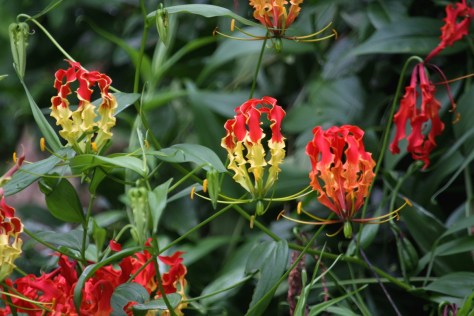
Glory Lilly (Gloriosa superba) by the roadside a short way from the camp

My kid P and I did three nights this time. The weather was cool with some spells of rain. Sightings were not particularly great as a result, but the forest was hauntingly beautiful, and straight out of a Grimm’s Fairy Tales movie set one particular morning, with a thick mist hanging over it.

k-gudi-sep-16-085

Brown fish owl, early in the morning

Visibility was poor due to luxuriant growth of Eupatorium Ageratina adenophora, Lantana Lantana camara and Bracken Pteridium aquilinum. These three weeds dominated the ground cover and it is very likely that they have had a deleterious effect on the herbivore population over the years. And this possibly explains why the large herds of gaur that were once plentiful in BRT are nowhere to be seen today. Elephants have become scarce too. The only consolation is that there is not much Parthenium hysterophorus . The post-monsoon clearing of vegetation by the track will not happen for another month. The undergrowth was tall enough to completely hide a leopard or sloth bear, making sightings possible only if the animal was on the track itself. Due to this reason, Durgur road, which is usually unfailingly productive on the way out (in the evenings), drew a blank this time.

k-gudi-sep-16-926

Another insidious plant that I should have noticed earlier but somehow hadn’t was the hemiparasitic Mistletoe Loranthus sp. It infested a majority of the Axlewood Anogeissus latifolia trees, leaching nutrients and water. I heard that it had almost completely decimated the Indian gooseberry Phyllanthus emblica trees.

k-gudi-sep-16-111

The darker leaves are from Mistletoe (Loranthus sp.), a hemi-parasite.

The birding was okayish, not too great. Grey wagtails had started to arrive a week back and were plentiful. I learnt to ID the vaguely squirrel-like call of the Orange-headed thrush. This call resonated frequently through the camp and the jungle as these birds were everywhere too. There is another call, a more frantic one, which is not quite as distinctive. I also got familiar with the Blue-bearded bee-eater’s call, given that a pair was constantly (and noisily) haunting the surroundings.

k-gudi-sep-16-142

Orange-headed thrush outside tent No. 7

I also puzzled over a call that sounded like the Stork-billed kingfisher’s except that it had four continuous notes in place of the usual two (or three). Rahul, an avid birder from Bangalore who was visiting indicated that this was the winter call of the Stork-billed kingfisher. Rajesh, my good friend, spotter extraordinaire and favourite driver was puzzled; he said he hadn’t seen this bird around.

k-gudi-sep-16-745

Jungle babblers behind the Gol Ghar. They are bold enough to hop right into the Gol Ghar looking for crumbs. Pic by P.

k-gudi-sep-16-402

This is a very common weed I have not been able to ID yet.

Naturalist Basavanna has shifted from Bandipur to K. Gudi and accompanied us on our drives (Narayan did too, for the first two days). He taught us to ID the call of the Drongo cuckoo. We were waiting by Anni kere when what superficially sounded like the Indian cuckoo’s call started up (except that this is not the season for the Indian cuckoo to call). And except that this was three notes up and one down, unlike the sing-song pitch of the Indian cuckoo’s.

At the same place, we also heard a repeated, drawn-out, shikra-like call which we were stumped by until Basavanna identified it as the Brown fish owl’s chick’s call.

k-gudi-sep-16-491

Jungle owlet. Pic by Rajesh.

k-gudi-sep-16-779

Indian blackbird in the camp

On day three, Rajesh suggested that we take a walk down the road towards the government school after lunch instead of wasting time lounging around in the tent (as he put it). We walked for a short distance until junior got too nervous to go any further – he had been rattled by the earlier sloth bear and leopard sightings around the tent. We saw an Oriental honey buzzard, a Blackbird, Blue-bearded bee-eaters, and on the way back, a Tawny-bellied babbler that showed itself clearly for quite a while, although while constantly flitting around and preventing Rajesh from getting a photograph. We also had a reasonable Rufous babbler sighting in the jungle later on.

k-gudi-sep-16-133

Radermachera xylocarpa outside tent No. 7. Commonly known as the Deer antler tree.

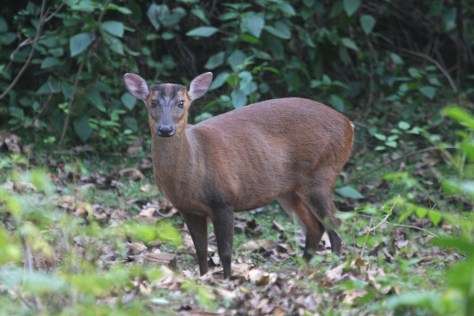
This was a trip full of tantalizingly close opportunities that never materialized. There were plenty of alarm calls, with none converting. On day 1, in the evening safari, we were drawn to Tiger Tank by persistent Muntjac alarm calls. The deer decamped, but a troop of langurs stationed there barked hysterically and persistently, accompanied by much leaping and branch shaking. They were clearly very excited. Rajesh, Basavanna and Narayan all craned their necks trying to get a fix on which side the langurs were focused on. Two opinions eventually emerged, one pointing away from the kere, and the other (Rajesh’s) pointing towards it. A quick discussion led to a consensus that the cat must have just crossed the road and passed in a direction away from the lake. And so off we went, looking for it elsewhere. Turned out that Rajesh’s suspicion was right. The tiger (which is what it was) was hidden right there, in the sea of Eupatorium between us and the lake. It emerged an hour and a half later and was seen and photographed by another group. Rajesh was especially disappointed that we had miscalculated.

k-gudi-sep-16-229

The long weekend brought a lot of traffic to the temple, further impacting the sightings.    Pic by P.

On day 3, in the evening safari, we ran into another loud and persistent series of calls. Somewhat midway between the barking deer’s and chital’s alarm call. Everyone promptly assumed it was one of these and an animated discussion ensued around where the cat possibly could be. We drove around a little trying to pinpoint direction. After a while, Rajesh smacked his forehead when he realized we were in fact listening to the Spot-bellied eagle owl’s call. Although he was equally excited at the prospect of locating the owl. We did try for a considerable time, but without success and the calls eventually died out.

k-gudi-sep-16-423

P (9 years old) clicked this pic of Durga Parameshwari, the camp elephant

I also missed an Indian flying squirrel sighting on day 3 in the evening. The squirrel calls had started just after junior and I had left the gol ghar post dinner. The pair was then sighted, for a period of fifteen minutes, as it progressively glided its way from the trees near the FRH to the jungle beyond the Gol Ghar. The next day I asked Basavanna why he didn’t give me a call, and his reply was that he would definitely have, had he known that I was interested in watching flying squirrels.

k-gudi-sep-16-487

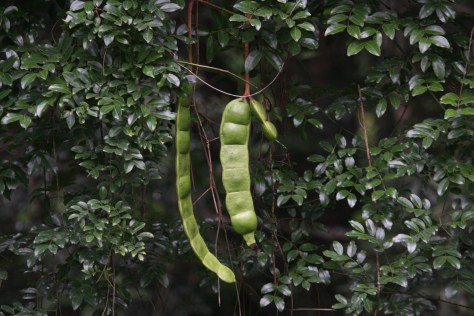
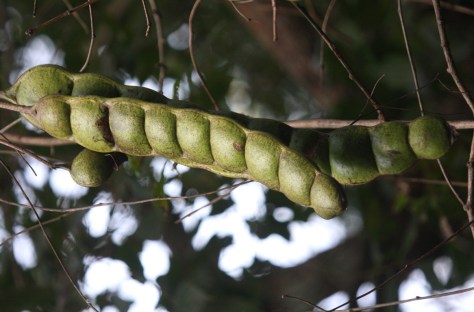
Chappekkai. Entada rheedii possibly. I had not realized earlier that the pods were growing off a climber and not off tree itself.

k-gudi-sep-16-951

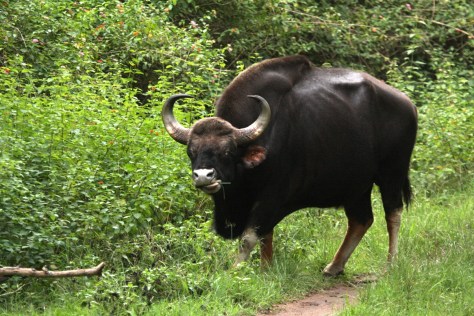
Gaur with calf. Pic by Basavanna.

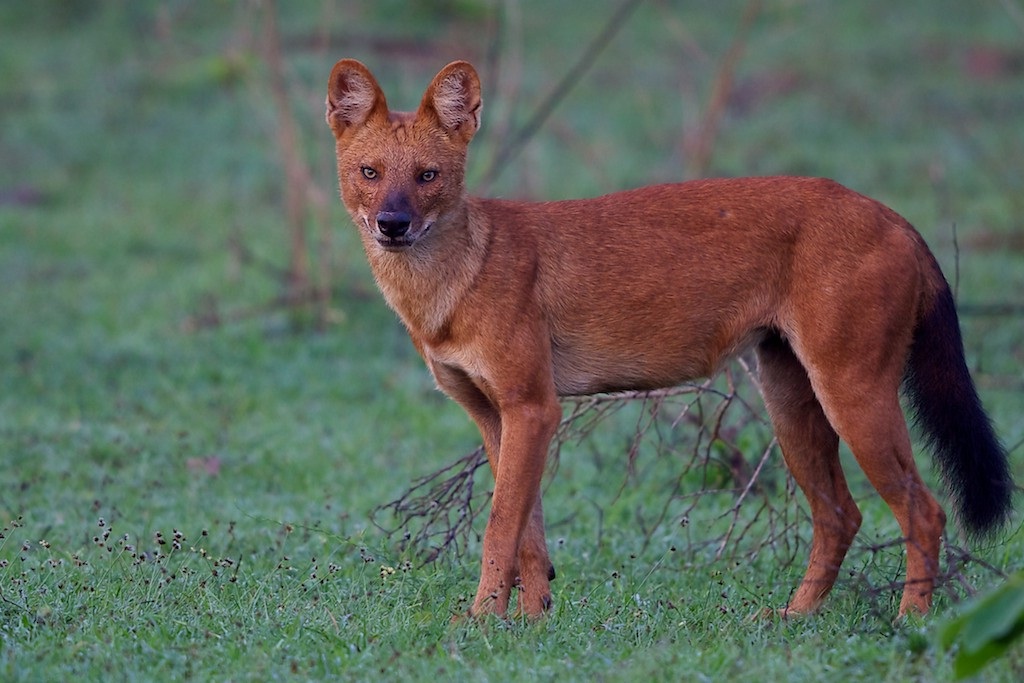
Junior and I also missed a dhole sighting on the drive back. We had driven down towards the temple on day 2 with Rajesh post breakfast, looking for a pack that frequented an area a little before the BR Hills settlement. (There was another pack frequenting the Navodaya checkpost side too that we also looked for in vain). We didn’t find the pack, and there was considerable disturbance from some tar-laying work that was underway. On my drive back to Bangalore on day 4, I did keep my eyes peeled while passing through the area, but saw nothing. Another guest who was in K. Gudi left around the same time and was a little behind me. He sighted the pack and Rajesh called me a little later, asking if I had too. He was surprised that I hadn’t – and the guest in question actually overtook me while we were having this conversation. We therefore couldn’t have been very far apart when he sighted the pack.

k-gudi-sep-16-606

Monitor lizard near the Navodaya checkpost

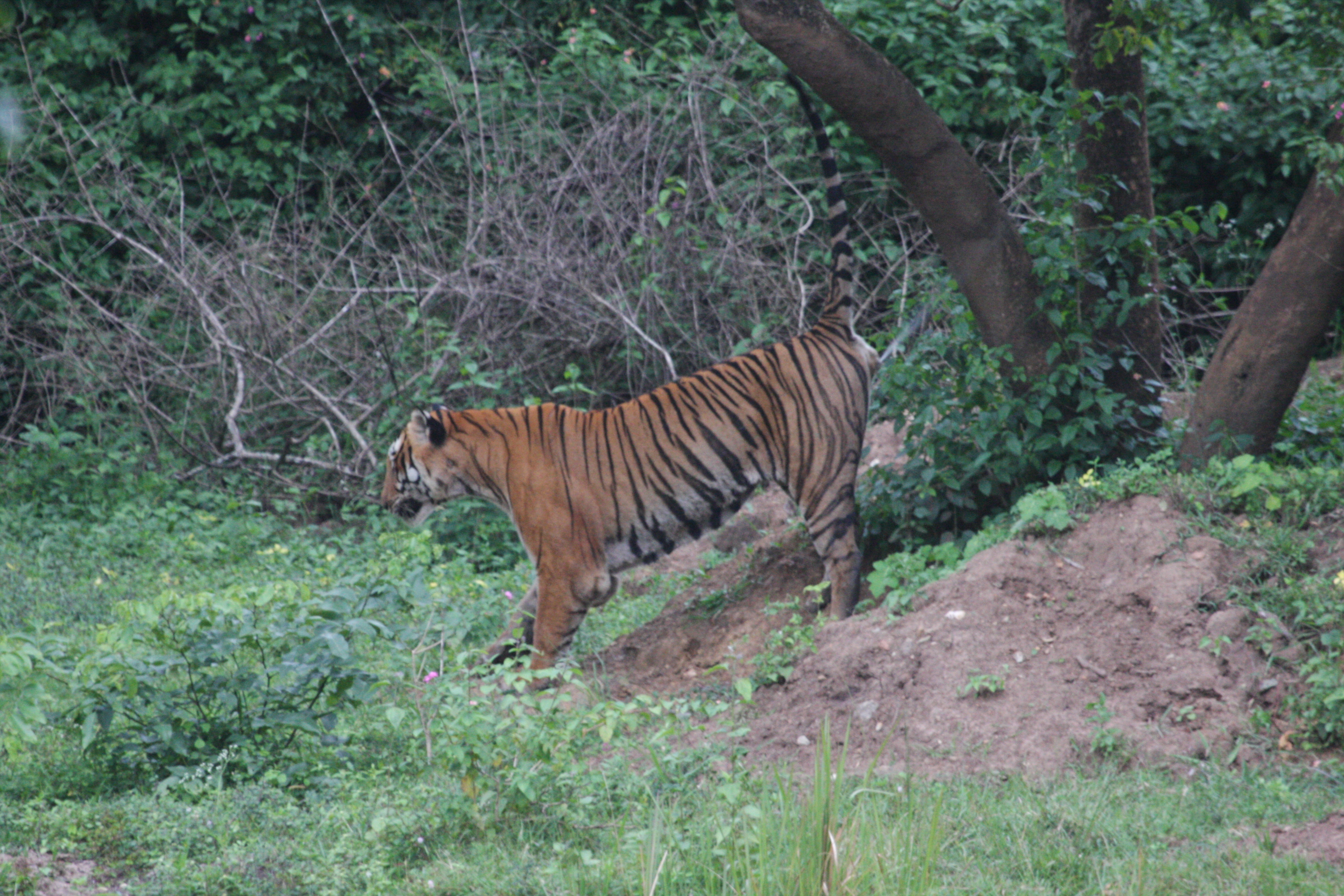
However these disappointments were not without compensating sightings. On the last safari, Rajesh and I saw a something on the track ahead. It saw us too, and went bounding away a short distance before leaping into the lantana. I thought it was a leopard, but Rajesh with his infinitely better eyesight shouted ‘tiger!’ No one else in the jeep caught the sighting. Arriving at the point, Rajesh’s opinion was confirmed by the pungent smell of scent marking. Basavanna had earlier remarked that the smell of the tiger’s scent-marking was very similar to the fragrance of cooked Basmati rice. I could instantly see why he said so. In any case, my tiger sighting account at BRT TR was finally opened, after 16 years of visits.

I should mention here that I have seen Rajesh use his sense of smell while tracking cats on safari more than once. He catches whiffs of kills, scat or the cat itself and makes as much use of this information as he does of pug marks or alarm calls. On this trip, he took another clever little masterclass while tracking a herd of elephants. There was no apparent sign on the road, but he determined that a herd had just passed. When I asked him how he knew, he pointed out that the grass on the track was uprooted in places. Try as I might, I couldn’t make this out. As is my wont, I dismissed his theory. Presently, dung appeared. And then spoor. And then the herd itself, in Anni kere. That’s the kind of tracker Rajesh is.

k-gudi-sep-16-866

The highlight of the trip was a superb Slaty-legged crake sighting near Anni kere on day 1. I remembered that in August 2014 I had seen this bird, though indistinctly, in Anni kere. I asked Prasad about it as soon as I landed there, and he confirmed that sightings were happening every once a while. The bird stepped out on the track in front of the jeep and bathed in a puddle for a good five minutes, until it was disturbed by another jeep approaching on the opposite side. Very clear view. The light was bad though, as it was around 6 PM by then.

k-gudi-sep-16-040

k-gudi-sep-16-041

I also had a fleeting sighting of a tree shrew on the track.

k-gudi-sep-16-012

Birds

  1. Black-hooded oriole
  2. Brahminy kite
  3. Bronzed drongo
  4. Brown fish owl
  5. Common tailorbird
  6. Crested serpent eagle
  7. Drongo cuckoo (calls)
  8. Green beeeater
  9. Hill myna
  10. Indian treepie
  11. Golden-fronted leaf bird
  12. Greater flameback
  13. Grey junglefowl
  14. Grey wagtail
  15. Indian blackbird
  16. Indian scimitar babbler (calls)
  17. Jungle babbler
  18. Jungle myna
  19. Jungle owlet
  20. Lesser flameback
  21. Long-tailed shrike
  22. Magpie robin
  23. Malabar parakeet
  24. Mountain imperial pigeon
  25. Orange-headed thrush
  26. Orange minivet
  27. Oriental honey buzzard
  28. Pied bushchat
  29. Plum-headed parakeet
  30. Puff-throated babbler (calls)
  31. Racket-tailed drongo
  32. Red spurfowl
  33. Red-vented bulbul
  34. Red-whiskered bulbul
  35. Rufous babbler
  36. Rufous woodpecker
  37. Small minivet
  38. (Southern?) coucal
  39. Spot-bellied eagle owl (calls)
  40. Spotted dove
  41. Streak-throated woodpecker
  42. Tawny-bellied babbler
  43. Tri-colored munia
  44. Vernal hanging parrot
  45. White-bellied drongo
  46. White-browed bulbul
  47. White-cheeked barbet
  48. White-throated kingfisher

Mammals/Reptiles

  1. Barking deer
  2. Chital
  3. Elephant
  4. Gaur
  5. Pond terrapin
  6. Malabar giant squirrel
  7. Monitor lizard
  8. Ruddy mongoose
  9. Sambar
  10. Southern tree shrew
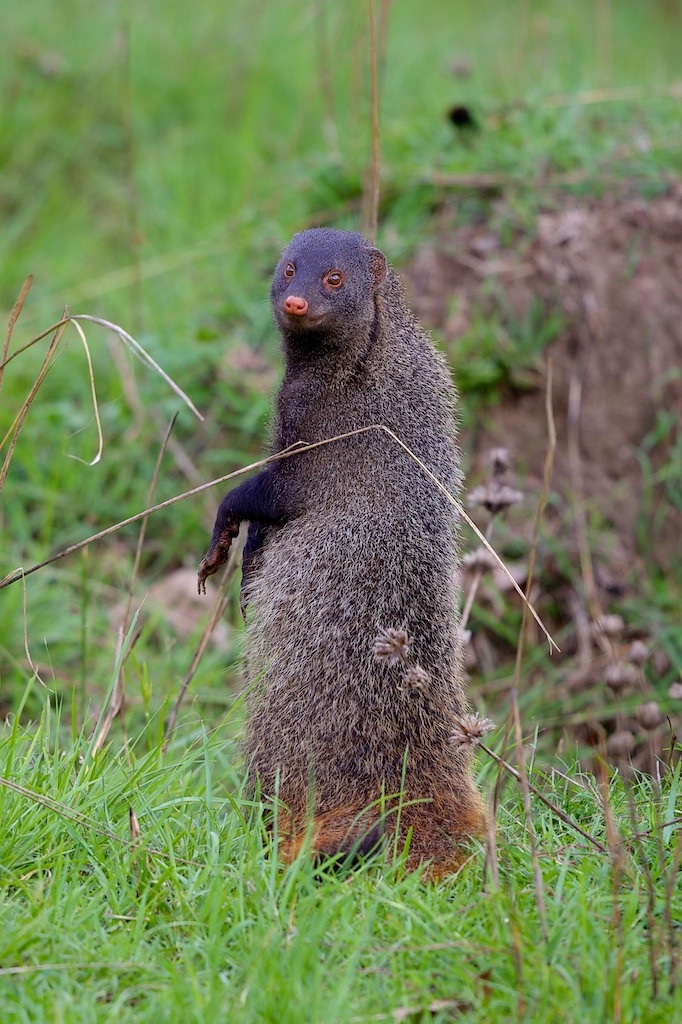
  11. Striped-necked mongoose
  12. Three-striped palm squirrel
  13. Tiger
  14. Tufted langur
  15. Wild pig

k-gudi-sep-16-797

Trip report: Bandipur, Apr ’16

Trip Report:        Bandipur National Park

Dates:                   14-17 Apr 2016

Camp:                   JLR Bandipur Safari Lodge

Who:                     Junior

The best trips are often the least planned ones. I got back from work on a Wednesday evening, checked JLR’s availability for K. Gudi for the next day, found it full, checked Bandipur next, found it available, and booked junior and myself for two nights. Given the quality of the sightings, we extended by another day and ended up returning to Bengaluru on Sunday.

Bengaluru was sweltering, allegedly having touched record highs of 41 and 42 degrees Celsius. Bandipur Safari lodge was cool enough because of the shade and the constant breeze, though it was warmish indoors. The safaris were also cool enough to be comfortable.

The Anogeissus latifolia trees were bare in some tracts and leaved in others, while Terminalia tomentosa were leaved throughout. Cassia fistula was in bloom, although reaching the terminus of its season – it must have been a truly awe-inspiring sight a couple of weeks back. The Gulmohar trees (outside the forest) were in riotous and spectacular bloom though. The lantana was dry and bare, though massed in thickets everywhere off the track.

The cicadas in the camp were deafening, especially near the front office and the Gol Ghar. While junior and I attempted to get pictures with my phone, the little fellows voided themselves by shooting sprays of clear liquid, often onto us.

20160416_130509

Lesser flameback. I was not birding very efficiently. I was aware of the calls most of the time though. Brahminy starlings, hoopoes, Coppersmith barbets, Magpie robins, Puff-throated babblers (in the mornings), Common ioras, Jungle babblers, Scimitar babblers, Purple sunbirds, Treepies and Indian cuckoos. And the Peacocks.

Bandipur Apr 16 1354

Dancing peacocks occurred frequently. This picture was clicked by 8-year old P.

Bandipur Apr 16 1302

Crested serpent eagle

Bandipur Apr 16 1662.JPG

Clash of the simians. Horseplay actually.

Bandipur Apr 16 1338.JPG

How does an elephant climb a 4-foot high embankment after a good scratch?

Three-month-old calf

Bandipur Apr 16 1384.JPG

We ran into this shy tusker in the evening safari on day 2. He withdrew into the lantana and stood watching us with utter suspicion. We in turn withdrew a short distance to coax him out, but he couldn’t bolster enough courage and we eventually gave up.

Bandipur Apr 16 1390

While we were driving back to the camp on the evening of day 3, this remarkable tusker appeared, rather suddenly. He walked at a quick-but-steady pace, crossed the highway with scarcely a break in stride or glance at the traffic he caused to suddenly halt, and disappeared in an apparent hurry on the other side. This was one traveling elephant with someplace to go.

Bandipur Apr 16 1716.JPG

We first spotted this leopard ambling on the edge of the lantana right by the highway, causing quite a traffic jam, and completely indifferent to the honking, gawking, screaming crowds. Eventually he cut into the lantana and disappeared. We turned into the forest to intercept him on the other side of the lantana patch. He crossed the track in front of three or four jeeps, quite unafraid. This picture was taken just before the crossing.

Bandipur Apr 16 1084

We had an interesting experience with this leopard in the evening safari of day 2. The safari was generally dry, except for the encounter with the shy tusker. We had spent a considerable amount of time waiting in vain by Ministerguthi Kolathi for a tigress with a triplet of cubs that were reported to be hidden in the bamboos by the kere. We left reluctantly when there was no more time left. Just before we reached the main road, we found this leopard crouched by the track, staring fixedly into the lantana.

Bandipur Apr 16 1404

 There were deer there, though we couldn’t see them. Except for a casual glance once, the leopard ignored us, even though we were some thirty or forty feet away.

Bandipur Apr 16 1430

This was a telling lesson in patience. After an interminable wait, the leopard rose ever so slowly, and stalked to the edge of the lantana. Just as he was about to launch into it, he was spotted and in an eruption of alarm calls, the chital scattered. The leopard bounded into the lantana after them and we lost contact with him.

Bandipur Apr 16 1445

Shortly after driving into the forest on our very first safari, we ran into a batch of langur alarm calls. A leopard was evidently lurking around. However we didn’t wait around as a couple of jeeps were seen clustered around Kolakmalli Katte hardly a hundred meters away. Prince was in attendance, sitting with his rear end submerged. We spent a short while with him until a short drizzle started up, driving him to seek cover. We came back a while later after the rain had stopped to spend some more time with him.

Bandipur Apr 16 1031

This sparkling encounter happened on the morning of day 3, at Moolapura kere. There was a short burst of alarm calls and then Prince strode down to the water’s edge, turned himself around, and lowered himself rump-first into the water. He stayed that way for ten minutes or so, before rising, scent-marking and then sauntering away down a nullah and out of sight.

Bandipur Apr 16 1447

Bandipur Apr 16 1511

Bandipur Apr 16 1611

Bandipur Apr 16 1631

Bandipur Apr 16 1638

Birds

  1. Ashy drongo
  2. Asian brown flycatcher
  3. Asian paradise flycatcher
  4. Black-hooded oriole (calls)
  5. Brahminy starling
  6. Brown shrike
  7. Changeable hawk eagle
  8. Common myna
  9. Coppersmith barbet
  10. Coucal (calls)
  11. Crested serpent eagle
  12. Indian cuckoo (calls)
  13. Indian treepie
  14. Lesser flameback
  15. Green barbet (calls)
  16. Grey junglefowl
  17. Hoopoe
  18. Indian robin
  19. Jungle babbler
  20. Jungle myna
  21. Magpie robin
  22. Peafowl
  23. Pied bushchat
  24. Pied kingfisher
  25. Plum-headed parakeet
  26. Puff-throated babbler (calls)
  27. Purple sunbird (calls)
  28. Purple-rumped sunbird
  29. Red vented bulbul
  30. Red whiskered bulbul
  31. Rose-ringed parakeet
  32. Scimitar babbler (calls)
  33. Spotted dove
  34. Streak-throated woodpecker
  35. White-breasted waterhen
  36. White-browed fantail
  37. White-throated kingfisher

Mammals

  1. Barking deer
  2. Bonnet macaque
  3. Chital
  4. Elephant
  5. Leopard
  6. Ruddy mongoose
  7. Sambar
  8. Stripe-necked mongoose
  9. Three-striped palm squirrel
  10. Tiger
  11. Tufted langur

Bandipur Apr 16 1180

Trip report: BRT TR, Dec 2015

Dates:                   30 Dec ’15 – 2 Jan ‘16

Camp:                   K. Gudi Wilderness Camp

Who:                     Drs. R & M, SS, kids P & V

IMG_3385

This is the way years should end and begin. Sparkling birding, leopard, slot bear and dhole sightings, and some satisfying tree-watching. I was in Kaziranga for last year’s start and in keeping with this sentiment, and when Dr R said he was booking K. Gudi, P and I followed suit. We were booked for two nights, but extended by another on impulse. I couldn’t get my usual tent – number 7 – and was given tent number 8 instead, the last one in the row.

The weather was excellent, with bracing cold mornings, warm afternoons and cool evenings.

Rajesh took to driving us down the main road towards Navodaya in the mornings at 6:30 AM before entering the safari routes, as a pack of dhole was frequenting the stretch. Tigers were also sighted here, though mainly at sunset. This is the same stretch on which P and I had our tiger near-miss the last time.

I made good progress with flora-watching this time. Lantana camara was virtually non-existent in the forest, having been supplanted by two weeds – the unpalatable and invasive Eupatorium Ageratina adenophora and the carcinogenic Bracken Pteridium aquilinum. These two dominated the undergrowth. Karthik, who is a sure-shot help with IDs when all else fails had helped me identify the former after my Wayanad trip. Narayan rummaged through a book to produce the latter ID.

Eupatorium Ageratina adenophora:

IMG_3038

Bracken Pteridium aquilinum:

IMG_2974

These were three commonly or occasionally seen plants I was unable to identify.

IMG_2992

(This plant below turned out to be a teak sapling, as Karthik pointed out!)

IMG_3467

(Below: Solanum spp. possibly Solanum viarum)

IMG_3604

The landscape was dominated by Kari mathi Terminalia tomentosa and Axlewood Anogeissus latifolia. Indian gooseberry Phyllanthus emblica trees were heavily laden with fruit. Belleric myrobalan Terminalia bellerica and FOTF Butea monosperma frequently occured. Rajesh, and naturalist Narayan who joined us on one safari taught me to identify East Indian rosewood Dalberigia latifolia, Chebulic myrobalan Terminalia chebula and Radermachera xylocarpa with its long pods. I need a little more work on the latter two to get comfortable with the identification.

We saw a tree with large, distinctive pods at one place and Narayan said it was colloquially called Chappakkai. I don’t have the ID, but did get a picture when Dr. R reminded me to. Karthik later helped me ID it as Entada spp., probably Entada rheedii.

IMG_3460

There were a few fine specimens of a species of strangler fig on Muradi road. This is a species I’ve seen elsewhere too. I’ll try and get it ID’d.

Birding in the camp was spectacular. Rusty-tailed flycatcher, Blue-capped rock thrush, Asian brown flycatcher, Bronzed and Ashy drongo, Golden-fronted leaf bird, Indian nuthatch, Black-hooded and Golden oriole and Vernal hanging parrot were commonly seen. I spotted a Black-naped oriole above tent no 3 or 4. Rajesh was very skeptical of this ID when I told him about it later as it is evidently rare in these parts. But I’m certain of what I saw. But then he was also skeptical of a Verditer flycatcher sighting I caught while on the first safari – and this was settled when we saw the bird again subsequently in the same place.

Streak-throated woodpecker, female:

IMG_3184

In the forest, there were great flocks of Common rosefinch and Tree pipit that rose from ground-level as the jeep approached and swarmed into the shrubbery (rosefinches) or the trees (pipits). While we were stopped to look one such flock of rosefinches, I noticed a bird that I have been unable to identify. The others didn’t see it, absorbed as they were with the rosefinches. This bird was very bulbul-like, with vertical streaks around the neck and breast and a rounded fork in the tail.

We saw the Square-tailed bulbul in its usual area and I subsequently cleared up my confusion about its ID vis a vis the Black bulbul’s. The Himalayan and SE Asian species is the Black bulbul Hypsipetes leucocephalus while the Western Ghats and Sri Lankan species is the Square-tailed bulbul Hypsipetes ganeesa.

Grey wagtail:

IMG_3424

I saw a bird which had a conical munia’s bill and what apparently was a crest. The distance was considerable and the light wasn’t great to be able to notice much else. I am not sure if the Crested bunting occurs in these hills. I saw similar features on a bird in Meghamalai WS too.

For the first time, I came away from BRT TR without having sighted a single Black eagle.

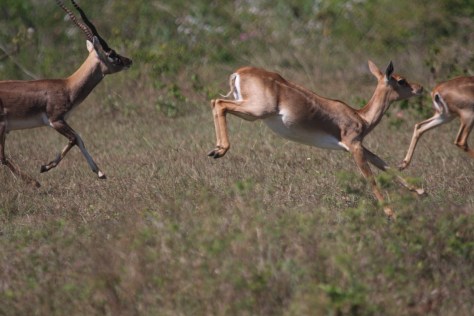
On day 1, after the morning safari, we descended down the Navodaya side and exited the forest to look for Bar-headed geese in a lake nearby. The geese were missing, apparently having been scared away by someone of devious intent who was uncomfortable with all the attention they were bringing to the place. We then drove into a nearby grassland area to look at a herd of blackbuck.

IMG_2758

On the first evening (30th), we ran into a leopard on Durgur road late in the evening. The light was fading and the cat leaped out of the fringes choked with Eupatorium, bounded up the road ahead of us, and back into the weeds on the other side. This road is usually productive late in the evenings. It and Anni kere are the two sighting hotspots in BRT TR, apart from the stretch of main road on the Navodaya side.

Incidentally, while back on my next visit, I intend to leave Bengaluru at 1:30 AM or so to arrive at the Navodaya checkpost at 6 AM. The drive up from there through the undisturbed forest in the early hour should yield tiger, dhole, gaur or elephant. GiK and I have a plan of coming back in March. We’ll try this then.

On the second day, in the morning, we saw a pack of dhole on the main road, descending on the Navodaya side at the start of the safari. The pack of four was missing on our way down, but were found cavorting merrily on the grassy verge on our way back. We spend a while watching them and they us. Rajesh mentioned one individual which apparently lives all by itself and hunts alone. The presence of the dhole in the area triggered muntjac calls a few times over the next couple of days.

The first day of the new year brought us a lovely Sloth bear sighting in the evening safari. A big male. Our frenetic response on spotting him unfortunately scared him away. Rajesh was disappointed as this individual was reputed to stay on the road once the initial shock wore away, providing long satisfying sightings. This was also the same individual who featured in a video I mentioned in my last post, standing up on his hind legs to scratch his back on a tree trunk.

The same evening brought an even more spectacular experience. We were relaxing on the plinth outside tent no 8 prior to dinner when a sambar belled in alarm from a short way down the slope. A leopard had been sighted by Nagesh on the main road shortly before, moving into this area. Dr. R and I descended some paces down the slope armed with torches and sure enough, the beams caught a leopard, female as it turned out, slinking across to our left, into a depression and out of sight. A while later we caught sight of her again as she moved to the right and out of sight. A langur watchman persisted with calling in alarm for a while after. This female was evidently resident around this area and had been seen frequently. One of the staff had lost his dog to a leopard near the safari entrance boom gate a few days back.

YN is a civil engineer from Mysore who had spent 3 months volunteering as a naturalist with JLR a while back. He was there and suggested we spend some time on the porch of the Biligiri log hut as the leopard was certain to pass by there. We waited for a while and then figured it would be easier to wait for the langur to call instead. Unfortunately for us, the langur failed us as they’d evidently vacated the area. The leopard passed without attention while we were at the gol ghar getting our dinners and chital calls started up from the area behind the tents. YN incidentally has a lovely picture of this individual shot in the same valley a month back.

IMG_3502

Birds

  1. Ashy drongo
  2. Asian brown flycatcher
  3. Asian fairy bluebird
  4. Asian paradise flycatcher
  5. Bay-backed shrike
  6. Black-hooded oriole
  7. Black-naped oriole
  8. Blue-capped rock thrush
  9. Blue-tailed beeeater
  10. Brahminy kite
  11. Bronzed drongo
  12. Brown shrike
  13. Brown-capped pigmy woodpecker
  14. Changeable hawk eagle
  15. Cinereous tit
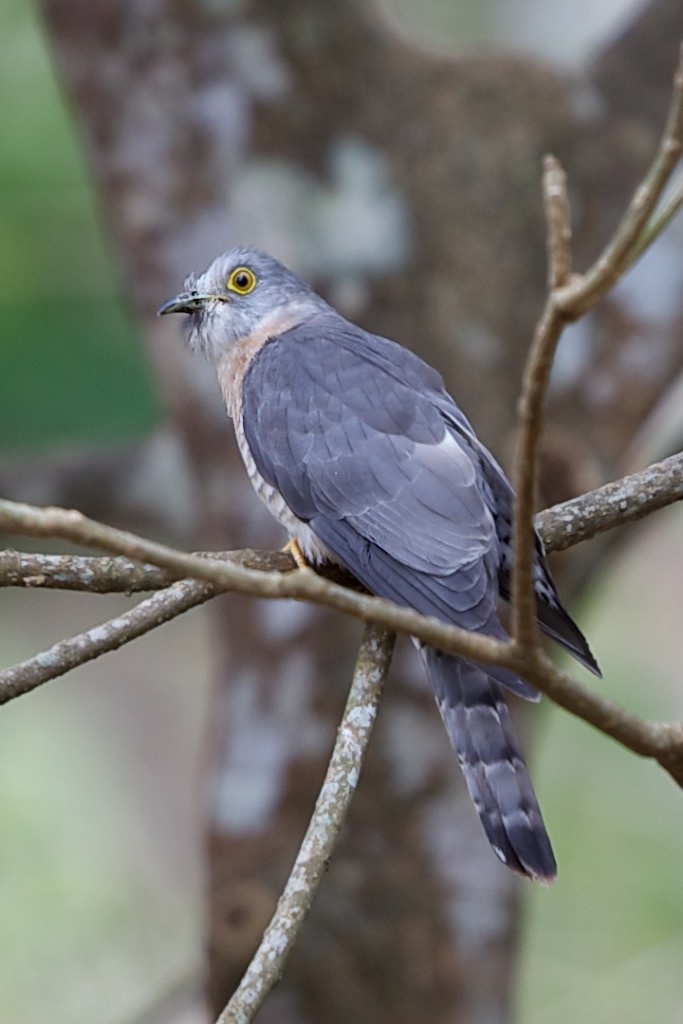
  16. Common hawk cuckoo
  17. Common iora
  18. Common myna
  19. Common rosefinch
  20. Common sandpiper
  21. Common teal
  22. Coppersmith barbet (calls)
  23. Crested bunting?
  24. Crested serpent eagle
  25. Unidentified flowerpecker
  26. Golden oriole
  27. Green beeeater
  28. Green imperial pigeon
  29. Hill myna
  30. Indian bushlark
  31. Indian robin
  32. Indian scops owl
  33. Indian treepie
  34. Golden-fronted leaf bird
  35. Greenish warbler
  36. Grey francolin (calls)
  37. Grey wagtail
  38. Hoopoe (calls)
  39. Indian scimitar babbler (calls)
  40. Jungle babbler
  41. Jungle myna
  42. Jungle owlet
  43. Lesser flameback
  44. Lesser yellownape
  45. Long-tailed shrike
  46. Magpie robin
  47. Malabar parakeet
  48. Orange minivet
  49. Oriental honey buzzard
  50. Paddyfield pipit
  51. Painted bush quail?
  52. Pied bushchat
  53. Plum-headed parakeet
  54. Puff-throated babbler (calls)
  55. Purple sunbird
  56. Racket-tailed drongo
  57. Red-rumped swallow
  58. Red spurfowl
  59. Red-vented bulbul
  60. Red-whiskered bulbul
  61. Rose-ringed parakeet
  62. Rufous babbler
  63. Rufous woodpecker
  64. Rusty-tailed flycatcher
  65. Small minivet
  66. (Southern?) coucal
  67. Spot-billed duck
  68. Spotted dove
  69. Streak-throated woodpecker
  70. Tawny-bellied babbler
  71. Tickell’s blue flycatcher
  72. Tree pipit
  73. Verditer flycatcher
  74. Vernal hanging parrot
  75. White-bellied drongo
  76. White-throated fantail
  77. White-browed wagtail
  78. White-cheeked barbet (calls)
  79. White-rumped munia
  80. White-throated kingfisher
  81. Yellow-footed green pigeon

Mammals/Reptiles

  1. Barking deer
  2. Blackbuck
  3. Bonnet macaque
  4. Chital
  5. Dhole
  6. Leopard
  7. Pond terrapin
  8. Malabar giant squirrel
  9. Sambar
  10. Sloth bear
  11. Southern flying lizard
  12. Three-striped palm squirrel
  13. Tufted langur
  14. Wild pig

Trip Report: Bandipur, Aug ’15

Trip Report:        Bandipur National Park

Dates:                   1-2 Aug 2015

Camp:                   JLR Bandipur Safari Lodge

This trip was done after a considerable gap – I’d not done anything after Sunderbans and that was months back. Other pre-occupations and procrastination also prevented me from posting on that trip and I’m not sure how much I remember of it anymore. My sister’s family had similarly gone for a long while now without any jungle visit and so we decide to take this weekend off. The two days afforded us just two safaris.

The weather was alright, cool without rain. The lantana had grown right upto the verges though, and visibility was poor in most places. It will now be cleared only after the monsoon I guess. Bomma drove us this time, and he is a magician although one who doesn’t speak very much.

The birding was not great, and we did not expect it to be. We didn’t make particularly strenuous efforts to bird-watch either.

The first safari puttered along unremarkably until we came across one of the safari vans stuck in slush. The entire van-load of chattering tourists and bawling kids was out by the roadside, while my old friend Pradeep attempted to rev the vehicle out of the mess. We waited awhile to help push, but were not able to rock in cadence sufficiently to tip the van out. Giving up, we moved on while the van-load waited for someone who’d been called.

Shortly after this, we ran into a herd of elephants first, and then into an impressive tusker by the roadside. This was one edgy elephant, going back and forth, clearly nervous about our presence and not knowing what to do about it. He didn’t show any aggression though so no charge, mock or otherwise.

Bandipur Aug 15 043

Bomma then received news of a tiger sighting in progress at Daid katte. I’m not sure that transliteration of the pronounced name spells right. We sped to the lake, to find five or so vehicles lined up, and an old male just having finished his dip. He rose out of the water just as we maneuvered into position, sprayed a tree and disappeared into the jungle.

Bandipur Aug 15 067

Everyone dispersed and so did we. Bomma said nothing, but took a route on which there was no one else until he stopped by another kere, this one called Venkatappana pala. He thought the tiger was likely to traverse by this lake and asked everyone to keep still. He’d hardy finished his sentence when a lone langur atop a nearby tree set up a hysterical alarm. A second later the tiger stepped into view, not far from us.

Bandipur Aug 15 076

A second jeep had meanwhile materialized behind us, and both jeeps backed up while the tiger walked nonchalantly, cutting across to step onto the road between the jeeps. Unfortunately behind us. He completely ignored our presence, and strode up the road, with both jeeps backing up in front of, and behind him.

Bandipur Aug 15 126

We followed him for a while before he stepped off the road and into the jungle.  This was possibly the closest I’ve seen a tiger pass by in South India – he was about fifteen feet away from where I sat as he passed.

Bandipur Aug 15 114

The morning’s safari was a quiet one, and I spend most of it looking at the Big Five – Kari mathi (Terminalia tomentosa), teak (Tectona grandis), axlewood (Anogeissus latifolia), FOTF (Butea monosperma), and Indian gooseberry (Phyllanthus emblica).

That tree in Bandipur which I am unable to ID continues to haunt me (I had mentioned it in a previous post). It is called Jaldha mara or Dhoopa locally. I checked with Karthik and with Nagendra (Kabini naturalist Ravi’s brother who is in Bandipur). My inadequate and possibly faulty description made it tough for them to figure out what I was seeing. Ailanthus malabarica and Vateria indica were suggested, but this seems to be neither.

Bandipur Aug 15 046

Bandipur Aug 15 048

Birds

  1. Asian paradise flycatcher
  2. Brahminy starling
  3. Brown shrike
  4. Changeable hawk eagle
  5. Coucal (calls)
  6. Crested serpent eagle
  7. Flameback (Lesser?)
  8. Green barbet
  9. Green bee-eater
  10. Grey junglefowl
  11. Indian blackbird
  12. Indian robin
  13. Jungle babbler
  14. Painted bush quail
  15. Jungle myna
  16. Magpie robin
  17. Malabar parakeet
  18. Peafowl
  19. Pied bushchat
  20. Pied kingfisher
  21. Pipit (species not recognized)
  22. Plum-headed parakeet
  23. Puff-throated babbler (calls)
  24. Purple-rumped sunbird
  25. Red vented bulbul
  26. Red whiskered bulbul
  27. Rose-ringed parakeet
  28. Spotted dove
  29. Spotted owlet
  30. White-bellied drongo
  31. White-breasted waterhen
  32. White-browed fantail
  33. White-throated kingfisher

Mammals

  1. Barking deer
  2. Bonnet macaque
  3. Chital
  4. Elephant
  5. Gaur
  6. Malabar giant squirrel
  7. Sambar
  8. Stripe-necked mongoose
  9. Three-striped palm squirrel
  10. Tiger
  11. Tufted langur

Trip Report: Corbett Tiger Reserve, Apr 2015

Trip:       Corbett Tiger Reserve

Camp:   Sultan FRH (2 nights), Gairal FRH (1 night)

Dates:   1 Apr – 6 Apr ‘15

Who:     VV, KB and my seven year old son

Corbett Apr 15 5 264This is going to be another long post. I guess it is deserved, considering that this was the best wildlife trip I’ve ever done, in terms of sheer sighting productivity.

VV and I had planned this trip well in advance and we were eager to get bookings at the famed Dhikala FRH. And VV had coordinated with Pavan Puri to put this trip together. Despite three people being poised to click exactly when booking opened 45 days in advance, we could not get Dhikala and had to be content with Sultan for the first two nights and Gairal for the third. I was contemplating canceling the trip and retrying our luck with Dhikala, but VV persuaded me to stick with the plan. The experience turned out to be completely unexpected (at least as far as we were concerned).

Dhikala was big and crowded, though there was the apparent advantage of being right where the sightings were (and thereby allowing guests to hang around the chaur until lockdown time at 6:30 PM, unlike guests staying at Sarapduli, Gairal, Sultan or one of the other places who needed to leave at 5 PM or whenever to reach their lodgings before 6:30 PM). Despite this, I would not like to stay at Dhikala when I go back. Sultan is the place to stay at.

Sultan was spectacular, nestling amidst a lovely stand of Sal, with just two rooms and no electric fencing (or electricity for that matter). The moon was nearly full at this time and the forest was expectedly ethereal in the moonlight. Chital alarm calls were heard around the FRH after dark. In addition to the persistent calls of nightjar – possibly Grey or Large-tailed – and of the Brown hawk owl.

Gairal FRH is much larger with nine rooms. It overlooks the Ramganga, but there is not much point to this as access to the river is cut off by electric fencing. Again not a patch on Sultan, in my admittedly dubious opinion.

This trip was restricted to the Dhikala safari zone. VV pointed out that the Bijrani safari zone was also worth exploration, and our quiet but competent driver Harish Patwal added that the Malani FRH there was a fair equivalent of Sultan. So those are the places I’ll head to the next time.

The weather at this time of year was interesting. It rained quite a bit. Mornings and evenings were cold while the rest of the day was hot. Nights were cool enough to sleep pleasantly through despite the absence of fans.

Corbett has a unique arrangement in terms of timings. Vehicles are allowed to leave the FRHs at 6 AM and have to be back by 6:30 PM. There is a lock-down in effect between 11 AM and 2:30 PM. All visitors have to be confined to one of the camps, or to one of the two watchtowers around Dhikala during this slot. We spent two of the four days on one of the watchtowers near Dhikala (the one near Sambar road I think) during the lockdown hours. The other two we spent doing lazy lunches at Dhikala and Gairal.

In terms of itinerary, we had initially planned to fly to Delhi and take the overnight train from there to Ramnagar. After some consideration, we changed our minds, advanced our air tickets to reach Delhi by 3 PM, and covered the 250 kms to Ramnagar by road, reaching there at 11:30 PM thanks to peak-time traffic in Delhi. On the way back, we took the train to Delhi and then took the morning flights out.

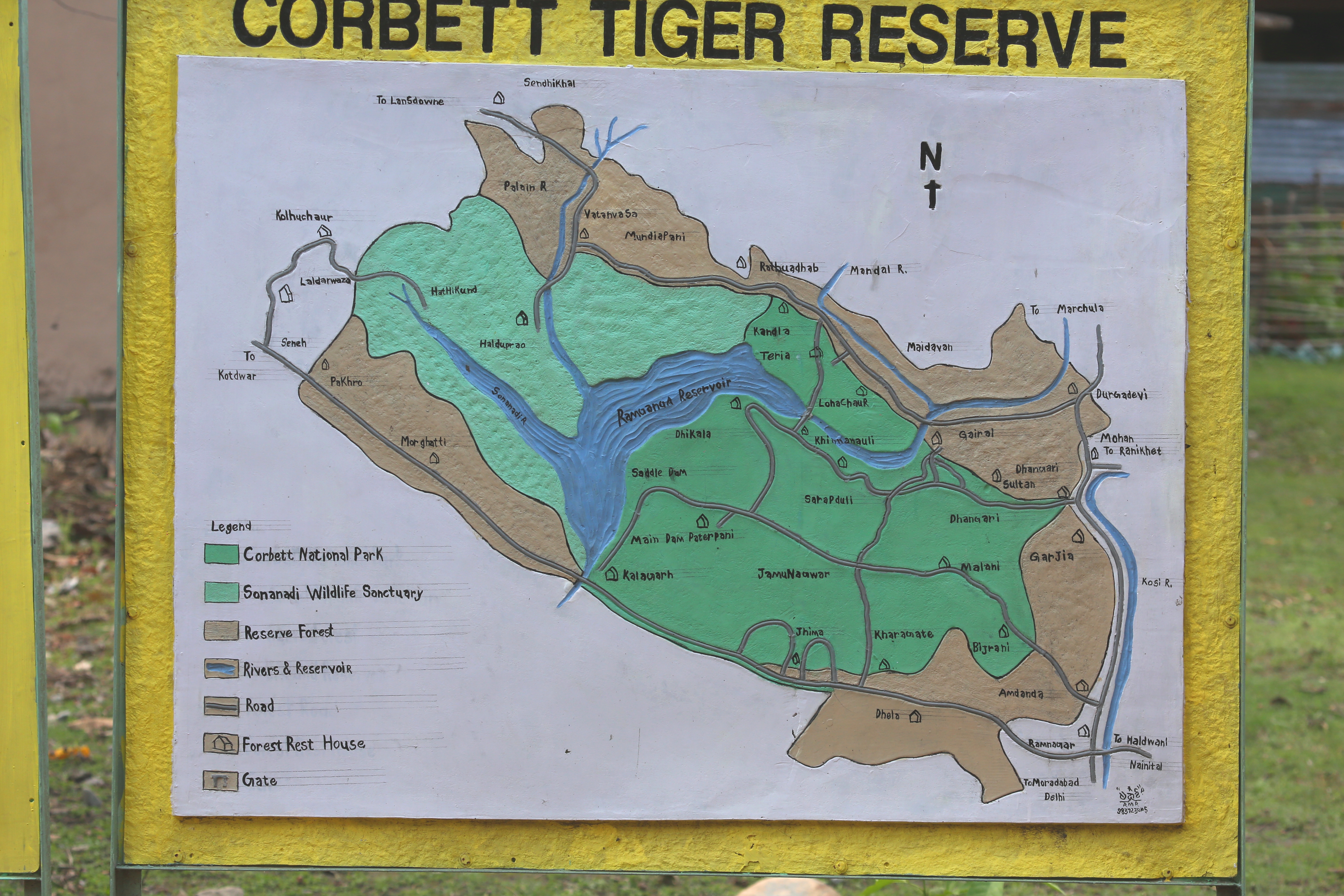
Some distances. The Dhangari gate is the gateway into the Dhikala safari zone and this is 18 kms from Ramnagar. Unless I got this wrong, Sultan is 6 kms from this gate, Gairal 15, and Dhikala 31 kms away.

Flora Corbett Apr 15 5 003 I spent quite some effort in identifying commonly seen trees and plants on this trip. It was a useful way to keep engaged whilst on the drive and between bird or mammal sightings. Time I’d otherwise have squandered away dreaming.

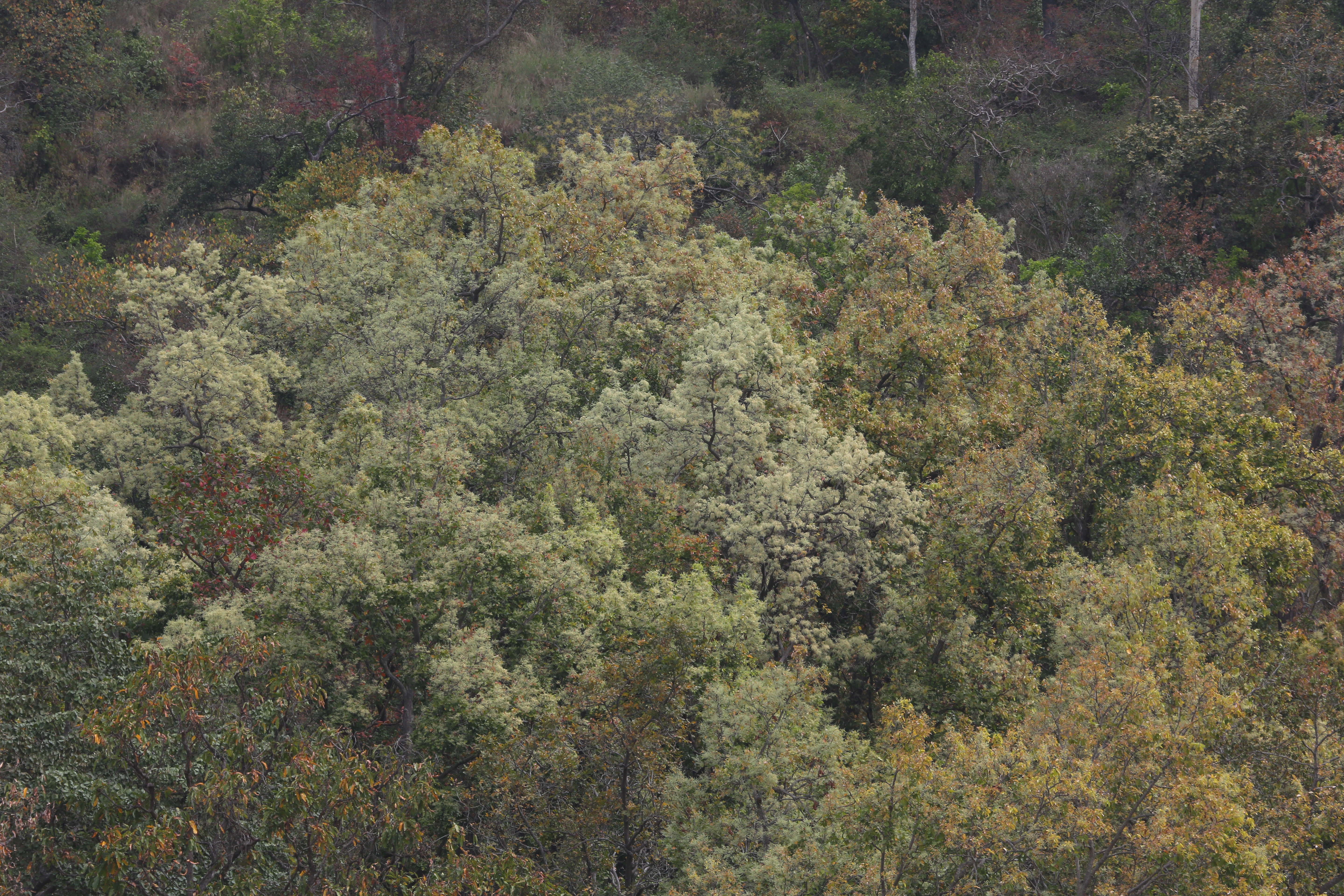
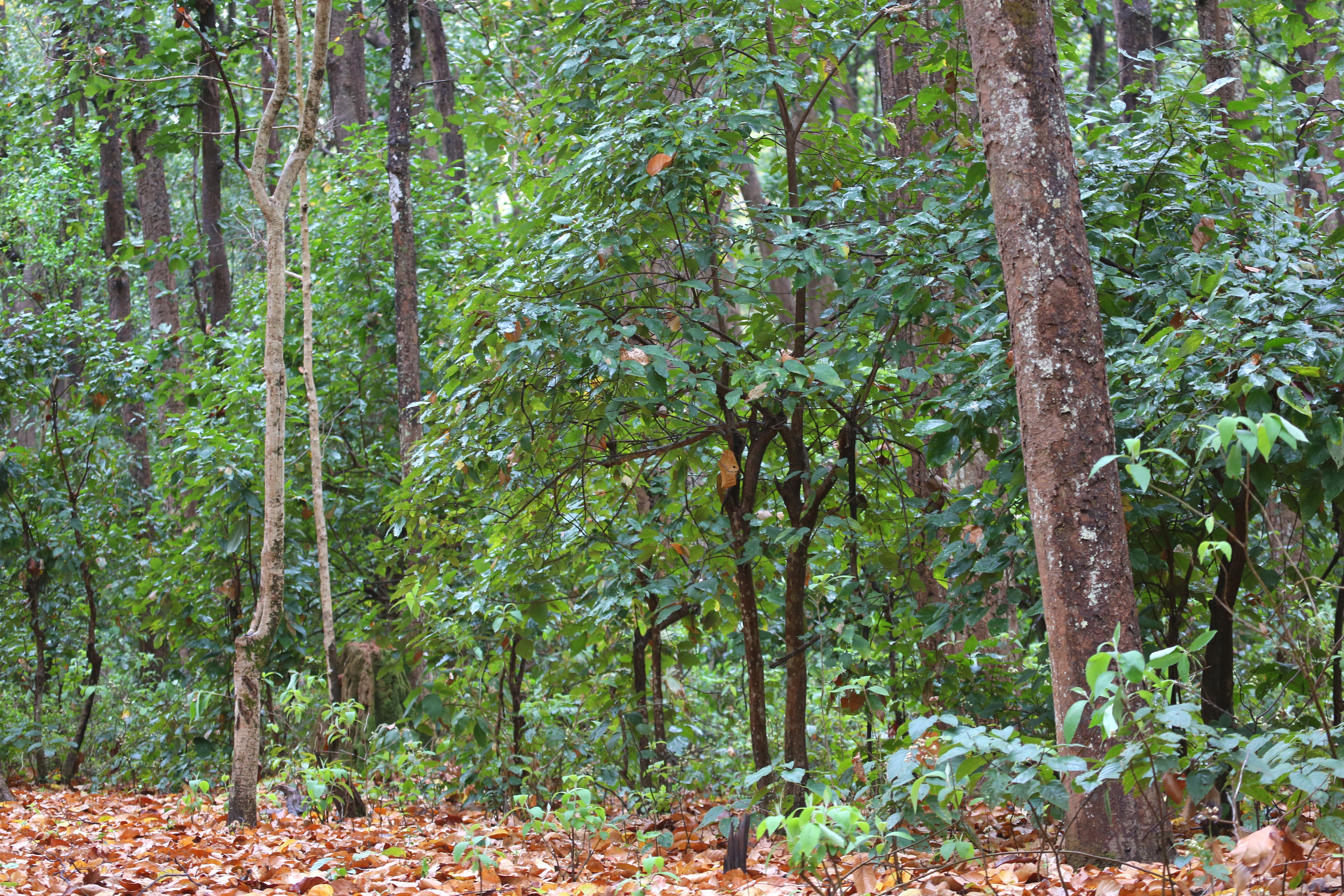
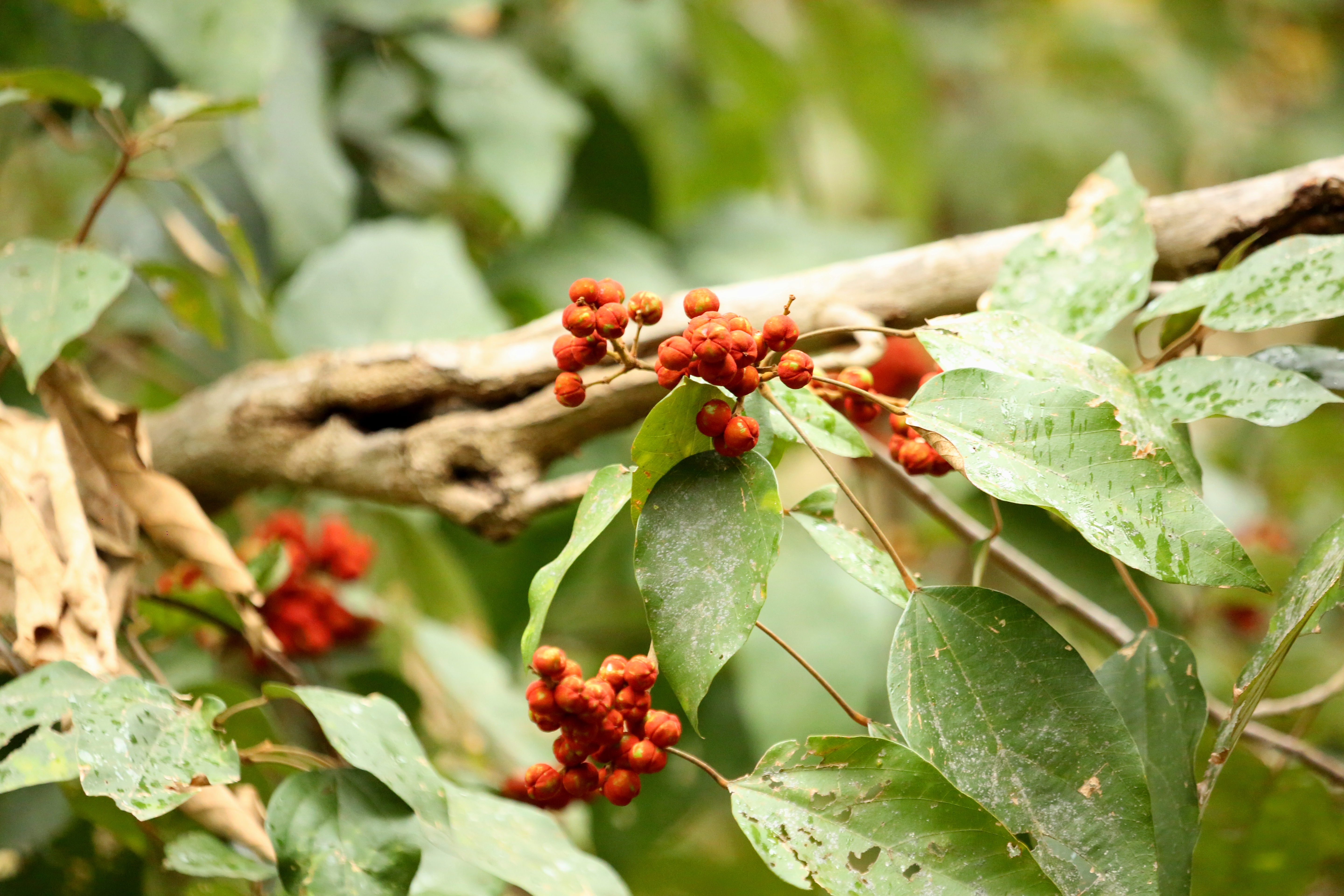
The landscape of Corbett TR is dominated by the Sal tree (Shorea robusta) to the extent of 73%. At this time of year, the trees were flowering and entire hillsides appeared dusted over with greenish white powder, contrasting with the dark green of the ribbed leaves below. Corbett Apr 15 3 124The Sal trees were also shedding heavily and the ground in many places was carpeted with rotting leaf litter. Corbett Apr 15 5 012In some stands of Sal, Rohini (Mallotus phillipinensis) grew in profusion in the understory. This is a diminutive tree bearing clusters of small, red fruit that find use in producing red dye and sindoor. The very picturesque last kilometer of road before Dhikala was reached boasted of plenty of these trees. Corbett Apr 15 4 027 Corbett Apr 15 1 056Terminalia elliptica, our Kari Mathi, was fairly common too. And I could occasionally spot Axlewood (Anogeissus latifolia). In some places, particularly around Dhikala, Indian gooseberry (Phyllanthus emblica) occurred.

In several areas, Haldu (Haldina cordifolia) grew in profusion, with many specimens having attained impressive girths. Corbett Apr 15 3 338 Alongside the Ramganga, Jamun (Syzygium cumini) was occasionally seen. Corbett Apr 15 4 017 The Kusum tree (Schleichera oleosa) stood out at this time of year as its newly sprouted leaves were red in colour, the contrast rendering it rather pretty. Corbett Apr 15 1 013 At one of the stream crossings, Harish pointed out a few specimens of Chir pine (Pinus roxburghii). This is the lone coniferous species that occurs in Corbett. Corbett Apr 15 1 006 In terms of plants, the understory in the Sal forests was dominated by two species for most part – Hill glorybower (Clerodendrum infortunatum) and Lantana camara. Both were flowering in profusion, the former decked out in little, five-petaled white flowers, each sprouting four tendrilly stamens. And the latter blossoming in a riot of white, orange, yellow and violet.

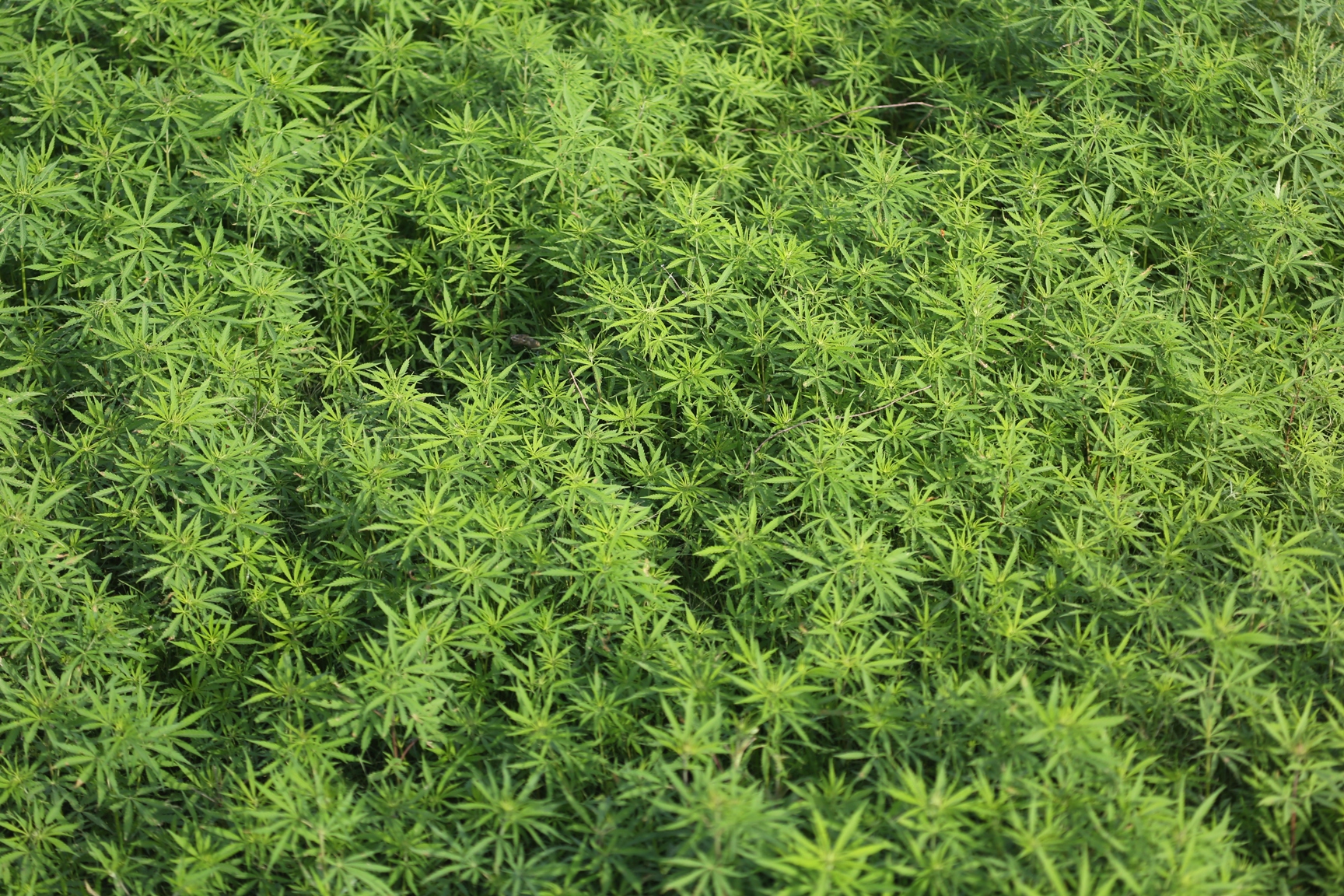
Clerodendrum infortunatum: Corbett Apr 15 1 002 The many hues of Lantana camara: Corbett Apr 15 5 026 Ageratum conyzoides, another exotic locally known as baansila also bore little white flowers and was very common. Corbett Apr 15 5 052 The Curry plant (Murraya koenigii) was seen in abundance, especially around Dhikala. The stretch of road known as Tunbhoji contains whole stretches of Curry plants. Corbett Apr 15 3 258 Colebrookea oppositifolia with its worm-like inflorescence was abundant in some places. Corbett Apr 15 3 012 In many areas Cannabis, possibly Cannabis sativa covered the ground in profusion. Corbett Apr 15 3 331 Ferns are commonly met with in the Sal forests. This one below is possibly Adiantum sp. Corbett Apr 15 4 013 And this one is possibly Pteris sp. Corbett Apr 15 4 007 These four species I am yet to identify – all four were very common.

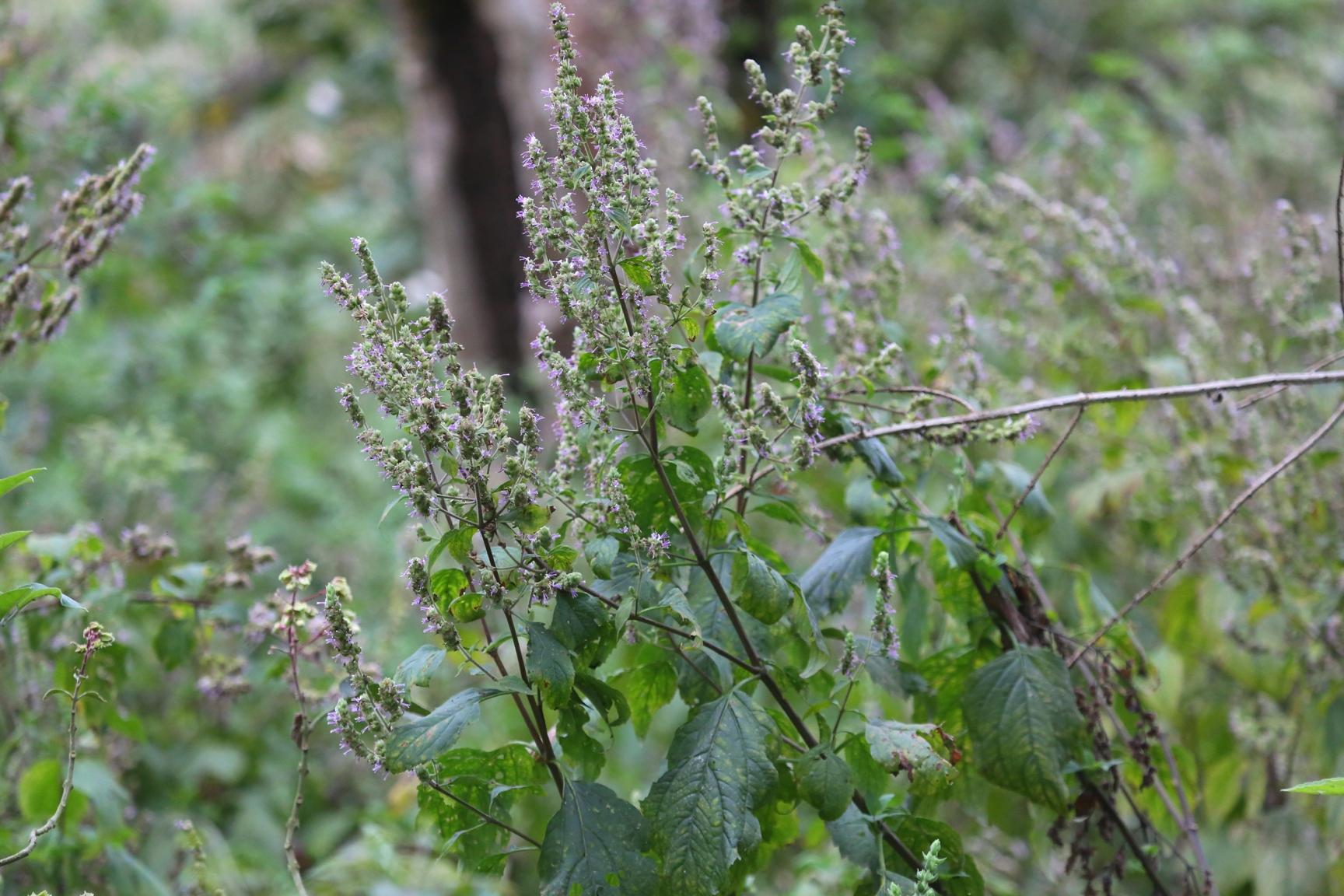
This plant is locally known as Tun. It is laden with clusters of green berries, some turning purple. A track around Dhikala (which connects with the famed Thandi sadak) is lined with this species and is called Tunbhoji. Corbett Apr 15 4 052 This species of plant growing to around a foot in height packed the verges in many places. Harish identified it as Anjeer. Corbett Apr 15 4 073 Another plant very commonly seen, and most often in a tattered condition and sprouting buds. Perhaps it is Pogostemon amaranthoides, which is said to occur in Corbett TR. Corbett Apr 15 5 015 This is a very common concomitant of Baansila – Ageratum conyzoides. It has little lavender flowers which are similar to those of Ageratum. Harish maintained that it was another variant of the same species, but that is quite evidently not the case. The plant itself is much smaller, and so are the leaves. They are reminiscent of mint leaves. The specimen in this picture below has been drenched in rain. Corbett Apr 15 4 078 Birding It would be an understatement to say that birding in Corbett is breathtaking. Most wildlife spots boast of somewhere under 300 bird species in my experience. Corbett boasts of 600. Unless this claim is inflated. I exceeded a species count of 100 for the very first time, with around 30 lifers thrown in. And this despite the fact that we were not exactly birding with a vengeance – we let a bunch of sightings go unidentified. It did help that that VV was fairly expert at the local avifauna.

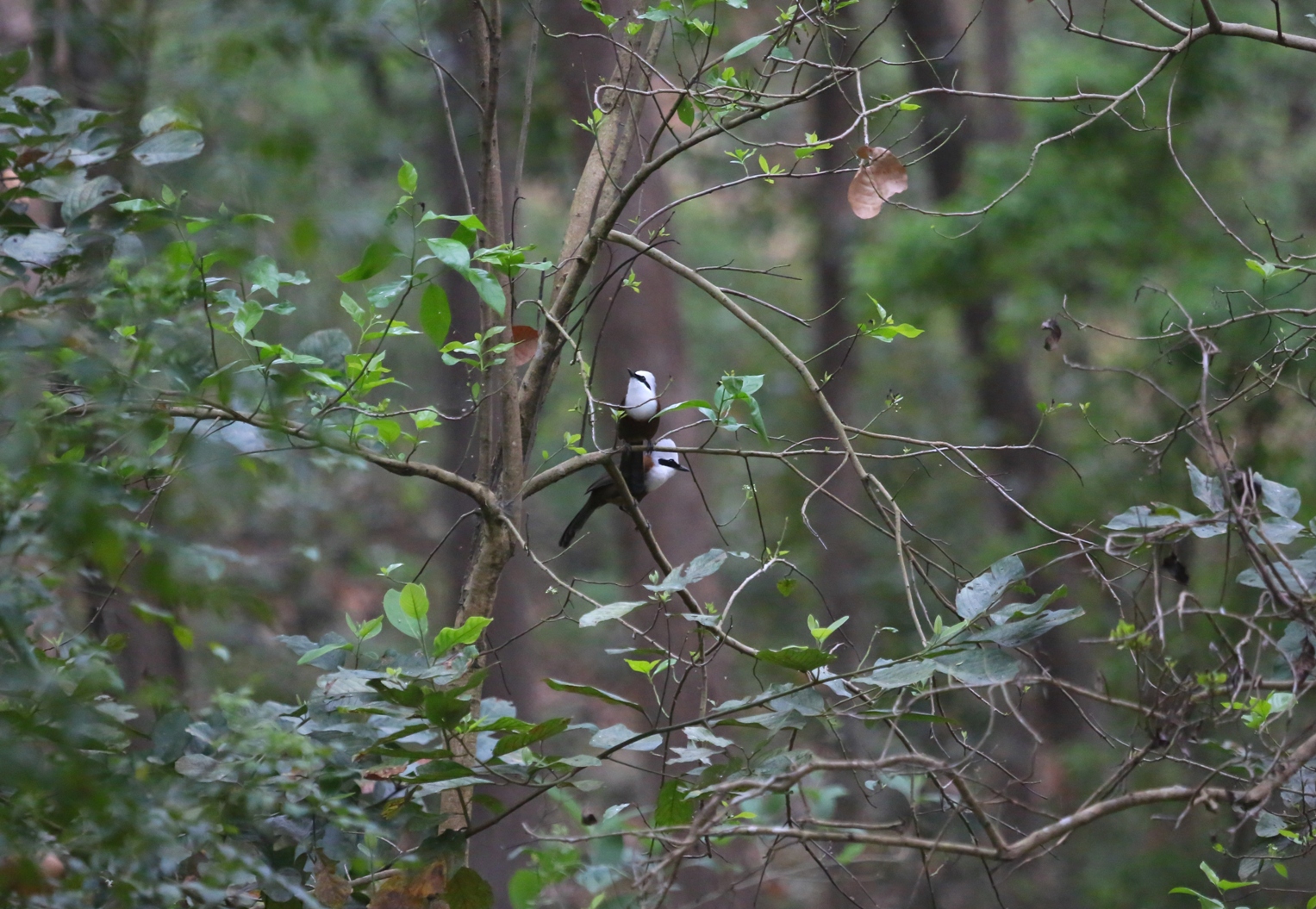
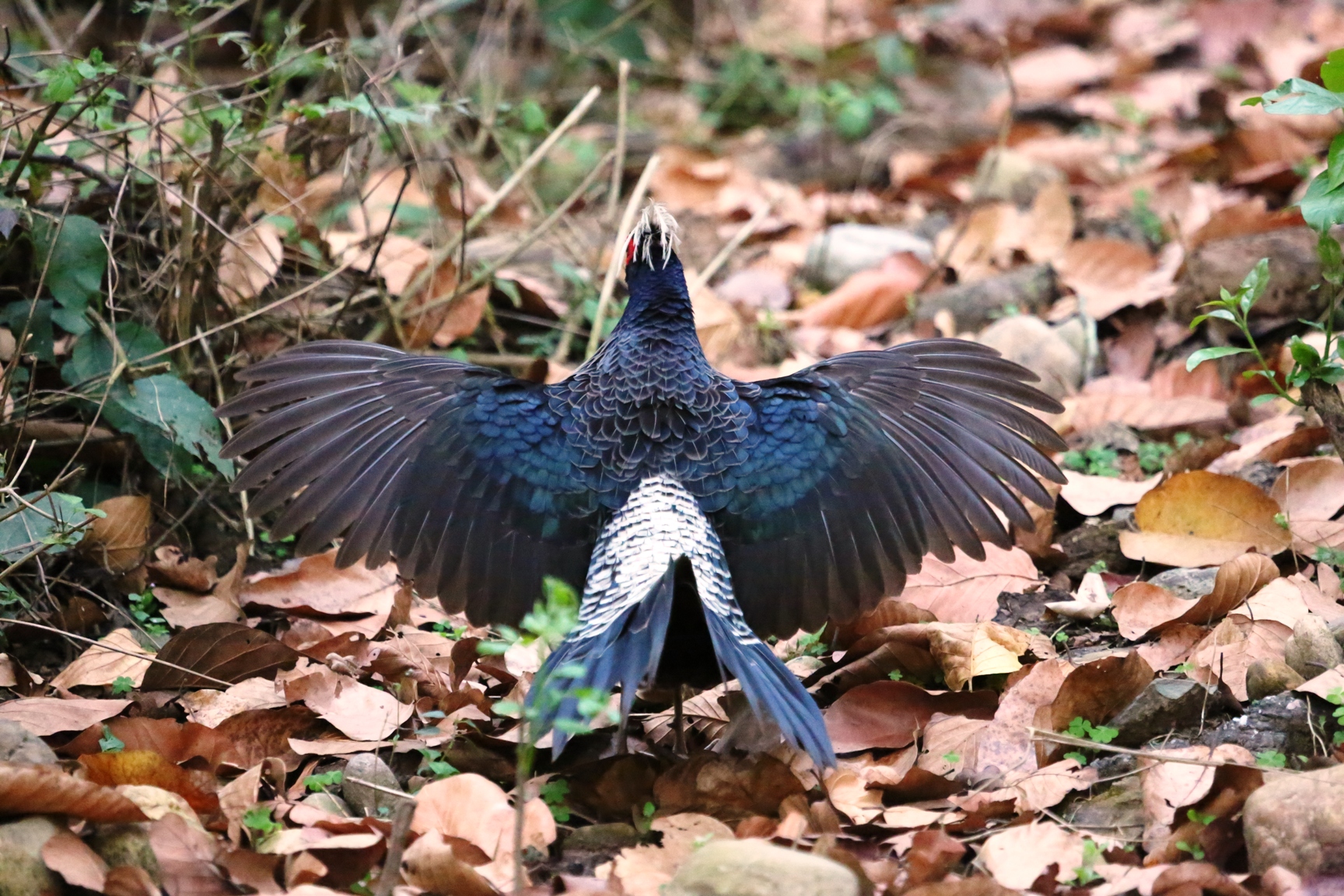
The calls of Black-hooded oriole, Red-breasted parakeet, Plum-headed parakeet, Common hawk cuckoo and Spotted dove were the typical sounds heard. We encountered the Blue whistling thrush and that most remarkable bird, the White-crested laughing thrush several times along the forest roads. Corbett Apr 15 3 019 Kalij pheasants gave us a couple of close and very patient photo ops, unlike their cousins the Red junglefowl which were considerably more nervous. Corbett Apr 15 3 373 Corbett Apr 15 6 416 Corbett Apr 15 5 087 A Great Indian hornbill swished past on our last day there. I finally managed to sight a bird that I’ve heard many times but have never managed to see – the Indian cuckoo. I also had the considerable satisfaction of spotting and later identifying the spectacular colours of the Rufous-bellied niltava. We spent many engrossing minutes from the Dhikala watchtower peeping on a pair of mating parakeets.

Red turtle doves frequent the Dhikala camp in large numbers, and were rarely encountered elsewhere. Corbett Apr 15 3 044 Corbett is a raptor-watcher’s paradise. Pallas’s fish eagle and Lesser fish eagle were commonly encountered. As were CSE, CHE and a host of vultures.Common kestrel and Shikra were also frequently seen.

Brown fish owl: Corbett Apr 15 3 315 On the chaurs, Paddyfield pipit, Pied bushchat and Common stonechat ruled. With some drongos thrown in for good measure. River lapwings and River terns were commonly seen along the water’s edge. Corbett Apr 15 3 148

Mammals and reptiles

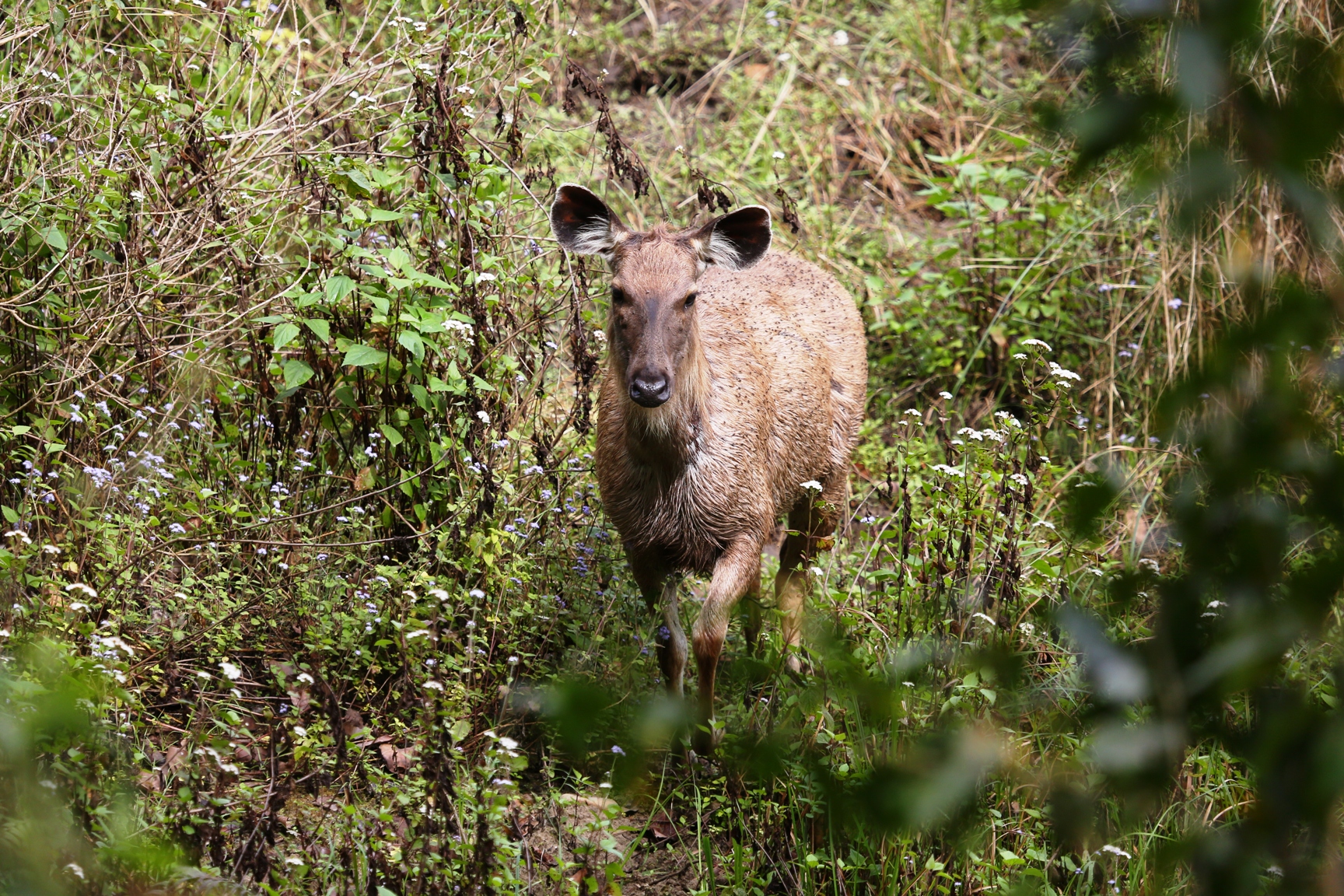
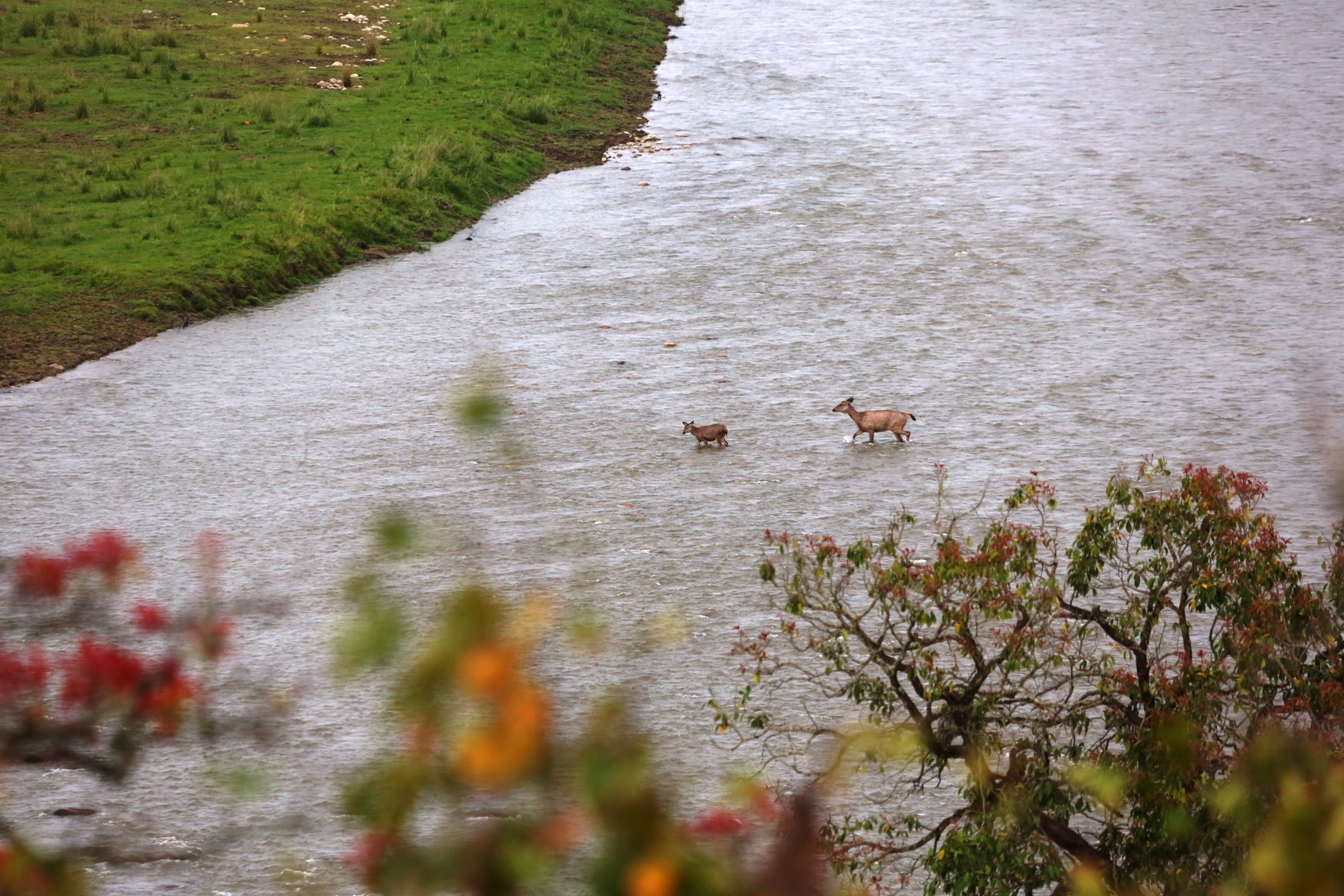
Sambar hind by the eponymous Sambar road. Corbett Apr 15 3 103 Sambar hind and fawn fording the Ramganga; photographed from the Dhikala watchtower. Corbett Apr 15 4 165 Wild boar at Dhikala. Corbett Apr 15 4 049 Hog deer hind by the Ramganga reservoir. Corbett Apr 15 4 153 Corbett Apr 15 4 110 Multiple herds of elephants were invariably at the Ramganga reservoir each evening. Corbett Apr 15 1 273 Corbett Apr 15 4 460 Corbett Apr 15 8 017 Corbett Apr 15 8 054 We saw this crippled calf and its herd on a couple of occasions. The mother’s handling of its inability to keep up was an object lesson in forbearance.  Corbett Apr 15 8 186 We invariably encountered jackal pairs in the picturesque stretch of Sal forest just before reaching Dhikala, and in the chaur around it. Here, doing it just like a dog. Corbett Apr 15 3 164 This python was stationed near Gorkha sot and sighted by most passing jeeps. It was most probably an Indian python, but could have been a Burmese python too. Yawning, in the second picture. Corbett Apr 15 5 173 Corbett Apr 15 5 199 At the point where a road branches off to the Khinnanauli FRH, we saw a pair of Yellow-throated marten dart across the road. The pair presently returned and recrossed again. This creature was on my wishlist for the trip. Harish noted that they were often seen in the vicinity. The weather was wet and presently the skies opened up. We waited a while longer before giving up. We then took to referring to the junction as ‘Marten point’ and looked for the pair each time we passed thereafter, with no luck however.

On day 3, we were rushing back to Gairal at sunset, being late for the 6:30 deadline. The light was rapidly fading. When we reached crocodile point, Harish slammed the brakes exclaiming “Tiger!”. Sure enough, a male got up and off the road, and wandered over into the bushes to our left (the viewpoint was to our left too, the tiger was in the bushes just past the viewpoint). Resenting our intrusion, the cat set up a series of growls while blundering through the thick undergrowth. I suggested that  we pull into the viewpoint to peep over the bushes he was in, but Harish felt the tiger would charge if provoked. In a few minutes, realizing we weren’t being driven away by the growling, the tiger re-emerged onto the road, crossed it, and stood on the verge for a minute staring fixedly at us, before disappearing into the undergrowth. Junior incidentally dived under his seat and stayed hidden there through the growling.

Here’s a picture I hurriedly clicked at an ISO of 25,600 in the failing light. Corbett Apr 15 5 032

Incidentally, Corbett doesn’t seem to be very big on naming individual tigers. However this particular male went by the moniker of Diwani Ram ka tiger, named after a fire watcher he killed three years back.

Our second tiger sighting happened the next morning. Alarm calls were reported from the stand of burnt trees near the reservoir. A tigress had evidently been spotted disappearing into the thickets by someone and the local phone tree was burning up. We reached there to join some eight or ten other Gypsies all lined up in the blazing sun on the chaur. A very large herd of chital grazed placidly nearby.

We’d just finishing admiring an osprey on a nearby tree when out of the thickets came the tigress, charging straight into the herd. She missed bagging anything and lost the advantage of surprise. The deer however went into milling confusion presenting another opportunity. She then made a second attempt, which failed too. After which she retired to the thicket, closely followed by the entire chital herd in formation, anxious not to lose sight of her.

Here’s a part of the sequence. Corbett Apr 15 5 115 Corbett Apr 15 5 116 Corbett Apr 15 5 117 Corbett Apr 15 5 120 Corbett Apr 15 5 121 Corbett Apr 15 5 123 Corbett Apr 15 5 127 ENGL2434 Corbett Apr 15 5 145

The list Birds:

  1. Ashy bulbul
  2. Ashy-crowned sparrow lark
  3. Ashy drongo
  4. Ashy prinia
  5. Ashy woodswallow
  6. Asian paradise flycatcher
  7. Bar-headed goose
  8. Black-hooded oriole
  9. Black redstart
  10. Black stork
  11. Black-shouldered kite
  12. Black-winged stilt
  13. Blue-bearded bee-eater
  14. Blue-throated barbet
  15. Blue whistling-thrush
  16. Brown-capped pygmy woodpecker
  17. Brown fish owl
  18. Brown hawk owl (calls)
  19. Changeable hawk eagle
  20. Chestnut-tailed starling
  21. Cinereous tit
  22. Cinereous vulture?
  23. Yellow wagtail
  24. Collared falonet
  25. Common green magpie (calls)
  26. Common hawk cuckoo
  27. Common iora
  28. Common kestrel
  29. Common myna
  30. Common sandpiper
  31. Common stonechat
  32. Coppersmith barbet
  33. Cormorant (?)
  34. Crested kingfisher
  35. Crested serpent eagle
  36. Egret (?)
  37. Eurasian collared dove
  38. Eurasian or Himalayan cuckoo (?)
  39. Fulvous woodpecker
  40. Gold-fronted leaf bird
  41. Great Indian hornbill
  42. Great slaty woodpecker
  43. Green bee-eater
  44. Grey-capped pygmy woodpecker
  45. Grey-headed fish eagle
  46. Grey-headed woodpecker
  47. Grey heron
  48. Grey wagtail
  49. Hen harrier?
  50. Himalayan bulbul
  51. Indian cuckoo?
  52. Indian grey hornbill
  53. Indian spotted eagle?
  54. Indian treepie
  55. Jungle babbler
  56. Jungle myna
  57. Kalij pheasant
  58. Large cuckooshrike
  59. Lesser fish eagle
  60. Lesser flameback
  61. Lesser yellownape
  62. Lineated barbet
  63. Long-tailed nightjar, or possibly Grey nightjar (calls)
  64. Long-tailed shrike
  65. Magpie robin
  66. Orange-headed thrush
  67. Orange minivet
  68. Oriental honey buzzard
  69. Oriental pied hornbill
  70. Oriental skylark?
  71. Oriental white-eye
  72. Osprey
  73. Paddyfield pipit
  74. Pallas’s fish eagle
  75. Peafowl
  76. Pied bushchat
  77. Pied kingfisher
  78. Plum-headed parakeet
  79. Purple sunbird
  80. Red avadavat
  81. Red-breasted parakeet
  82. Red-headed vulture
  83. Red junglefowl
  84. Red turtle dove/Red collared dove
  85. Red-vented bulbul
  86. Red-wattled lapwing
  87. Red-whiskered bulbul
  88. River lapwing
  89. River tern
  90. Rock dove/Blue rock pigeon
  91. Rose-ringed parakeet
  92. Rosy minivet
  93. Rosy starling
  94. Rufous-bellied niltava
  95. Ruddy shelduck
  96. Shikra
  97. Small minivet
  98. Spangled drongo
  99. Spotted dove
  100. Streak-throated woodpecker
  101. Striated grassbird?
  102. Striated laughingthrush
  103. Tailor bird (calls)
  104. Tawny fish owl
  105. Velvet-fronted nuthatch
  106. Warbler (?)
  107. White-browed wagtail
  108. White-crested laughingthrush
  109. White-eyed buzzard
  110. White-rumped vulture?
  111. White-throated kingfisher
  112. White-throated laughingthrush
  113. White wagtail
  114. Wooly-necked stork
  115. Yellow-eyed babbler
  116. Yellow-footed green pigeon

Mammals:

  1. Barking deer
  2. Chital
  3. Common langur
  4. Common mongoose
  5. Elephant
  6. Hog deer
  7. Rhesus macaque
  8. Sambar
  9. Tiger
  10. Wild boar
  11. Yellow-throated marten

Reptiles:

  1. Bengal monitor
  2. Gharial
  3. Indian or Burmese python
  4. Mugger

Trip Report: Ranthambore National Park, Jan ’15

Trip:      Ranthambore National Park

Camp:   Ranthambhore Regency

Dates:   23-26 Jan ‘15

Who:     GiK, Drs R and M and kids V and P

We should have flown to Jaipur and driven from there to Sawai Madhopur (150 kms). Instead we flew to Delhi, reached there an hour later than scheduled, at about 9:30 PM, dealt with the pathetic airport taxi system to get to Hazrat Nizamuddin station, and took the 11:40 PM Haridwar-Mumbai Bandra Terminus SF Express that ended up leaving Delhi at 1:45 AM. We reached Sawai Madhopur at sometime past 6 AM, a full ninety minutes past schedule and rushed to catch the morning safari. And all this with two kids and a cold wave in attendance. Flying to Jaipur would have been the sensible thing to do, even if it meant some loss of daytime.

The zones

Ranthambore 015

We spent four days in Ranthambore, doing seven safaris in all. Ranthambore has ten numbered tourist zones, with ten gypsies allowed into each zone at a time. On weekends, the FD allows a few more under pressure from VIPs. In fact the FD themselves possess safari-ready gypsies for ferrying their guests around. These gypsies have the triple advantages of no zone restrictions, no time restrictions and a ready information feed via radio.

Zones 1 to 5 are the sought-after ones, with zone 3 being the clear favourite at this time. It is evidently not easy to get the popular zones booked. Regency get an assortment of zones booked daily and ration them among their guests to ensure everyone gets a fair share of the more productive zones. And so we did three safaris in zone 3, two in zone 4 and one each in zones 2 and 6.

Entry to zones 2 and 3 is via the Jogi Mahal gate. The picturesque zone 3 route winds past the Padam talao (on the banks of which the famed Jogi Mahal is sited) and onto the vast Raj Bagh lake. The abandoned hunting lodge on the latter has produced some fine images of tigers on its balcony framed by its structure and shot from across the lake. Finding tigers in this structure is evidently a summer phenomenon.

20150123_092207

Zone 2 is magnificent too, with the road winding by the towering Ranthambore fort and then past another long range of cliffs. However twice a month on chaturdashi days of the Hindu calendar, pilgrims troop through this zone barefoot to worship at a Ganesh temple somewhere. The resultant ruckus effectively puts paid to any decent sighting possibilities. That’s what happened to us on day 1 in the afternoon.

GiK and I thought zone 4 was the best of them all in terms of its beauty. At this time of year, it has several stunningly beautiful spots, especially large patches of bright, finely textured grass. A tiger on this grass in mellow morning light will make for a dream photograph. Zone 4 also has a large lake teeming with aquatic birds, muggers and sambar – Malik talao.

Ranthambore 173

This zone  is accessed via a gate placed to the left of the approach road some distance before the Jogi Mahal gate is reached.

The anicut in zone 4 in the morning mist:

20150124_082705

In contrast with these three zones, zone 6 is a drab and dreary affair, with no impressive landscapes or features – just dusty tracks winding through unprepossessing, stunted jungle. To make matters worse, this zone is accessed after negotiating the sewer-lined, congested bazars of old Sawai Madhopur. If this route is bad in winter, I shudder to think what it’ll be in the heat of summer. But to be fair, we did sight a tiger in zone 6, and a magnificent male in his prime at that.

Tiger centricity

Ranthambore Day 1 AM 186

At the outset, our very competent naturalist Satish Upadyay suggested that we get the tiger sighting out of the way before turning our attention to birding. GiK, my kid P and I were in one Gypsy and we started with zone 3. We reached Rajbagh and struck luck. Three 10-month cubs gamboling in the grass, the litter of the tigress T-19 or Krishna. This tigress is Machli’s offspring and the reigning queen tigress of Ranthambore. We didn’t see the mother though, just the cubs. They were some 40-50 feet from the jeep, by the water and we watched them for twenty minutes or so before they headed back into taller khus grass where a sambar kill was hidden.

Ranthambore Day 1 AM 122

Ranthambore Day 1 AM 141

Ranthambore Day 1 AM 147

As often happens, this spectacular start was followed by muted follow-through, with plenty of alarm calls but no sightings fructifying until the evening of the next day. That was the afternoon safari of day 2, in zone 6. A passing Gypsy reported seeing a tiger cross a nallah and disappear into the jungle. Scouting around we finally came to a cluster of jeeps with the tiger barely visible some two hundred meters away. This was T-34 or Kumbha, a tiger with a colourful reputation for intimidating behavior. He was lying on his back with his paws in the air.

Ranthambore allows safaris in Gypsies and Canters. The latter contain five seats to a row and it mustn’t be great fun to be stuck in the middle. Anyway there were plenty of noisy tourists in attendance and the din disturbed the animal enough to make him roll over one side to the other occasionally and lift his head up to see what the racket was all about. This went on for about fifteen minutes after which he was disgusted enough to rise and stalk away. The horde then started up to chase him, but by the time the jam could be sorted out and the vehicles turned around, a good ten minutes was lost. Meanwhile the cat disappeared without a trace.

Satish had predicted a success rate of 30%. We did a little better than that, with three sightings in seven safaris. On day 3 in the evening safari, we had spent the evening chasing alarm calls in vain all over zone 4. Often being in the unenviable situation of having calls emanating from two different directions.

An interesting feature of tiger tracking in Ranthambore is that when alarm calls are heard, whether chital or langur, Satish listened to see if multiple individuals were calling. Calls by single individuals evidently lack credibility and were actually ignored a couple of times, even when persisting for a while. Satish also mentioned that while chital or sambar calls may sometimes mislead, the nilgai’s alarm call, if heard, is a certain indicator of the tiger’s presence.

Exit time was at 5:30 and we’d spent much of the evening rushing from one set of calls to another. While we were stopped in one of the meeting points for a quick bio break, a gypsy rolled in and the woman in it asked why all of us were hanging around there while there was a sighting in progress elsewhere. Satish and the driver jumped like they were bee-stung and we began a crazy, careening hurtle at mad speed towards the spot indicated. This was quite a distance away and we had just about half an hour to go before exit time, with the exit gate a long way off.

Reaching the place we found that it was hardly a kilometer’s distance from where we’d waited a while earlier listening to chital calls. Some jeeps had gone ahead from that point but had returned without having spotted the tiger. Given the late hour, all the vehicles there were FD Gypsies, with our Gypsy and a canter that arrived later being the only commercial tourist vehicles. The tiger was sprawled on the grass across a ravine amidst some very pretty scenery. This was T-6 or Romeo a fine six year old male. We had around five minutes to take a good look and finish clicking pictures before it was time to hurtle back towards the exit gate. The driver incidentally clocked 85 kmph on that crazy drive and we spent much of it in the air, holding on tight to keep us from bouncing right off the jeep. Admittedly illegal but incredible fun though.

Leopards are at least as numerous as tigers in Ranthambore but as is typical of tiger-infested areas, rarely show themselves.

Both chital and sambar were numerous and the long-drawn rutting calls of chital stags reverberated through the forests at this time of year, sometimes startling innocent tourists who mistook them for the agonized screams of some animal being done to death.

Upwardly mobile chital stag:

Ranthambore 601

Sambar stags sparring:

Ranthambore 085

Nilgai are also fairly numerous in places, and GiK and I got some pictures.

Nilgai doe and buck in the mist:

Ranthambore 443

Nilgai buck:

Ranthambore 614

We also saw the Chinkara or Indian Gazelle for the first time, a very satisfying experience. Mugger are commonly seen on all the lakes.

There were several palm squirrels in the forest. After a desultory glance at one of them, I concluded that they were of the three-striped variety. Dr. R later told me that we were probably looking at Five-striped palm squirrels. I resolved to look more carefully and get a picture if possible on the next outing, but this slipped my mind and I didn’t see any more squirrels.

Ranthambore Day 1 AM 152

Birding

Most remarkable are the Indian treepies. They are exceedingly common all through the forest, and are inured to tourists feeding them, although that is supposedly banned now. We did see some tourists feeding the birds at the rest points though. The birds however have lost their fear of people and freely perch on heads and hands. They are fearless enough to hop into the gypsies and onto the floor right around our feet, hunting for crumbs. Stop at any spot and in all likelihood, a couple materialized, heads cocked greedily, inspecting us closely for signs of anything edible.

20150123_162258

Ranthambore Day 1 AM 364

20150123_153928

Peafowl are numerous as you might expect, and the persistent, two-note calls of Grey francolins rent the air frequently.

Ranthambore 030

Babblers, especially jungle babblers are numerous too and make it noisily evident. Large grey babblers are easily met with and I initially mistook them for jungle babblers until Dr. R pointed this out. Rose-ringed parakeets are another noisy, frequently encountered bird. We met spotted owlets around half a dozen times, so they are not uncommon here.

Ranthambore 065

Long-tailed shrike:

Ranthambore 133

Hoopoe on a Dhok tree:

Ranthambore 479

In the waters of the lakes were Ruddy shelducks, Wooly-necked storks, Grey herons, Common snipes, egrets, cormorants, darters, White ibis, Openbill storks, River terns, dozens of Common moorhen, plenty of Black-winged stilts, more White-breasted waterhen than I’ve cumulatively seen so far and intrepid Red-wattled lapwings that stalked right up to the jeeps hunting for insects dislodged by the tyres.

Wooly-necked stork:

Ranthambore 126

Black-winged stilt:

Ranthambore Day 1 AM 292

Black-capped night heron:

Ranthambore 577

We noted that barbets were strangely absent, although Dr. R’s naturalist pointed out that Coppersmith barbets did occur and were heard in the summer. Junglefowl are conspicuously absent.

Indian Scops owl:

Ranthambore 225

On the drive from Sawai Madhopur to Jaipur (we took the more sensible route on the way back), we saw Bank mynas for the first time whilst stopping for chai.

Crested serpent eagle:

Ranthambore 289

Flora

The landscape of Ranthambore is dominated by the tiny-leaved Dhok tree (Anogeissus pendula). This species comprises a good seventy or eighty percent of the forest’s tree-count and is therefore ubiquitous. Next in terms of frequency are Babul or the Gum Arabic tree (Acacia nilotica) and the Flame of the forest (Butea monosperma).

Acacia nilotica:

20150123_154803

20150123_154832(0)

Stunted Khair trees (Acacia catechu) are also frequently encountered.

Ranthambore 275

On rocky slopes, the striking-looking Karaya Gum tree (Sterculia Urens) is commonly seen.

20150123_165644

Several fine specimens of banyan (Ficus bengalensis) are found throughout the park including the iconic one draping the entrance a little before the Jogi Mahal gate. An exceptionally large specimen occurs near the Jogi Mahal, but is out of bounds for tourists.

20150123_145024

Indian date palms (Phoenix sylvestris) are frequently met with. Tendu (Diospyros melanoxylon) is also encountered occasionally. Adusa (Adhatoda vasica) occurs in clumps in many places. The leaves, flowers and bark of this shrub find medicinal uses chiefly in the treatment of asthma.

Ranthambore 001

Large clumps of the cactus-like Euphorbia plant are also seen.

20150124_080752

A very common shrub in the Dhok forests is Grewia flavescens. At least that’s what I think it is. Our naturalist Satish identified the plant as Chameni in Hindi. I struggled to locate the binomial name and after considerable search, am leaning towards Grewia flavescens. This Grewia species is reputed to be a frequent associate of the Dhok and is supposedly commonly found in Ranthambore. The plant we saw is certainly found all over the place.

20150124_080353

The lakesides are lined with the aromatic Khus grass (Vetivaria zizznioides). Large patches of striking red Water velvet (Azolla pinnata) were found on the surfaces of some lakes. This is a species of tiny-leaved aquatic fern.

Birds:

  1. Asian pied starling
  2. Ashy-crowned sparrowlark
  3. Bank myna
  4. Long-tailed shrike
  5. Black-capped night heron
  6. Black drongo
  7. Black-shouldered kite
  8. Black-tailed godwit
  9. Black-winged stilt
  10. Blue rock dove
  11. Bluethroat
  12. Brown rock chat
  13. Cinereous tit
  14. Common iora
  15. Common kingfisher
  16. Common moorhen
  17. Common snipe
  18. Crested serpent eagle
  19. Darter
  20. Eurasian thick-knee
  21. Greater cormorant
  22. Greater coucal
  23. Grey francolin
  24. Grey heron
  25. Grey wagtail
  26. Hoopoe
  27. Indian Scops owl
  28. Indian vulture
  29. Long-tailed shrike
  30. Indian treepie
  31. Jungle babbler
  32. Large egret
  33. Large grey babbler
  34. Lesser flameback
  35. Little brown dove
  36. Little green heron
  37. Magpie robin
  38. Oriental honey buzzard
  39. Osprey
  40. Painted stork
  41. Peafowl
  42. Painted spurfowl
  43. Pied kingfisher
  44. Plain prinia
  45. Red-breasted flycatcher
  46. Red-wattled lapwing
  47. River tern
  48. Rose-ringed parakeet
  49. Ruddy shelduck
  50. Spotted dove
  51. Stonechat
  52. White-belloed drongo
  53. White-breasted waterhen
  54. White-browed fantail
  55. White-browed wagtail
  56. White ibis
  57. White-throated kingfisher
  58. White wagtail
  59. Wooly-necked stork
  60. Yellow-footed green pigeon

Mammals:

  1. Chinkara
  2. Chital
  3. Common langur
  4. Nilgai
  5. Ruddy mongoose
  6. Sambar
  7. Tiger

Reptiles:

  1. Marsh crocodile

Kaziranga/Gibbon Wildlife Sanctuary, Dec 2014

Trip:       Kaziranga National Park/Hollongapar Gibbon Sanctuary

Camp:   Wildgrass (Kaziranga)/FRH (Gibbon)

Dates:   29 Dec ’14 – 1 Jan ‘15

This is going to be a long post.

My son and I had visited Kaziranga in April 2013, along with my sister’s family. He was five then and we’d had some great sightings. This second visit was planned six months in advance, for just the two of us. As the date approached however the trip looked to be jinxed. First was SpiceJet’s wholesale disruptions (our Bangalore-Guwahati onward was with them). Alternate fares quickly climbed in excess of Rs. 43K. Thankfully services were restored a couple of days before our departure date (which was on Christmas day). And then there were the Bodo militant attacks killing 75 people that put Assam on the boil a couple of days before we left. We planned to visit friends in the Missamari cantt for a few days, in addition to doing Kaziranga. The route from the Guwahati airport to Missamari passed through one of the sites of the attack (Dhekiajuli) and a curfew was supposedly in effect. Further, it was 4:15 PM by the time we exited the airport and the early winter sunset was underway. Which meant four hours of driving mostly in the dark. In any case the drive passed off without incident.

Missamari

Missamari was cold and offered some little birding around the cantt. Brown shrikes and Red-vented bulbuls were aplenty, as were three species of myna – Common, Jungle and Asian pied, and spotted doves. Black-throated munias were also numerous and a pair of these had nested under the roof overhang of the house.  I spotted a babbler-sized brown bird once that I couldn’t identify.

On the day before we left for Bangalore, a twittering something went sailing over the lawn, with a jerky uneven flight. Turned out to be a Brown shrike that had grabbed a munia chick from its nest. The chick screamed and struggled for all its tiny worth, and the shrike had trouble holding its course. It blundered over a hedge, landed on a pile of thorns some twenty five meters away, panicked at my approach and abandoned the chick wedged inside the thorny pile. The chick had sustained a bleeding injury around the mantle, but seemed alive enough. We extricated it and placed it on the lawn, from where it disappeared a short while later – spirited away either by its parents, or by the shrike.

20150102_112239

The Itinerary

I had explored the possibility of managing three or four PAs with Ficus’s Ravi Kailash months in advance. Pakke, Orang and Nameri are all tantalizingly close to Missamari. As is Eaglenest. However considering that all these places entailed some degree of walking, and considering that my son is not a particularly accomplished walker, I had to limit the schedule to two nights in Kaziranga and a single night at Gibbon. Given this schedule, Ravi, considerate as ever, suggested that I dispense with Ficus’s assistance and book directly through Manju Barua of Wildgrass. This latter gentleman was enormously helpful and courteous, and patiently responded to my numerous emails promptly and in great detail. To begin with, he pointed out that I was visiting Kaziranga at the worst possible time as the week of 25th Dec turns the park into a “circus”. And then Wildgrass was booked out and he put me on a waitlist, which eventually cleared.

And so my son and I ended up reaching Kaziranga by lunchtime on the 29th, did the evening safari there, stayed overnight at Wildgrass, and left for Gibbon the next evening after completing both safaris on day 2. Overnighting at Gibbon, we finished with the apes before breakfast the next morning, rushing back in time to catch the evening safari at Kaziranga. The next morning, 1-Jan, was our last safari after which we departed for Missamari. So five safaris in all at Kaziranga, of which two each were in the Western and Central zones and the last one in Eastern.

Wildgrass

Although not as luxurious as the Iora resort, Wildgrass is probably the best place to stay at in Kaziranga. Manju Barua’s attitude being in no small measure a reason for this, the ambience accounting for the rest. He took care of everything for me very efficiently – accommodation, safaris, naturalist, my Missamari and Gibbon transfers and the Gibbon FRH booking. We enjoyed the place the last time too and this time was no different. If I must find something to crib about, it’ll only be the acoustics of the hardwood floors. These amplified sounds from the room above spectacularly and even if the occupant was tiptoeing in his socks, produced a din below resembling someone playing nine pins with propane cylinders. If you are a light sleeper, you want to ask for a room on the top floor. This little inconvenience aside, we had a spectacular time.

20141229_115028

I didn’t get to do too much birding in the resort. I sighted Indian robin, a Magpie robin (I think), Black-hooded oriole, Baya weaver bird, Spotted dove, all the three mynas again and Red-vented bulbul.  And heard the Blue whistling thrush. The resort grounds are the best place to spot the Hoary-bellied Himalayan squirrel and we sighted these as expected. And on the way in, we stopped to watch a Malayan giant squirrel that our driver Biju managed to spot in a forest patch around thirty klicks from Kaziranga. We also saw elephants, but these might have been domestic ones as they were not very far from human habitation.

Malayan giant squirrel:

Kaziranga Dec 14 931

Kaziranga

Safari 1, PM, Western Zone. The evening safaris were abbreviated ones, given the early sunset. We typically set off a little before 2 PM, with 15-20 minutes spent on the drive to the gate and another 15-20 minutes squandered in getting the entry tickets. Sometime before 3 PM is when we entered the park gates, giving us a maximum of two hours before the sun disappeared completely.

I had mentioned to Manju Barua that naturalist Tarun Gogoi had done a tremendous job with the spotting during our 2013 trip. He offered to book Tarun for us this time too. However the naturalist was held up with another group for the first safari, and so Biju Hazarika, the driver who’d picked us up from Missamari tripled up as safari driver, spotter and naturalist all rolled into one. And did a very creditable job of it.

A short while into the first safari, we ran into a fair-sized King cobra right by the track. We slammed to a stop after passing some twenty five feet past the reptile. Before I could get my lens to bear on it the snake raised its hood briefly before making itself scarce.

We made a brief stopover at the Donga beel viewing point. Rhino, buffalo, hog deer and swamp deer grazed on the far bank. We saw flocks of Yellow-footed green pigeons around this spot both the times we visited.

Elephant and rhino skulls at Donga beel:

20141229_145635

We also ran into a pair of elephants in the elephant grass by the roadside later in the drive.

We opened the birding account with Asian openbill stork, Crested serpent eagle, Wooly-necked stork, Bar-headed goose, mallard, Red-breasted parakeet, Common stone chat, Black-necked stork and Lesser adjutant stork. We were to meet all these repeatedly on subsequent drives.

Common stonechat:
Kaziranga Dec 14 672

Rhino at dusk in the western zone:

Kaziranga Dec 14 245

Safari 2, AM, Central Zone. Hog deer, Swamp deer, rhino and buffalo were commonly seen on all safaris. As were enormous flocks of foraging Bar-headed geese, Greylag geese, mallards, Spot-billed ducks, pintails, Black-necked and Wooly-necked storks, egrets and Lesser adjutant storks in all beels. I’ll therefore avoid repetitive mention. To the birds list we added Barn swallow, Grey-headed canary flycatcher, Bronze-winged jacana, Purple heron, pintail, cormorants, White wagtail, Common snipe, Citrine wagtail, Asian pied starling, Ruddy shelduck and Pied kingfisher. And heard Puff-throated babbler, Lesser flameback and a Changeable hawk eagle.

Bar-headed geese are truly remarkable birds. Look them up online to learn why.
Kaziranga Dec 14 1439

Greylag geese:

Kaziranga Dec 14 1488

A barking deer turned up on the track. To the untrained eye or at least to my untrained eye, muntjac can be mistaken for the more commonly seen Hog deer, especially if the sighting is fleeting.

Hog deer stag & doe:

Kaziranga Dec 14 567

Kaziranga Dec 14 326

The road winds past the Kawoimari lake and the Diphlu river and is quite picturesque. On the lake, we saw an Indian roof turtle. A Grey-headed fish eagle sat silently surveying the river.

Indian roof turtle:

Kaziranga Dec 14 431

The road pauses at a viewpoint area where visitors can alight and use the malodorous bamboo toilets. A row of tufted ducks paddled in the water, along with the other usual suspects. A rhino grazed on the far bank, as did a small herd of buffaloes. We saw White (Rosy) pelicans in addition to the more commonly seen Spotbilled ones. As we moved on from the viewpoint area raising fine powdered dust that fouled everything, a Bengal monitor lizard was found basking beside the track, unmindful of the clouds of dust billowing onto it. A lone osprey quartered the skies. Indian treepies called.

Bengal monitor lizard:
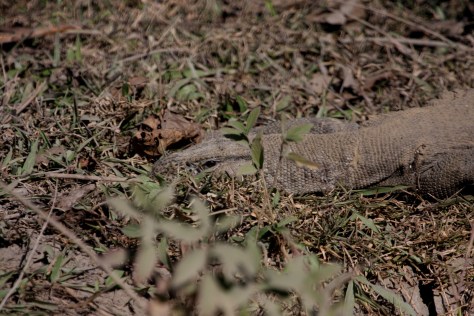
Kaziranga Dec 14 534

Safari 3, PM, Western Zone. This was the safari we rushed back to catch, from Gibbon. The drive started propitiously with a Pallas fish eagle sighting. I was on the lookout for this species. The bird was evidently nesting there as we found it around the same place multiple times subsequently. A small troop of Rhesus macaques foraged nearby.

Kaziranga Dec 14 1294

Tarun identified a small tree we saw repeatedly as jujube, Ziziphus jujuba – the berries of which are evidently pickled and served in the Wildgrass dining room.
Kaziranga Dec 14 641

He identified another commonly seen tree with large, ribbed leaves as Dillenia indica, the Elephant apple tree. The palm for the most common tree in Kaziranga however undoubtedly goes to the Red silk cotton, Bombax ceiba. It is abundant in the countryside as well.

Elephant apple tree, Dillenia indica:
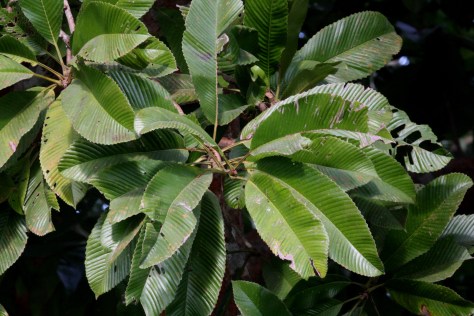
Kaziranga Dec 14 1337

At one spot, hog deer began calling in alarm in the grass. The calls were strident and we waited awhile. The sun was starting to set and great flocks of Green imperial pigeons flew past on their way to roost.  A pair of Greater Indian hornbills swooshed past and the tiger was momentarily forgotten. Alexandrine parakeets squawked and flitted. Eventually giving up, we turned back. The light was fading fast and a little before the park exit, we came upon another set of alarm calls. The hog deer were calling and a herd of buffaloes hurriedly turned around to face the direction the tiger was evidently in. We could pinpoint the area the deer and buffalo were focused on, but the setting darkness and thick grass hid the cat only too well. Tarun caught a fleeting glimpse, but I could see nothing despite standing atop the Gypsy’s bars at a ten foot vantage point.  The buffalo herd trooped out and the calls subsequently ceased.

Pintails at dusk:

Kaziranga Dec 14 739

Safari 4, PM, Central Zone.  Mihi is a beel in the central zone with the Kothora watchtower overlooking its vastness. This place is sometimes referred to as tiger point owing to the frequency of sightings. Visitors can alight at the watchtower to watch the wildlife on the beel.

We spent the entire evening tethered to this spot by persistent alarm calls. The deer and a rhino were intently focused on a patch of tall grass to our right. Plenty of other jeeps came and went, but we stayed put. Tarun was determined to catch a tiger sighting after one too many near misses. Unfortunately for us hordes of noisy tourists made appearances. Tarun was worried they’d scare the feline away and that’s precisely what happened. The tiger made off in the opposite direction away from the beel, crossed the road some two hundred meters away, and disappeared into the grass.

Tarun was bitter about all the noise the tourists were making – he’d spent a good part of an hour with his eyes glued to his binocs atop the watch tower, watching for stripes. All for nothing.

Biju Hazarika watches hog deer calling in alarm on Mihi beel:
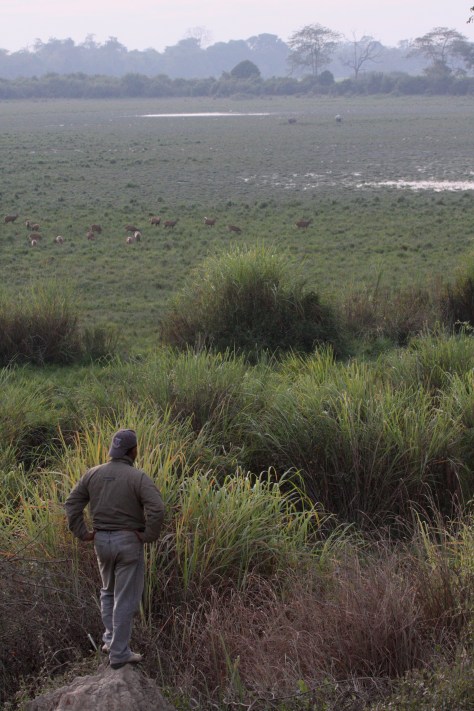
Kaziranga Dec 14 1125

We went further up the track hoping the feline would return, but had to give up eventually. While waiting we found a couple of rhinos waiting to cross the track and positioned ourselves to catch the crossings, but noisy passing tourists scared those away as well. I now know what Manju Barua meant by the “circus”.

It was fully dark by now and that’s how we ended the last day of 2014. Would have been even better to end it with a tiger sighting that actually fructified but then we do not always get what we ask for.

The last sunset of 2014:
20141231_164809

Safari 5, AM, Eastern Zone. I was anticipating a tourist-free forest, this being the 1st of Jan. I had miscalculated however as hordes of people evidently consider it great fun to continue the festivities of the previous night in the forest on day one.

The Eastern zone is renowned for its birdlife more than large mammals. A Stork-billed kingfisher sat sentinel as we entered the park gate. Further up the track, a branch was heavy with Himalayan griffon vultures. We also sighted Black-hooded orioles, a Spotted eagle, Indian vultures, a Changeable hawk eagle, a Common kestrel, Indian treepies, Orange minivets, Red-breasted parakeets and Common teals.  The track winds past the massive Sohola beel. A pair of Oriental pied hornbills flew from one tree to another, very close by and I hurriedly attempted a flight shot, having been caught unawares while handing junior the binocs to view a Pallas fish eagle sitting at a distance. The shot came out with one wing clipped.
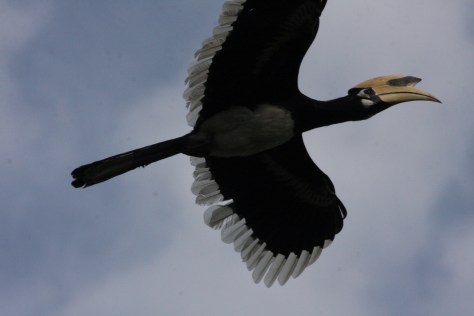
Kaziranga Dec 14 1335

A squirrel raced up a bole and leaped across to another. Tarun identified it as a Himalayan striped squirrel.

Kaziranga Dec 14 371

We saw a solitary brown fish owl that sat looking at us for a long while before flapping away on massive wings. A small herd of elephants posed for pictures further up the track. We then reached the terminus of the track at the Bramhaputra river.
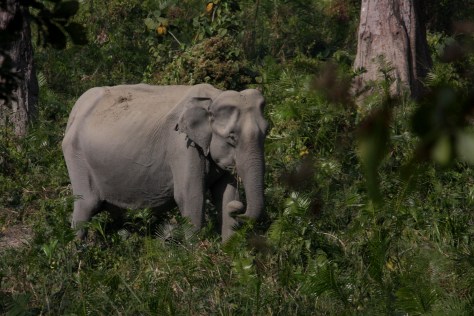
Kaziranga Dec 14 1385

20150101_094119

On the way back I saw two lapwings I’ve never seen before – the Grey-headed and the Northern (Crested) lapwing. We saw the former multiple times.
Kaziranga Dec 14 1396

Hollongapar Gibbon Wildlife Sanctuary
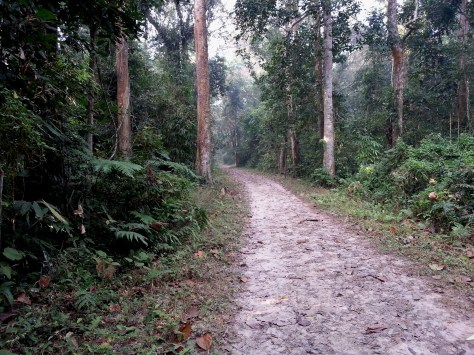
20141231_071550

Gibbon is around 135 kilometers from Kaziranga and we left after the evening safari, to reach there by 9:30 PM or so. The FRH at Gibbon has two rooms. The ever-smiling cook produced barely tolerable meals on a woodfire stove in an alluringly warm but sooty kitchen behind. A railway gate occurs not very far away and passing trains sound their horns frantically to warn off crossing elephants. To the sleepers in the rooms, it sounds like the engines are passing on the other side of the wall.

We awoke early to the calls of Puff-throated babbler, Black-hooded oriole, and Blue whistling thrush. Gibbon comprises some 21 square kilometers of evergreen forest with paths running through it. A forest guard armed with a rusty, double-barreled gun of ancient vintage accompanied us. He said the weapon was intended to scare elephants away as he broke open the breech to load a pair of red cartridges. We left junior sleeping snugly back in the room, with Biju kindly consenting to wait on His Little Majesty.

Blue whistling thrush at dawn:
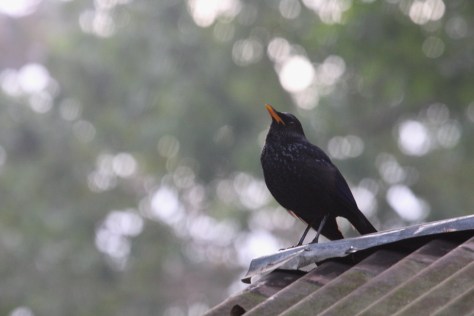
Kaziranga Dec 14 819

Gibbon is home to seven species of primates – the Western hoolock gibbon, Stump-tailed macaque, Northern pig-tailed macaque, Bengal slow loris, Capped langur, Assamese macaque and Rhesus macaque. We sighted three of these in the couple of hours we spent walking through the forest. The morning was crisp, cold and utterly lovely. The first mammal sighting was of a very lively Malayan giant squirrel. A small troop of Capped langurs presently appeared, crashing about the canopy, leaping tree to tree.

Capped langur:
Kaziranga Dec 14 898

We then sighted an Orange-bellied Himalayan squirrel. The sound of breaking branches warned us of the presence of elephants further up the path and we back-tracked, finding an alternate route to skirt around the animals. We had spent a good hour and a half now traipsing through Gibbon with no sign of the eponymous ape. I was thinking that we might have to return without having managed a single sighting.

A troop of Pig-tailed macaques turned up next, shortly followed by junior in the car driven out by Biju, all rested and refreshed.

Pig-tailed macaque:

Kaziranga Dec 14 827

A second guard finally spotted a Gibbon family on the canopy, and we spent some fifteen minutes watching a male, female and a sub-adult swinging and feeding high up in the canopy. Gibbon-watching is good treatment for people afflicted with cervical spondylitis.

Gibbons, male and female:

Kaziranga Dec 14 1031

Kaziranga Dec 14 1051

The Gibbon sanctuary is a spectacular birding site. It reminded me of Thattekad in many ways. Tarun was in his elements and we sighted orange-headed thrush, White-throated bulbul, Bronzed, Greater racket-tailed and Spangled drongos, Grey-bellied tesia, Grey-headed canary flycatcher, Black-crested bulbul and Maroon oriole. And heard the Asian barred owlet. The highlight however was watching a pair of Red-headed trogans for a good many minutes as they flitted around the canopy. Tarun was elated with this sighting. Back at the FRH and after breakfast, we listened to Lineated barbets calling loudly before packing up to rush back to Kaziranga in time for a hurried lunch and the evening safari.

Here are some pictures from my 2013 trip.

22 Kaziranga Day 2 Eastern 271

18 Kaziranga Day 2 Eastern 458

28 Kaziranga Day 1 Wildgrass 104

48 Kaziranga Day 2 Eastern 912

56 Kaziranga Day 2 Eastern 570

54 Kaziranga Day 1 Western 158

55 Kaziranga Day 1 Western 217

The list

Birds:

  1. Alexandrine parakeet
  2. Asian barred owlet (calls)
  3. Asian openbill stork
  4. Asian pied starling
  5. Bar-headed goose
  6. Barn swallow
  7. Baya weaver bird
  8. Bay-backed shrike
  9. Black-crested bulbul
  10. Black-hooded oriole
  11. Black-necked stork
  12. Black-throated munia
  13. Blue whistling thrush
  14. Bronzed drongo
  15. Bronze-winged jacana
  16. Brown fish owl
  17. Brown shrike
  18. Cattle egret
  19. Changeable hawk eagle
  20. Citrine wagtail
  21. Common kestrel
  22. Common myna
  23. Common snipe
  24. Common stonechat
  25. Common teal
  26. Cormorant (Greater?)
  27. Crested serpent eagle
  28. Darter
  29. Greater Indian hornbill
  30. Greater racket-tailed drongo
  31. Green imperial pigeon
  32. Common greenshank
  33. Grey-bellied tesia
  34. Grey-headed canary flycatcher
  35. Grey-headed fish eagle
  36. Grey-headed lapwing
  37. Grey heron
  38. Greylag goose
  39. Himalayan griffon vulture
  40. Indian robin
  41. Indian roller
  42. Indian treepie
  43. Jungle myna
  44. Large egret?
  45. Lesser adjutant stork
  46. Lesser flameback
  47. Lineated barbet (calls)
  48. Indian vulture
  49. Magpie robin
  50. Mallard
  51. Maroon oriole
  52. Northern/crested lapwing
  53. Orange-headed thrush
  54. Orange minivet
  55. Oriental pied hornbill
  56. Osprey
  57. Pallas fish eagle
  58. Pied kingfisher
  59. Pintail
  60. Pond heron
  61. Puff-throated babbler (calls)
  62. Purple heron
  63. Red-breasted parakeet
  64. Red-headed trogan
  65. Red junglefowl
  66. Red-vented bulbul
  67. Rose-ringed parakeet
  68. Ruddy shelduck
  69. Spangled drongo
  70. Spot-billed duck
  71. Spot-billed pelican
  72. Spotted dove
  73. Spotted eagle
  74. Stork-billed kingfisher
  75. Tufted duck
  76. White-browed wagtail
  77. White ibis
  78. White/Rosy pelican
  79. White-throated bulbul (calls)
  80. White-throated kingfisher
  81. White wagtail
  82. Wooly-necked stork
  83. Yellow-footed green pigeon

Mammals:

  1. Barking deer
  2. Capped langur
  3. Elephant
  4. Eastern swamp deer
  5. Great Indian one-horned rhino
  6. Striped Himalayan squirrel
  7. Hoary-bellied Himalayan squirrel
  8. Hog deer
  9. Hoolock gibbon
  10. Malayan giant squirrel
  11. Orange-bellied Himalayan squirrel
  12. Pig-tailed macaque
  13. Rhesus macaque
  14. Wild buffalo

Reptiles:

  1. Bengal monitor lizard
  2. Indian roof turtle
  3. King cobra

Trip Report: Kabini River Lodge/Nagarahole NP

Trip:       Kabini River Lodge/Nagarahole NP

Camp:   JLR’s Kabini River Lodge

Dates:   20-22 Sep ‘14

Who:     GiK & SV

GiK and I had met SV and his family at K Gudi last, and we hit it off well considering our shared interests in wildlife. We had proposed a trip to Kabini together and SV promptly did the reservations as soon as he got back to Bangalore. By happy coincidence, BR who figures in my last K. Gudi post was also there, and it was a reunion of sorts. We did two nights at Kabini River Lodge, and GiK and I stayed back for an extra evening safari on day three, leaving for Bangalore late in the evening. This was a good plan as in addition to the extra safari, it allowed us to avoid return traffic on the Mysore road.
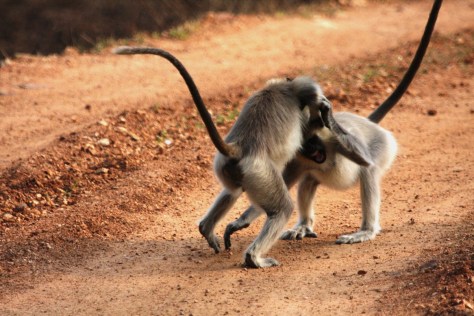
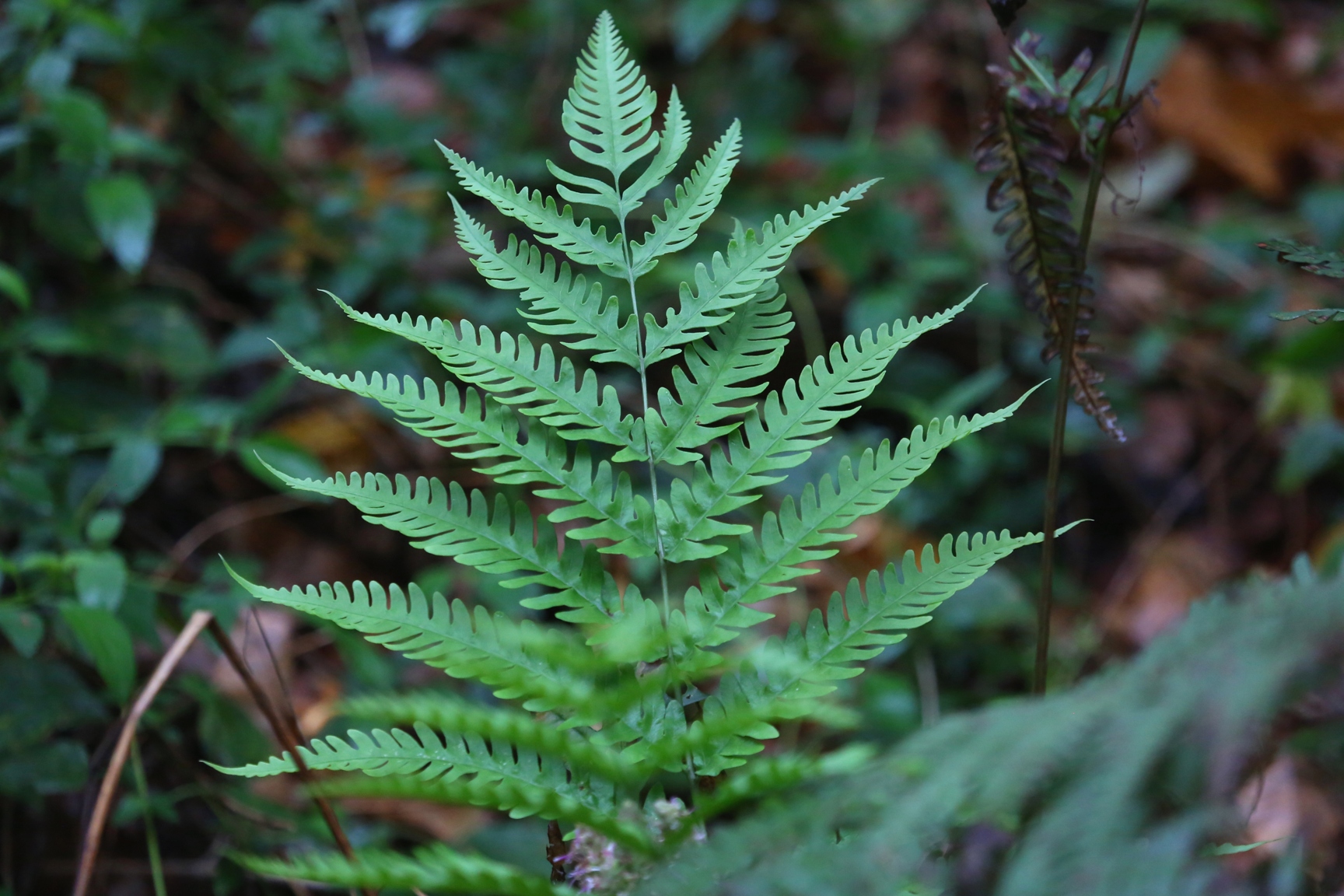
Kabini RL is considered JLR’s flagship property and their sightings are reputed to be second to none. Despite this I haven’t been there after a single trip ten years back. The scale of the establishment puts me off I guess. The safaris are indubitably spectacular, but the place lacks the sense of intimacy that the K. Gudi camp has, in my opinion. And BR agrees with me on this.

The “five kilometer” road. This is a disused and restricted (erstwhile) section of the highway to Kerala – SH17D. This road was fairly productive for us. Particularly interesting was a spot along this road known as the “burning place”, which bears the scars of the 2012 fire that ravaged the park.  Kabini Sep 2014 1080

Changeable hawk eagle. We saw at least three CHEs and only one Crested Serpent Eagle in a reversal of the usual proportions.

Kabini Sep 2014 868

Sambar hind. Note the bald patch on the neck, which is a strange and not-fully-understood occurrence in the species. Kabini Sep 2014 885

I was trying to get a shot of these two stags sparring, but they took a break to stare back at us instead. Kabini Sep 2014 227

I saw Common langur without the tuft after a long while. The langurs that occur in Bandipur, K. Gudi and Galibore are all Tufted langurs, with a distinct tuft on their heads. Langurs helped us locate a she-leopard with a single cub that we sighted on two safaris, near the KV waterhole. Incidentally, there is a watch tower by this waterhole on which I’d spent an entire afternoon ten years back, with only  chital and langur sightings to show for all my trouble. Kabini Sep 2014 851

Both gaur and wild boar were strangely missing. We saw just two herds of gaur, and that in the last couple of safaris. And just one token wild boar. This animal below was photographed in the “burning place” Kabini Sep 2014 1076

We saw plenty of elephants right through the trip. This makhna crossed the road just behind our jeep. Kabini Sep 2014 003

We met this young tusker while he was grazing by the highway. Kabini Sep 2014 085

We watched a herd of three elephants systematically destroy a patch of teak saplings. Kabini Sep 2014 888

Elephants stand around all day and even sleep standing up. This cow gave her leg a break. Kabini Sep 2014 891

Another member of the herd of three approaching. Kabini Sep 2014 893 Kabini Sep 2014 925

This cow approached very close to the jeep. And stood placidly grazing at spitting distance. I asked the naturalist Ravi if Nagarahole elephants were so habituated to human presence that they grazed like cattle around us. He replied that they do mock-charge frequently, and that the tolerance we were seeing wasn’t always present. Kabini Sep 2014 940

We sighted this large tusker with a broken tusk on two separate occasions, both on the “five kilometer” road. Kabini Sep 2014 953

Another massive tusker, this one in the “burning place”. Kabini Sep 2014 1167

This tusker accompanied a small herd. Kabini Sep 2014 1170

A pair of Golden  jackals (Canis aureus) came cantering down the track, stepped off it to pass the jeep, and regained the track to continue on their way. Typical jackal behavior. Kabini Sep 2014 121 Kabini Sep 2014 142

We encountered a pack of three dhole on the “five kilometer” road. Possibly the same pack was sighted by another group the next day in the “burning place”. Kabini Sep 2014 994

We had leopard sightings in three of the five safaris. This she-leopard was found on a tree by the highway, a little before the Balle gate. She stayed put for forty five minutes and treated us to a variety of poses. Two cubs were with her, and had descended out of sight before we arrived at the spot. Kabini Sep 2014 378 Kabini Sep 2014 590 Kabini Sep 2014 608 Kabini Sep 2014 709

The cat was briefly distracted by something in the tree above. We later learned that there was a Giant flying squirrel (Petaurista petaurista) on the tree, but none of us noticed at the time. Kabini Sep 2014 669  

My jungle trees 101 progressed at a slow crawl. I learned to ID the Nandi tree or Crepe myrtle (Lagerstroemia microcarpa). This tree is called the naked lady of the forest alluding to how it looks when shorn of its bark – the trunk resembles that of the Eucalyptus, somewhat. And the Belleric myrobalan (Terminalia bellerica). Both of which were fairly common. I also learned that the Axlewood tree has a handle too – leper of the forest – owing to its pale blotchy patterns. There were plenty of these trees in Nagarahole. My old friends Tectona grandis, Terminalia tomentosa and Phyllanthus emblica were there in force too.

The birding lacked the usual intensity. What came our way was what we saw. There was plenty of unrecognized birdlife we zipped past in our quest for megafauna. Incidentally, Grey wagtails had just started to arrive for the winter and were seen around the Gol Ghar. But what was truly striking was the sheer number of Grey junglefowl everywhere. On two occasions, I counted eight individuals foraging at one place.

The list

Birds:

  1. Ashy prinia
  2. Ashy wood-swallow
  3. Asian brown flycatcher
  4. Asian paradise flycatcher
  5. Black-hooded oriole
  6. Bronzed drongo
  7. Brown fish owl
  8. Bushlark?
  9. Changeable hawk eagle
  10. Common hawk cuckoo (calls)
  11. Coppersmith barbet (calls)
  12. Crested serpent eagle
  13. Unidentified flameback
  14. Green imperial pigeon
  15. Grey francolin
  16. Grey junglefowl
  17. Grey wagtail
  18. Hill myna
  19. Hoopoe (calls)
  20. Indian grey hornbill
  21. Jungle myna
  22. Jungle owlet
  23. Magpie robin
  24. Malabar parakeet
  25. Paddyfield pipit
  26. Peafowl
  27. Pied bushchat
  28. Plum-headed parakeet
  29. Puff-throated babbler (calls)
  30. Brown-capped pygmy woodpecker
  31. Racket-tailed drongo
  32. Red-whiskered bulbul
  33. Red-vented bulbul
  34. Rose-ringed parakeet
  35. Streak-throated woodpecker
  36. Tailor bird
  37. Velvet-fronted nuthatch
  38. Vernal hanging parrot
  39. White-bellied drongo
  40. White-bellied woodpecker
  41. White-cheeked barbet (calls)
  42. White-throated kingfisher

Mammals:

  1. Barking deer
  2. Chital
  3. Common langur
  4. Dhole
  5. Elephant
  6. Golden jackal
  7. Indian flying fox
  8. Leopard
  9. Malabar giant squirrel
  10. Ruddy mongoose
  11. Sambar
  12. Stripe-necked mongoose
  13. Wild boar

Trip report: BRT TR & Bandipur NP, May 2014

Trip Report:        BRT Tiger Reserve

                               Bandipur National Park

Dates:                   1-3 May 2014

Camp:                   JLR’s K. Gudi Wilderness Camp & Bandipur Safari Lodge

All the photographs used in this post were shot by S. Balajee.

I was supposed to do KMTR this weekend with GK. Unfortunately he fell ill and we abandoned the plan at the last moment. I was however able to tag along with my sister’s family on this trip. We did one night and two safaris each at BR Hills and Bandipur.  The two-destination idea turned out to be quite productive, adding variety without being inconvenient as Bandipur is a short 70 kms from K Gudi.

BRT TR/K. Gudi

Reaching the camp by 11:30 AM gave us opportunity for some pre-lunch birding, in the camp and around the little lake by it. We saw Cinereous tit, Magpie robin, Common myna, unidentified warbler, Asian brown flycatcher, Orange minivet, White-browed wagtail, Red-rumped swallow, Red-whiskered bulbul, Gold-fronted leaf bird, White-cheeked barbet, Jungle babbler, Brahminy kite, Oriental white-eye, Black hooded oriole, unidentified flameback and Spotted dove. And the Black eagle.

On my wish-list for this visit were four stars – Black eagle, Red spurfowl (don’t ask why), Rufous babbler (with a photo-op) and Southern tree shrew – and possibly an elephant mock charge as icing on the cup-cake. The first of these – the Black eagle – was knocked off the list within an hour of reaching camp. And this is not the first time I’ve seen this raptor over the K. Gudi camp.

Gold-fronted leaf bird:

Image


Orange minivet, male:

Image


Cinereous tit:

Image

Incidentally, we stayed in the Biligiri and Nilgiri log huts, farthest down the line and abutting the jungle. I had referred to the Biligiri log hut in my previous K. Gudi trip report post.

The first safari was naturally the evening one. The weather was surprisingly cool and cloudy, a welcome change from the dry, sweltering furnace that was Bangalore. On my last visit, we had an extremely productive time with birds thanks to us being driven on safari by Rajesh. We asked for him this time too and Prasad, the new manager was kind enough to oblige. Rajesh has razor-sharp eyesight, spotting skills like you wouldn’t believe, and is a mustard-keen birder. A worthy successor to Thapa, the legendary driver/spotter of K. Gudi, now retired. With Rajesh, his bins and his copy of Grimmett & Inskipp along, there was not a dull moment on safari. And the forest was fairly throbbing with birdlife despite the time of year.

Barking deer, fawn:

Image

The evening was therefore pleasant enough, with some involved birding. Early into the safari we found a pair of Racket-tailed drongos mobbing a Jungle owlet. These drongos were ubiquitous.

Racket-tailed drongo:

Image


Fairly common also was Magpie robin, Indian blackbird, Jungle myna, Jungle babbler, Bronzed drongo, Indian treepie, Grey junglefowl, Common hawk cuckoo, White-bellied drongo and bulbul (both Red-vented and Red-whiskered).

Rajesh had marked a burrow in the earth tenanted by a Blue-bearded bee-eater and we spent some time watching the bird flit in and out. Both Rajesh and BIL B were keen on getting a picture of the event, but this posed a challenge as getting close enough for a clear line of sight was deterring the bird – although the nest was just off the road and barely a foot off the ground.

Blue-bearded bee-eater:

Image


Other notables were Indian pitta (two separate sightings), Malabar whistling thrush, Green imperial pigeon, Orange-headed thrush,  Oriental honey buzzard, Crested serpent eagle, Brown fish owl and Rufous babbler (second item off the wishlist). The much-awaited mock charge didn’t materialize, but we did see a trio of elephants in high grass.

Brown fish owl:

Image

Waking up in camp the next morning to the calls of Jungle owlet, Indian Nightjar, Common hawk cuckoo, Black-hooded oriole, Magpie robin, Hoopoe, and Tufted langur, we set off on what turned out to be a sparkling safari.

Black-hooded oriole:

Image

Common hawk-cuckoo:

Image

We found a quartet of Nilgiri wood pigeons fluttering about a salt lick and spent some time there. We then ran into a Mountain imperial pigeon and the day was starting to look better and better.  Red spurfowl went off the wishlist next, although the sighting was a tad too fleeting for comfort. That left just one worthy on the list – the Southern tree shrew.

And as luck would have it, we found a pair of these rodents gamboling on the grass and on a fallen tree, in the open, not very far away, and in perfect light. Of such moments is paradise made. BIL B got a bunch of very decent pictures, and I got a good clear look at Anathana ellioti. Suum cuique!

Southern tree shrew:

Image

Bandipur

The evening safari started off with a spot of rain but this quickly subsided, leaving the jungle cool and glistening. This was a typical Bandipur safari, with plenty of flamebacks and intrepid Stripe-necked mongooses. If BRT is the place for Barking deer that aren’t human-shy, Bandipur is the place for Stripe-necked and Ruddy mongooses.

Stripe-necked mongoose:

Image

Passing by the Anekatte waterhole, Kiran the driver thought he spotted a ‘brown shape’ disappearing into some shrubs, and we stopped there waiting. In a while, someone at the back of the jeep realized that there was an elephant standing just off the road and about seventy meters behind us. It turned out to be a magnificent makhna, and we rolled the jeep back a short way to watch this distraction. The elephant was not too happy with the situation, and showed signs of restless agitation. But he wasn’t sure what do to about it either. Turn tail and flee, or get all belligerent and nasty. And so he kicked his feet, threw dust over himself, stamped around, swayed and did a bunch of things to express his annoyance.

Image


After a while, we decided to leave him to his devices and started up again, stopping briefly by the pool to confirm that the brown shape hadn’t materialized while we weren’t looking. It had not, and off we went. Later on in the safari, we saw another herd of four elephants at some distance.

Sambar hind:

Image

The next morning was better. We entered the forest not by the usual gate right across the road from the reception center, but from the turn-off further down the road, towards the congregation of resorts. A couple of oncoming vehicles reported the presence of dhole further up the road. Passing by a massive herd of chital some hundred strong, we heard alarm calls and stopped. A lone, unseen sambar stag to our right responded with his own belling honk. Scan as we might with binoculars, nothing was visible and the calls presently subsided. This herd was within the perimeter of the camp, with buildings not very far away. Concluding that a snake was the probable cause of all the commotion, we moved on to look for Cuon Alpinus.

The pack came into view in a short while, with the remnants of a chital kill by the road. The dogs had demolished the carcass and were lying around worrying the larger bones when we appeared on the scene. One by one they took themselves off, pausing to stare at us before pattering into the thickets without showing undue haste. We counted six dogs in the pack. The morning light was fine and mellow, and BIL B got some impressive pictures.

Indian wild dog or dhole:

Image

Much later in the safari, we passed by an anti-poaching camp (APC) and a while later, ran into a JLR safari van driver who had news of a tigress kill near this APC. K-turning back, we found what was left of the kill (a sambar hind) hidden just by the road. A lone jungle crow that was making the most of the opportunity and a waiting safari van pointed us to the spot. We waited for a short while before concluding that the tigress had possibly decamped after consuming the kill.

Streak-throated woodpecker:

Image

I made a start with jungle trees during this safari. Six trees were most commonly seen on this route and I learned to ID the ones I earlier couldn’t. Flame of the forest (Butea monosperma), the Crocodile bark tree or kari mathi (Terminalia tomentosa), Axlewood tree (Anogeissus latifolia) with its pale, guava-like bark and clustered, drooping leaves, Indian gooseberry (Phyllanthus emblica) with its fern-like foliage, and teak (Tectona grandis). The sixth I haven’t been able to relate to; Kiran used the local term Jaaldar for it. This is a small-to-medium sized tree, vaguely reminiscent of Tabebuia aurea/argentea. I have photographs and should be able to take someone’s help to ID it in a day or two.

Not having paid more attention to trees in BRT TR too was a pity, and I should spend some effort on trees in upcoming trips.

Grey junglefowl, cock:

Image


Black-naped hare:

Image

The List:

BRT TR

Avifauna:

  1. Asian brown flycatcher
  2. Asian fairy bluebird
  3. Black-hooded oriole
  4. Black kite
  5. Blue-bearded bee-eater
  6. Brahminy kite
  7. Bronzed drongo
  8. Brown fish owl
  9. Cinereous tit
  10. Common hawk cuckoo
  11. Common myna
  12. Coucal
  13. Crested serpent eagle
  14. Flameback (?)
  15. Flowerpecker (?)
  16. Gold-fronted leaf bird
  17. Green imperial pigeon
  18. Grey junglefowl
  19. Hill myna
  20. Hoopoe
  21. Indian blackbird
  22. Indian cuckoo (calls)
  23. Indian nightjar (calls)
  24. Indian pitta
  25. Jungle babbler
  26. Jungle myna
  27. Jungle owlet
  28. Large cuckoo shrike
  29. Magpie robin
  30. Malabar whistling thrush
  31. Mountain imperial pigeon
  32. Nilgiri wood pigeon
  33. Orange-headed thrush
  34. Orange minivet
  35. Oriental honey buzzard
  36. Oriental white-eye
  37. Pigmy woodpecker
  38. Plum-headed parakeet
  39. Racket-tailed drongo
  40. Red-rumped swallow
  41. Red spurfowl
  42. Red-vented bulbul
  43. Red-whiskered bulbul
  44. Rufous babbler
  45. Spotted dove
  46. Warbler (?)
  47. White-bellied drongo
  48. White-browed wagtail
  49. White-cheeked barbet
  50. White-throated kingfisher

Mammals:

  1. Barking deer
  2. Elephant
  3. Gaur
  4. Malabar giant squirrel
  5. Southern tree shrew
  6. Spotted deer
  7. Tufted langur
  8. Wild boar

Others:

  1. Terrapin

Bandipur

Avifauna:

  1. Asian paradise flycatcher
  2. Bay-backed shrike
  3. Brahminy starling
  4. Bushlark (?)
  5. Common hawk cuckoo
  6. Coucal
  7. Flameback
  8. Grey junglefowl
  9. Hoopoe
  10. Indian cuckoo (calls)
  11. Jungle babbler
  12. Jungle myna
  13. Magpie robin
  14. Peafowl
  15. Pied bushchat
  16. Plum-headed parakeet
  17. Red-wattled lapwing
  18. Shikra
  19. Spotted dove
  20. Streak-throated woodpecker
  21. White-bellied drongo
  22. White-breasted waterhen
  23. White-browed fantail
  24. White-throated kingfisher

Mammals:

1. Barking deer

2. Dhole

3. Elephant

4. Gaur

5. Sambar

6. Stripe-necked mongoose

7. Tufted langur

8. Black-naped hare