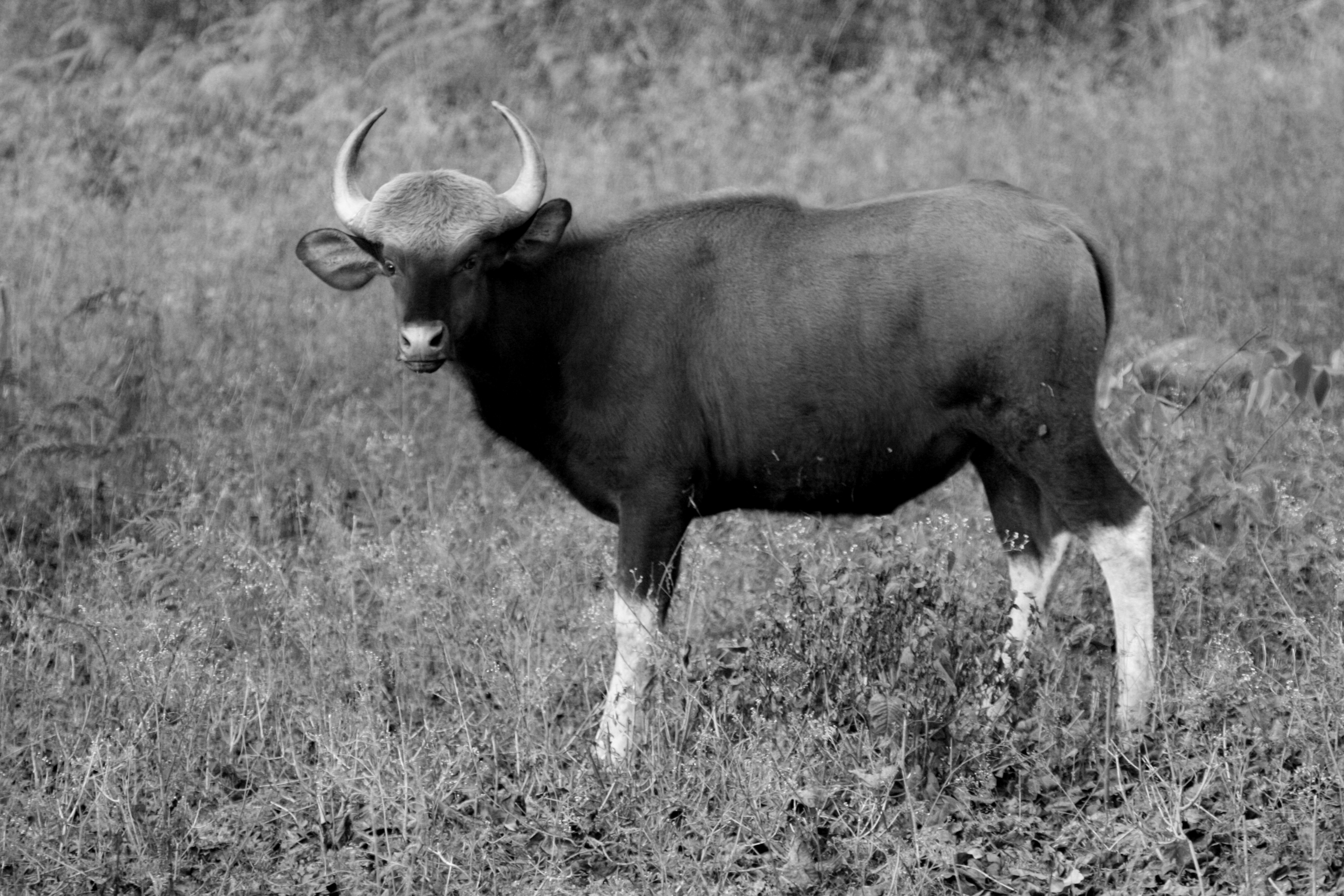
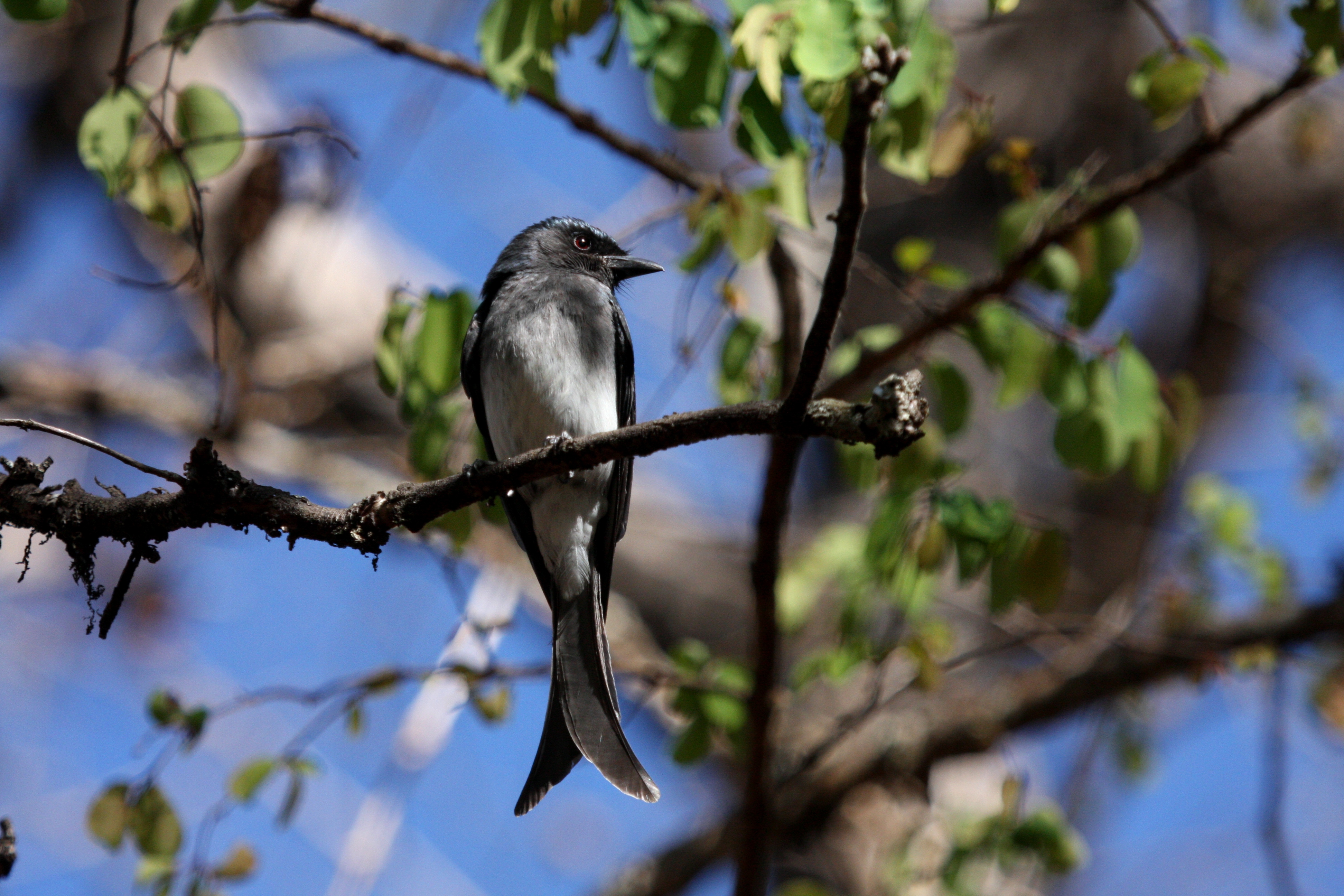
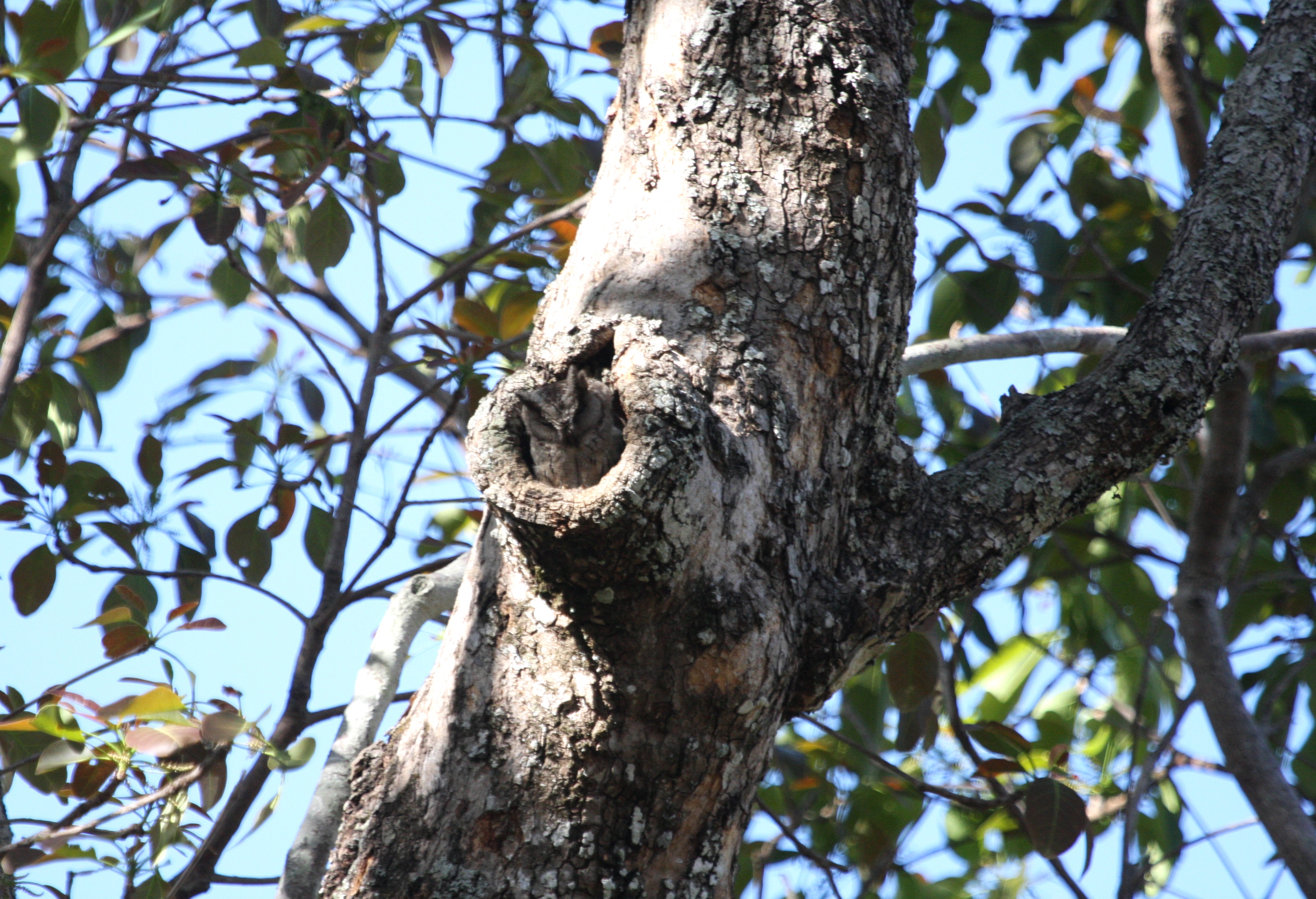
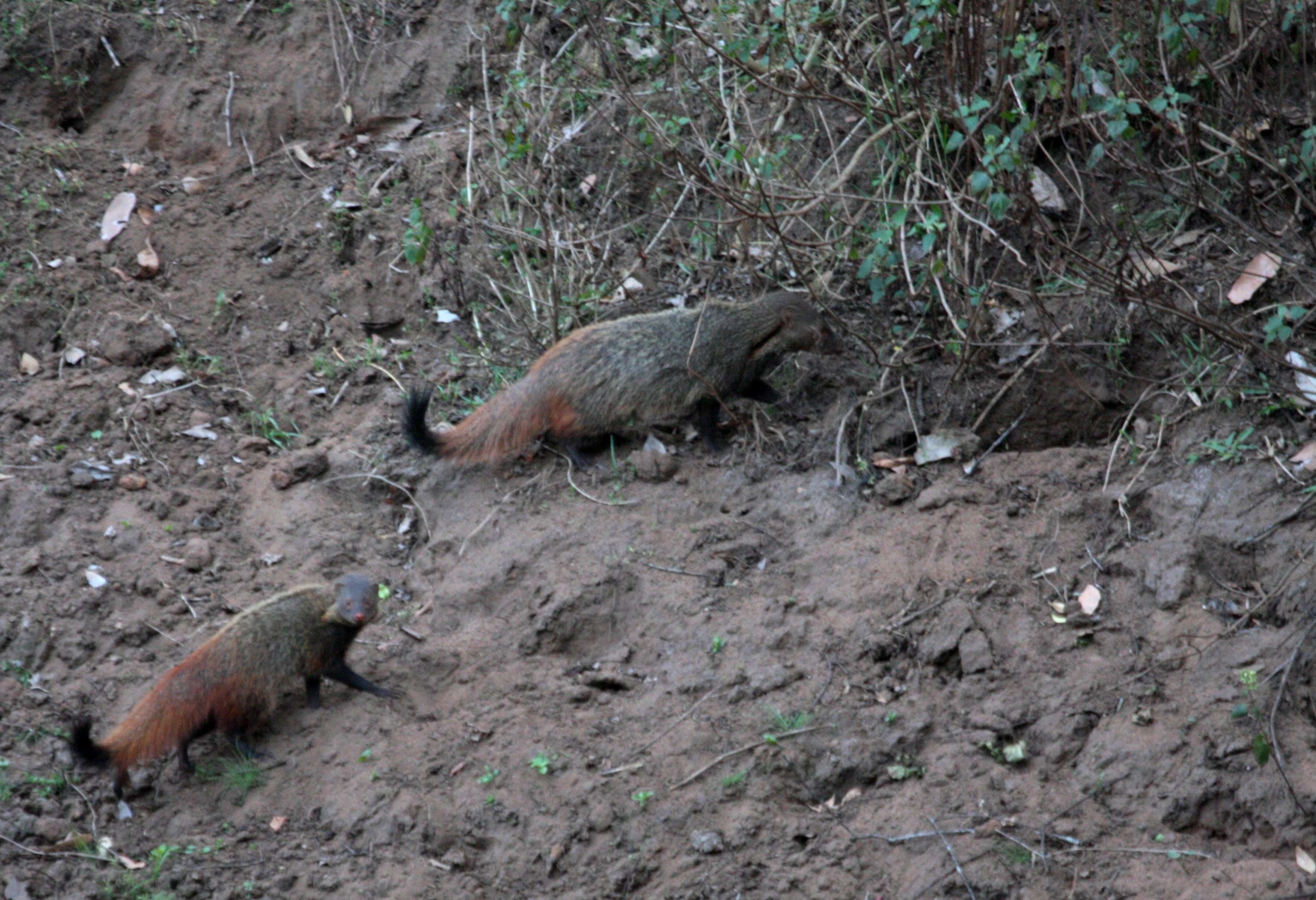
Trip Report: Bandipur National Park, March 2014

Trip Report: Bandipur National Park 

Dates:           29-31 Mar 2014

Camp:           JLR’s Bandipur Safari Lodge

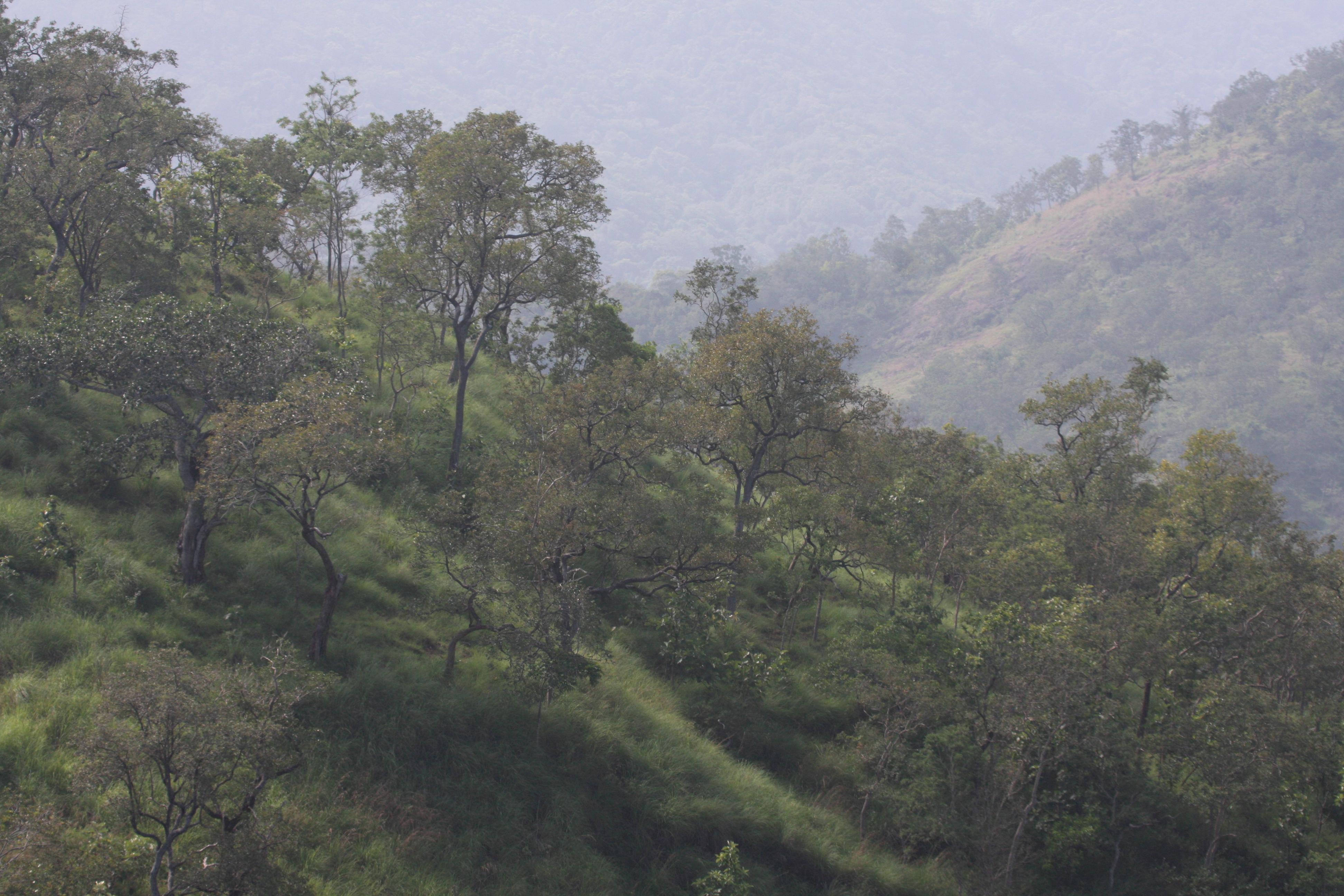
This trip was organized by a bunch of us from the Nov ’13 NTP batch. It was open to the batch, but just four of us ultimately signed up. With the temperature rising, we were hopeful of productive mammal sightings; the forest fire which broke out a little before the middle of March threatened to put paid to our plans, but the safaris resumed after 4-5 days of disruption. We drove through some of these charred forests on one of the safaris, and the affected swathes can also be seen by the Ooty highway a little beyond the Bandipur reception area. A thousand acres were impacted by the fire, although this is perhaps not necessarily the tragedy it is made out to be. If you want to know why I say so, this is a very insightful piece to read.

Bandipur Mar 14 327

We did four safaris and I wouldn’t exactly say that the outings were brimming over with sightings, in terms of birds or mammals. Certainly not a patch on my last trip to Bandipur just before the south-west monsoon, when the safaris were vibrant with encounters every few minutes. That was in fact one of the best trips I have ever done (three tiger sightings, ten minutes spent backing up right besides a magnificent and very tolerant tusker, a Black naped hare, Ruddy and Stripe-necked mongooses that permitted prolonged and close observation, and plenty of birdlife).

This time in stark contrast, most of the time was spent in driving through a silent forest shorn of leaves (and completely infested with lantana), the jeep throwing up a pall of fine dust which settled on and fouled everything. Despite the subdued productivity, it was nevertheless time well-spent for us, with some intense birding and an interesting tigress sighting.

There was a tree spreading over our rooms, and weighed down with hundreds of golden-orange figs. Naturally, this was a magnet for frugivores of all hues and we spent a considerable amount of time between safaris under this tree and around the camp. Red-vented bulbuls, Plum-headed parakeets, Asian koels, Coppersmith barbets and palm squirrels were probably the most common gourmands – we found these on the tree with near-certainty at any point. Red-vented bulbuls were in force and aggressively so, and given to relentlessly harassing their more timorous red-whiskered cousins. Indian grey hornbills appeared fairly frequently.

Elsewhere in the camp, there were plenty of Purple-rumped sunbirds, Cinereous tits, Blyth’s reed warblers, Asian brown flycatchers, Common ioras, Oriental white-eyes and White-bellied drongos. A coucal was a constant (and constantly calling) fixture right outside our door, where we also spend an enthralling few minutes watching a flock (murder is the correct albeit awkward term) of crows mob a Shikra which had settled down to partake of something dead and delicious clutched in its claws. Unfazed, the Shikra decamped only after consuming its meal entirely, leaving nothing for the crows.

On the safaris, the first and last threw up elephant sightings, something that I was looking forward to. A small herd of three each time. In terms of birds, most common were hoopoes, Grey junglefowl, Brahminy starlings, Red-vented bulbuls, Magpie-robins, Flamebacks, Streak-throated woodpeckers, Jungle mynas and babblers (both Jungle and White-headed).

The tiger sighting happened in the third safari (evening). Our driver got a call and headed to a waterhole called Kadamatur Katte, where a couple of vehicles waited by the bank. Alarm calls were strangely absent though a langur foraged nearby. Deer were missing in the vicinity. A lapwing was calling hysterically though, punctuated by peacock calls. A few minutes later, a tigress walked out of a game trail on the opposite bank, and descended to the water to drink. However she seemed uneasy with the presence of the jeeps and wandered away to the right, disappearing into the undergrowth. Our jeep cranked up and moved in the same direction hoping for another interception when the van behind us, still parked at the same spot, signaled frantically. Backing up, we found that the tigress had returned to the water hole, slid into the shallows, and was lying with her haunches submerged. We spent some time watching her until she hauled herself out of the water and stalked away into a game trail in the shrubbery, to our left this time. Turning around, we drove some distance and parked near a spot where the drivers judged her likely to emerge. Five or six vehicles had congregated by this time, and we all waited in expectant silence.

The keyed-up tension settled in a few minutes, and we were trying to determine whether a flock of babblers we could see on a forking track ahead was common or white-headed when the tigress abruptly emerged and cantered across the track a short way ahead, much in the manner of a startled cow. We turned into another road in the same direction and some distance ahead, again found a likely spot where she might emerge. A few more vehicles had added on by this time and a long line waited in patient silence.

line

Eventually our patience ran out and concluding that we’d lost her, we started on our way and had hardly gone fifty meters ahead when she was spotted sitting amidst the lantana, a short way off the road. Our screeching to a halt however alarmed her and rising, she finally turned around and disappeared into the lantana.

Dr. R had stayed on to do an additional safari after we left, and an interesting sidelight is that he returned to the same waterhole the next evening and noticed that in our excitement, we had probably missed spotting a carcass floating in the water. There was evidently some flutter at the human-like appearance of the carcass, but the forest department staff were informed and presently fished out a dead langur.

(Pic by Dr. R).

_MG_9221 jpg-LANGUR

Here are a few more pictures.

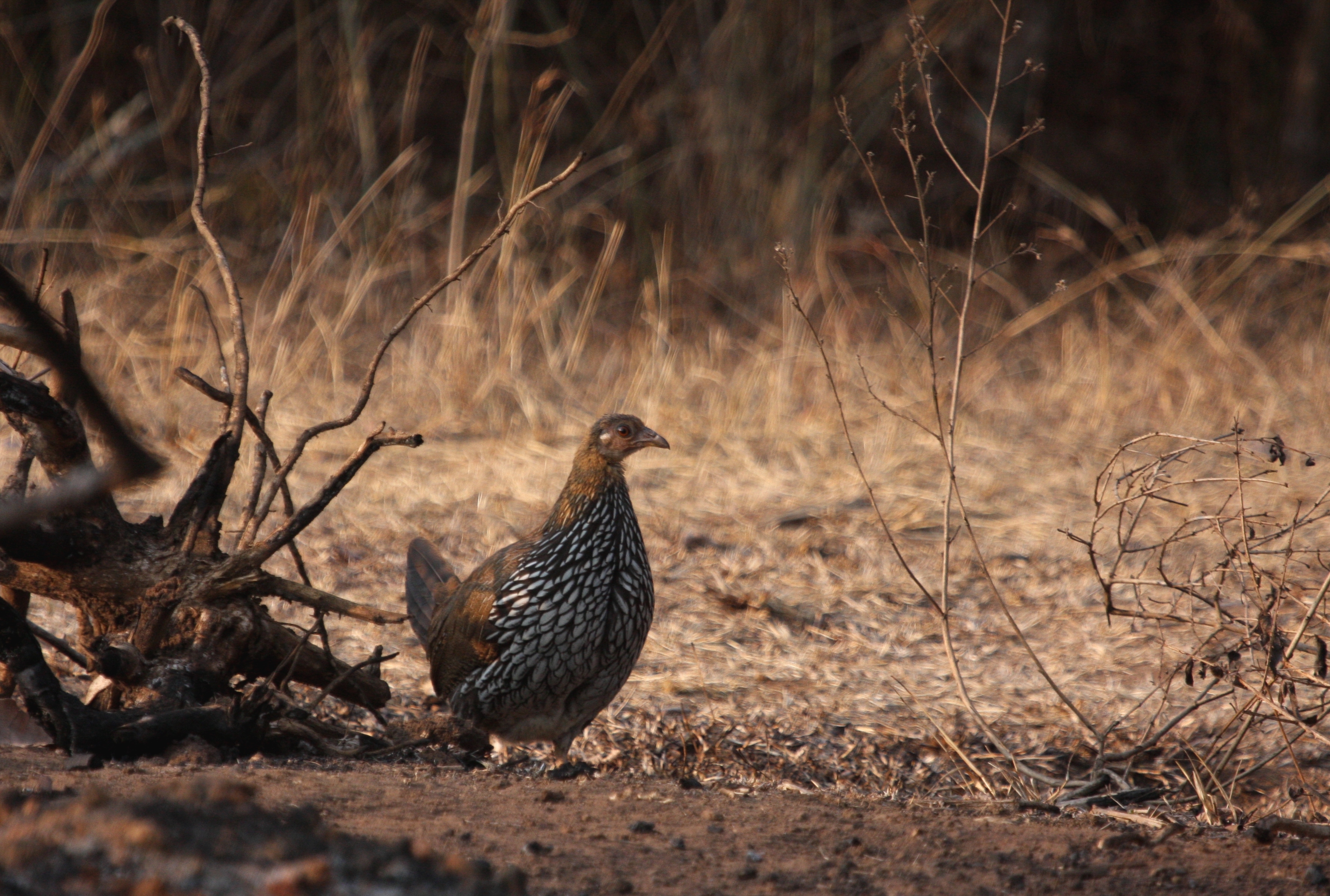
Grey junglefowl, Mr. and Mrs.

Bandipur Mar 14 158

Bandipur Mar 14 422

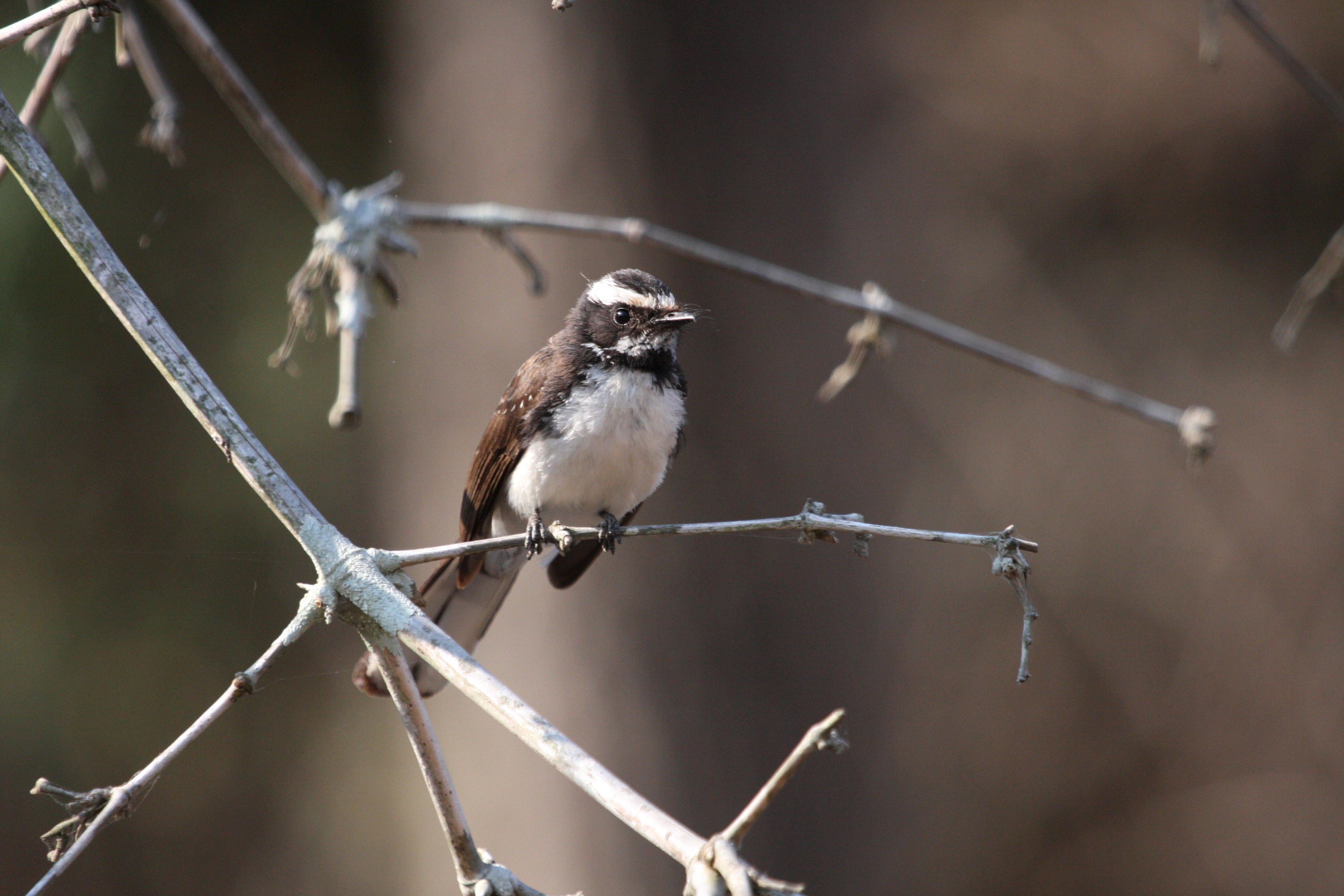
White-browed fantail:

Bandipur Mar 14 212

Grey francolin:

Bandipur Mar 14 371

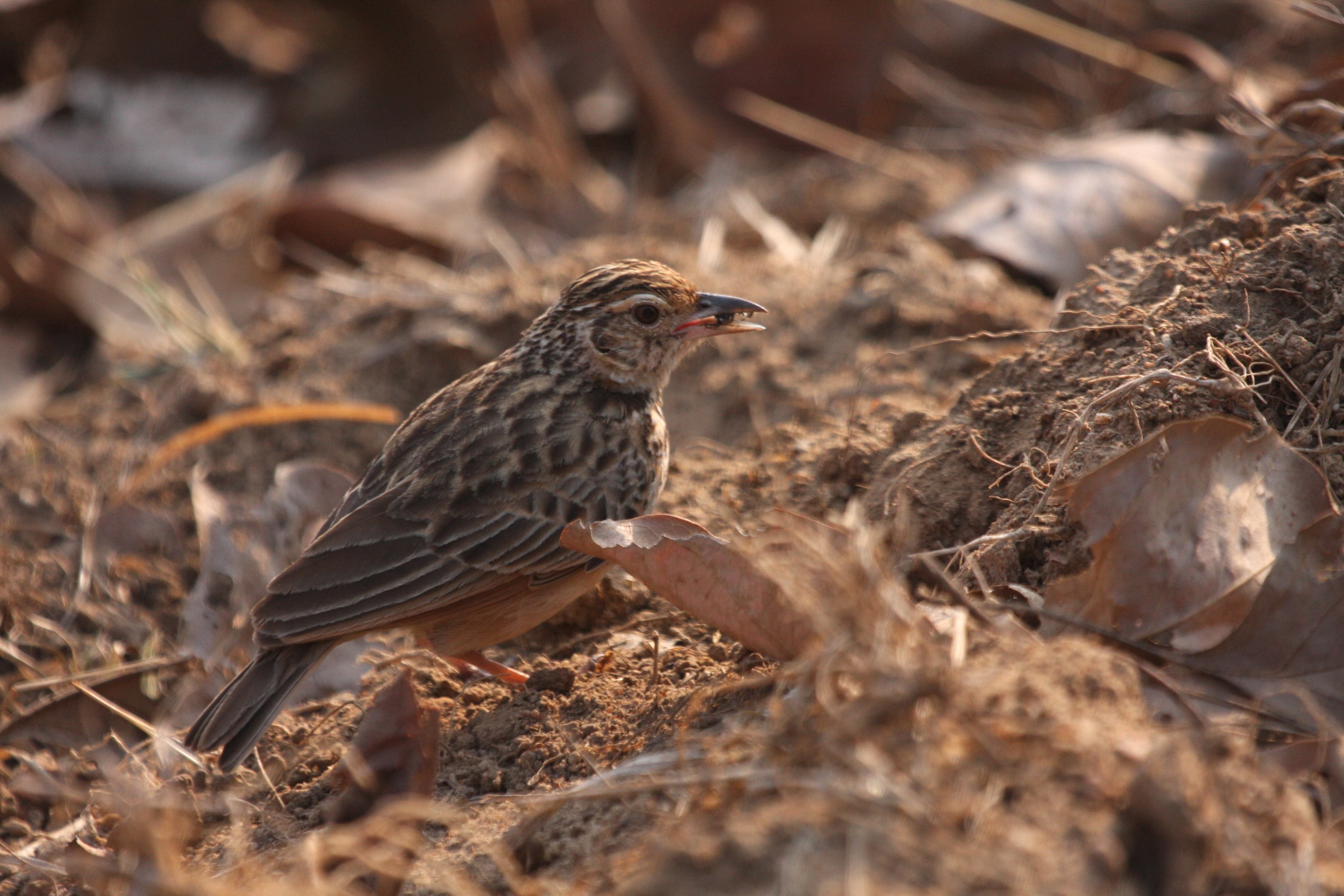
Paddyfield pipit:

Bandipur Mar 14 483

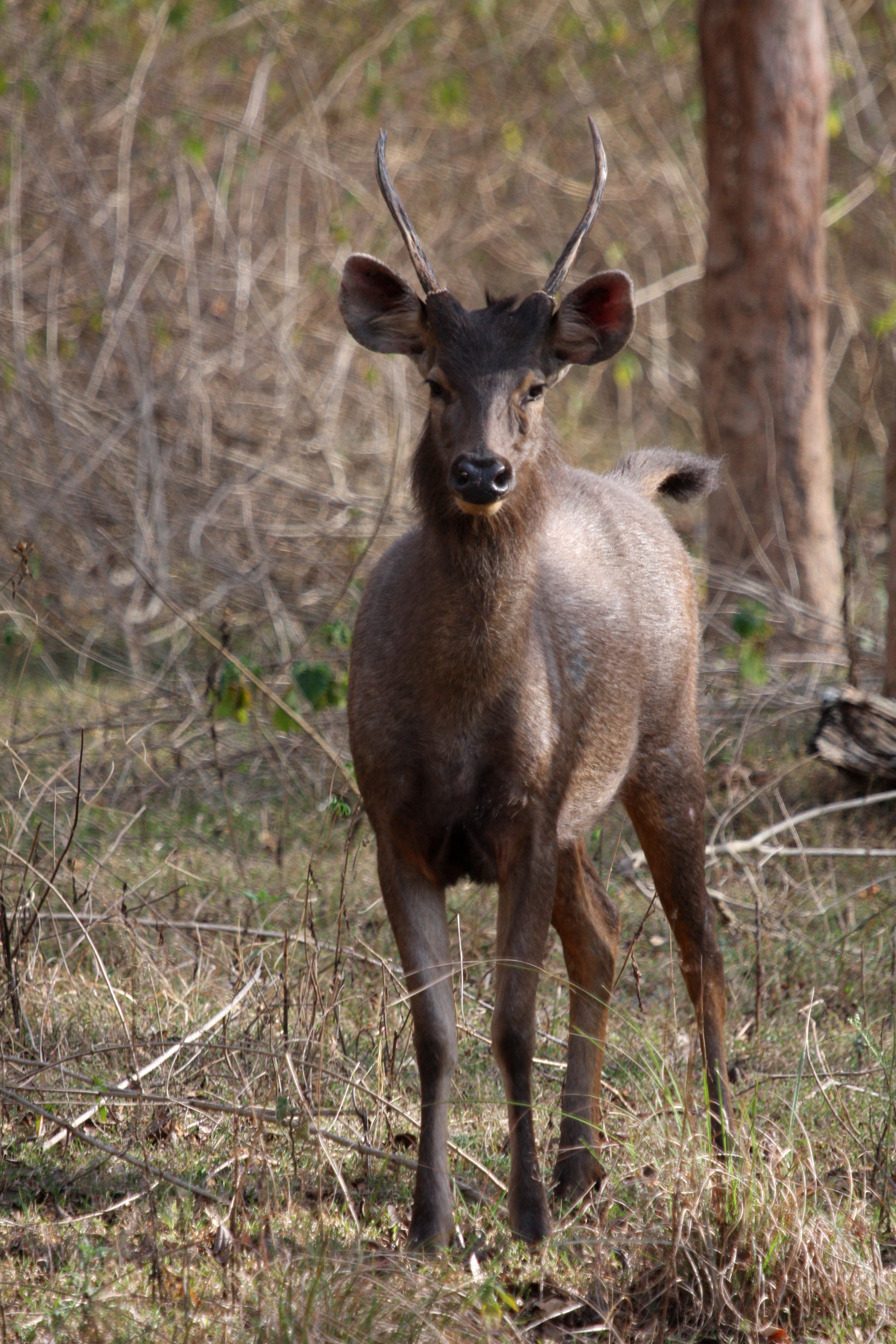
Sambar, note the hairless patch on the neck – this is found in adult males and in pregnant or lactating females, sometimes oozes liquid, and is postulated to be glandular in nature:

Bandipur Mar 14 262

Peek-a-boo:

Bandipur Mar 14 292

Common mongoose on the main road:

Bandipur Mar 14 267

Stripe-necked mongoose, this is the largest species of mongoose in India:

Bandipur Mar 14 092

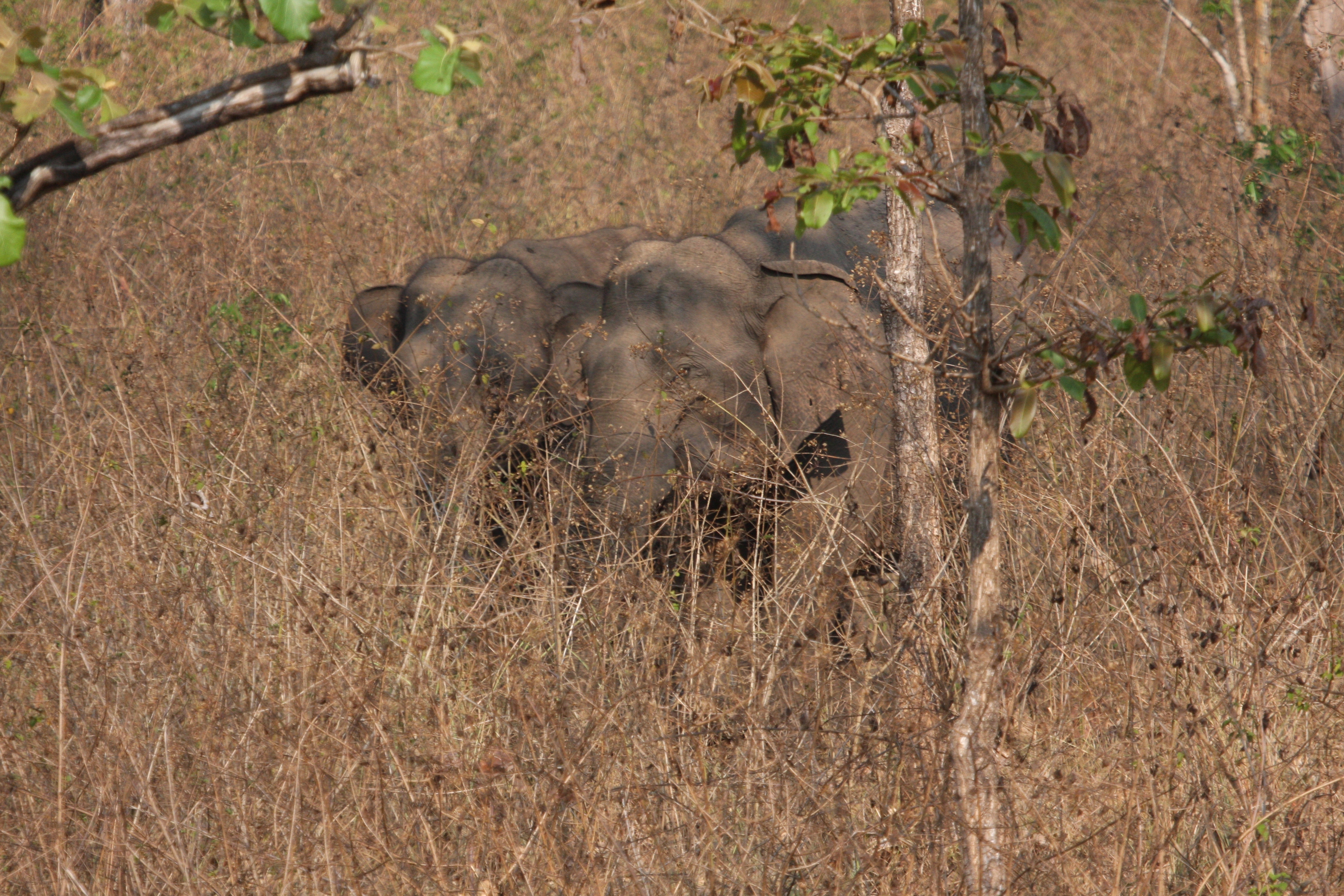
Elephant herd in the grass:

Bandipur Mar 14 512

Unnerved by the presence of the jeep, this nervous matriarch turns to flee:

Bandipur Mar 14 076

Tiger tiger burning bright, pic by Dr. R:

_MG_8803tiger

Here is the complete list of sightings.

Avifauna

1. Asian brown flycatcher

2. Asian koel

3. Ashy drongo

4. Ashy prinia

5. Asian paradise flycatcher

6. Bay-backed shrike

7. Blue-faced malkoha

8. Blyth’s starling

9. Blyth’s reed warbler

10. Brahminy starling

11. Brown fish owl

12. Brown shrike

13. Chestnut shouldered petronias

14. Cinereous tit

15. Common hawk cuckoo

16. Common iora

17. Common kestrel

18. Common myna

19. Coppersmith barbet

20. Coucal

21. Crested serpent eagle

22. Eurasian collared dove

23. Greater flameback

24. Green barbet

25. Grey francolin

26. Grey heron

27. Grey junglefowl

28. Grey wagtail

29. Hoopoe

30. Indian grey hornbill

31. Indian robin

32. Indian treepie

33. Jungle babbler

34. Jungle myna

35. Large cuckooshrike

36. Lesser flameback

37. Little brown dove

38. Little egret

39. Long-tailed shrike

40. Magpie robin

41. Oriental white-eye

42. Paddyfield pipit

43. Pied bushchat

44. Pigmy woodpecker

45. Plum-headed parakeet

46. Purple-rumped sunbird

47. Racket-tailed drongo

48. Red spurfowl

49. Red-vented bulbul

50. Red-wattled lapwing

51. Red-whiskered bulbul

52. Rose-ringed parakeet

53. Shikra

54. Sirkeer malkoha

55. Small green bee-eater

56. Spotted dove

57. Streakthroated woodpecker

58. White-bellied drongo

59. White-browed fantail

60. White-browed wagtail

61. White-headed babbler

62. White-throated kingfisher

63. Yellow-footed green pigeon

Mammals

64. Barking deer

65. Chital

66. Common mongoose

67. Elephant

68. Gaur

69. Malabar giant squirrel

70. Ruddy mongoose

71. Sambar

72. Stripe-necked mongoose

73. Tufted langur

74. Wild boar

75. Tiger

Others

76. Terrapin
Trip report: BRT Tiger Reserve, March 2014

Trip Report:        BRT Tiger Reserve/K Gudi

Dates:               15-17 Mar 2014

Camp:               K. Gudi Wilderness Camp

This was the first of a series of summer trips planned months in advance. I did this trip with a friend VV, and my six year old son. We were perhaps a month too early, as the summer mammal sightings had not yet begun in earnest. However we were compensated by abundant avian winter migrant sightings.

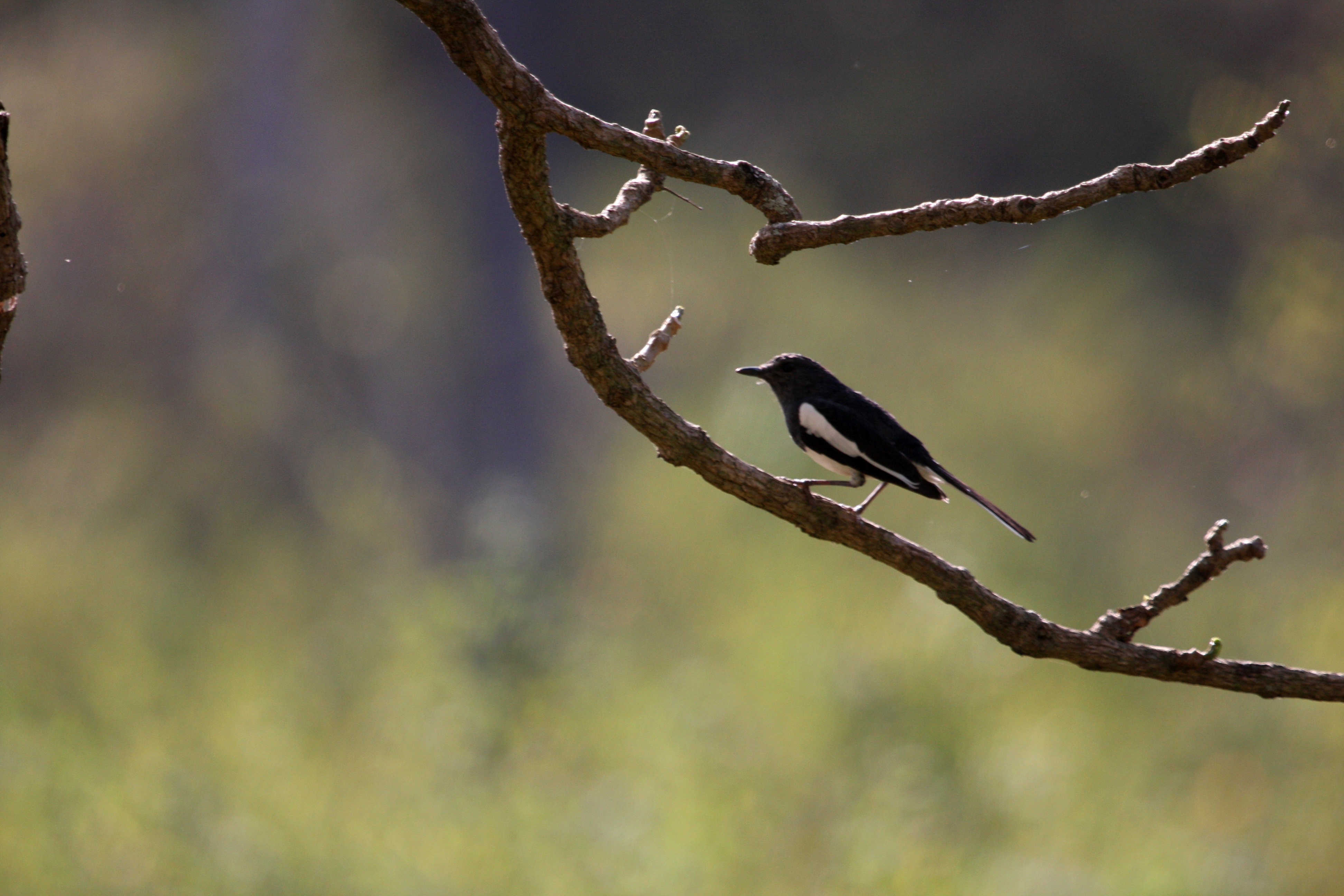
The Biligiri Ranganathaswamy Temple (BRT) Tiger Reserve spreads over 590 sq kms of a mosaic of habitats, ranging from scrub to Shola-evergreen forests.  The reserve comprises five ranges – the eponymous BR temple is in the Yelandur range while the K. Gudi camp falls under the Chamarajanagar range. It lies at the southern border of Karnataka, and is contiguous with the Kollegal FD to its east (which in turn connects with the Cauvery Wildlife Sanctuary further east). The Sathyamangalam Tiger Reserve lies to its south (which in turn is contiguous with the Nilgiri Biosphere Reserve/Mudumalai to its west). The BRT reserve therefore forms a part of the ecological bridge running east-west between the Western and Eastern Ghats.

We stayed two nights at the K. Gudi camp and did four safaris in all. Summer was just beginning to set in and the days were hot and dry, while the temperature plummeted sharply at sun-down leaving the nights mildly chill. Most trees had shed heavily leaving the forest bare. Visibility was nevertheless poor due to lantana thickets crowding in ubiquitous profusion. Common trees were Terminalia elliptica (crocodile bark), Radermachera xylocarpa (maan kombu maram in Tamil), teak on some slopes and plantation areas, and a tree which our driver Rajesh knew the Kannada name of, which we could not identify.

The camp itself was alive with birdlife. Most common were Cinereous tits and Asian brown flycatchers. These two species were pretty much on every other twig. Followed by Orange minivets, Velvet fronted nuthatches, Malabar parakeets, Asian paradise flycatchers, Bronzed drongos, Ashy drongos, Little brown doves and Jungle babblers. The Jacaranda trees in riotous bloom around the reception area had a constant supply of Vernal hanging parrots on them. Black hooded orioles called frequently though we sighted just one individual. We also sighted a Gold fronted leaf bird, a Pigmy woodpecker, a Large cuckooshrike, Grey wagtails, Magpie robins and Indian treepies, apart from Sambar. I’m not counting the chital and wild pigs which are always to be found in the camp. Nor the semi-domesticated blackbuck doe with the Dr. Jekyll-and-Mr. Hyde personality; it toggled between begging for food and belligerent head-butting.

K. Gudi was the first JLR property I visited (over ten years back). Around the turn of the millennium, we were in the habit of visiting K. Gudi almost once every quarter for a couple of years. Memories of being driven out on safari by Thapa  – one of the best spotters you can ever find – and numerous exciting incidents are fresh in my memory. I find I can still recognize the spots where some of those incidents happened.

The four safaris were largely centred around birding, considering that not too much showed up by way of  megafauna, charismatic or otherwise. I was especially disappointed not to see any elephants. For me, elephant sightings carry the same thrill as sighting large carnivora.

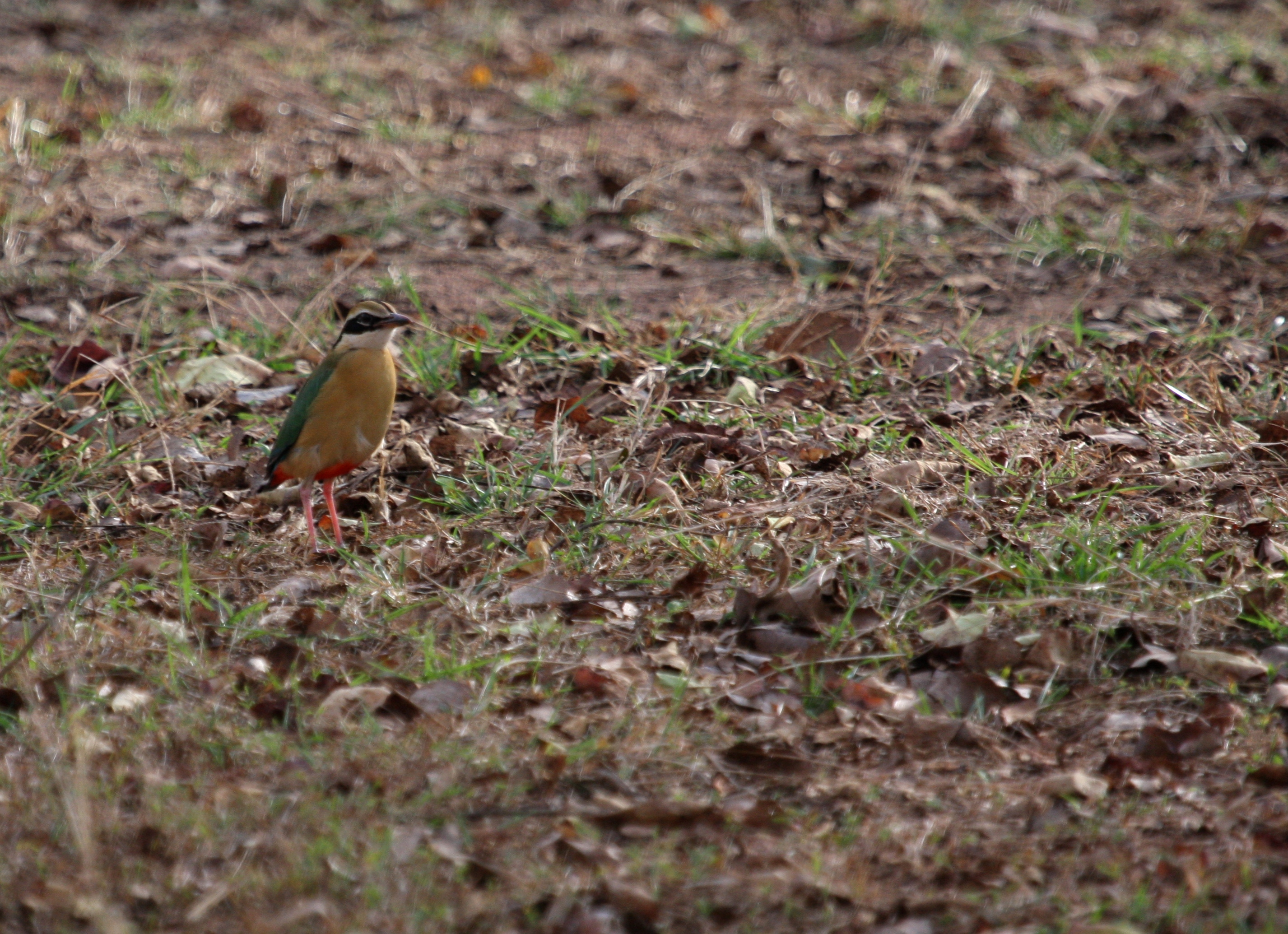
Most abundant in the forest were three types of drongos (Bronzed, Ashy and White-bellied), Magpie robins, Malabar parakeets, Lesser flamebacks, Indian blackbirds, Bulbuls (both Red-whiskered and Red-vented),  Jungle mynas, Hill mynas, Asian paradise flycatchers, Blue capped rock thrushes,  Hoopoes, Jungle babblers and Indian treepies. Fairly common also were Common hawk cuckoos, Orange headed thrushes, Indian pittas, Ashy woodswallows and Grey junglefowl.

We had multiple sightings of a Brown fish owl by the same kere. On the way to the safari and a short way from the camp, an Indian scops owl roosted in a burrow high up – we looked for it each time we passed and sighted it twice. And on the way back to camp, a Racket tailed drongo consistently showed up at one spot. For that matter, the pitta turned up in the same place for multiple sightings, as did one particular Asian paradise flycatcher individual. Incidentally, VV and I had some discussion around differentiating juvenile and female Asian paradise flycatchers in the field. Both are rufous and broadly similar looking, but the juvenile male has a jet black throat, and a blue eye-ring. The female has a paler throat and lacks the eye-ring.

Two encounters with atypical individuals happened in the first safari. The first one concerned a sambar stag. We sighted it beside the track and halted. The stag was frozen immobile and alert, watching us. We inched forward in spurts getting closer and closer, and it didn’t move a muscle. Finally when we were practically beside it, its nerve gave way and stamping its foreleg as sambar are wont to do when spooked, it honked in alarm, the sudden loud calls resonating in the quiet of the jungle. Another unseen individual in lantana thickets just beyond was unnerved by these calls and gave alarm too. The herd of three finally disappeared, crashing through the undergrowth.

The second concerned a Grey junglefowl cock that effectively blocked the road, showing little sign of fear at the sight of the jeep. We were forced to tail it slowly for a distance before it stepped off the road and made way.

On day two post breakfast, we drove down the highway towards the south, turning back shortly before the Navodaya checkpost. Chital were calling in alarm at a waterhole a little before this checkpost. We waited for a while, but nothing emerged and the calls presently subsided. Incidentally, a male tiger was sighted on this stretch at 8:30 AM the previous morning by a batch of pilgrims. Elephant encounters are also apparently a daily occurrence here and a little beyond the K Gudi camp, a pack of dhole had been sighted the previous day. However our luck was limited to Malabar parakeets, a Yellow-capped woodpecker, a pair of Orange minivets, a Jungle owlet, Bay-backed shrikes and Tufted langurs,

We then drove back and past the camp, all the way north, turning back a little before the eponymous BR temple. This section of the forest is heavily disturbed, with plenty of traffic, grazing cattle and settlements and is not particularly pleasurable to drive through for this reason.

Here is a full list of the sightings:

Avifauna

  1. Ashy drongo
  2. Ashy woodswallow
  3. Asian blue fairybird
  4. Asian brown flycatcher
  5. Asian paradise flycatcher
  6. Bay backed shrike
  7. Black hooded oriole
  8. Blue bearded bee eater
  9. Blue capped rock thrush
  10. Bronzed drongo
  11. Brown fish owl
  12. Cinereous tit
  13. Common hawk cuckoo
  14. Common rosefinch
  15. Coppersmith barbet (calls only)
  16. Coucal
  17. Gold fronted leaf bird
  18. Greater flameback
  19. Greater racket tailed drongo
  20. Green barbet
  21. Grey junglefowl
  22. Grey wagtail
  23. Hill myna
  24. Hoopoe
  25. Indian blackbird
  26. Indian Pitta
  27. Indian Scops owl
  28. Indian treepie
  29. Jungle babbler
  30. Jungle myna
  31. Jungle owlet
  32. Large cuckooshrike
  33. Lesser flameback
  34. Little brown dove
  35. Magpie robin
  36. Malabar parakeet
  37. Malabar whistling thrush
  38. Orange headed thrush
  39. Orange minivet
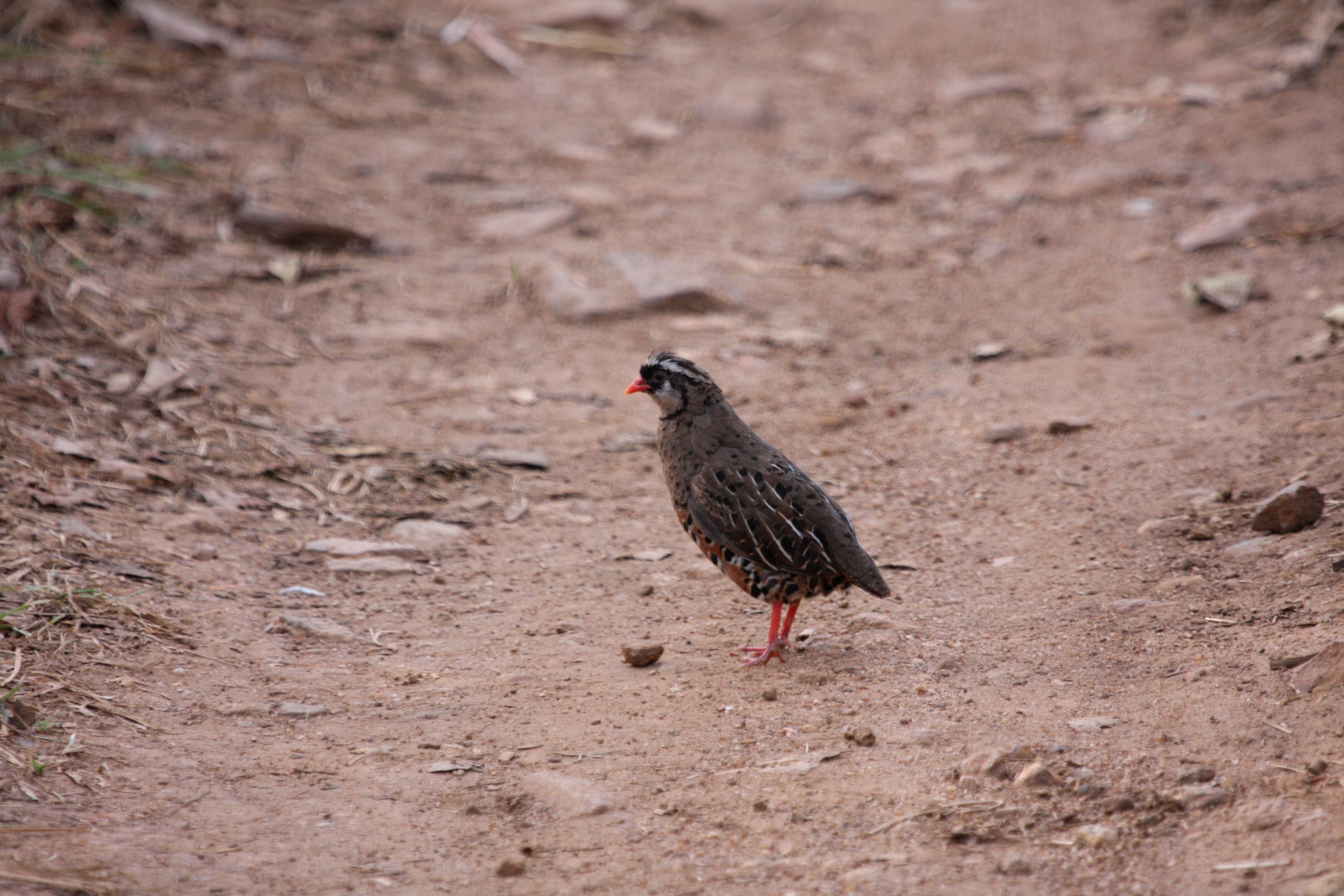
  40. Painted bush quail
  41. Pigmy woodpecker
  42. Pipit (species not recognized)
  43. Red spurfowl
  44. Red vented bulbul
  45. Red whiskered bulbul
  46. Rufous babbler
  47. Spotted dove
  48. Streak throated woodpecker
  49. Tickell’s blue flycatcher
  50. Tricoloured munia
  51. Velvet fronted nuthatch
  52. Vernal hanging parrot
  53. White-bellied drongo
  54. White-throated kingfisher
  55. Yellow capped woodpecker

Mammals

  1. Barking deer
  2. Bonnet macaque
  3. Chital
  4. Gaur
  5. Malabar giant squirrel
  6. Sambar
  7. Stripe-necked mongoose
  8. Three-striped palm squirrel
  9. Tufted langur

Here are some random pictures:

Magpie robin:

BR Hills Mar 14 008

Painted bush quail:

BR Hills Mar 14 016

Jungle myna:

BR Hills Mar 14 030

Sambar:

BR Hills Mar 14 093

Indian pitta:

BR Hills Mar 14 150

Blue bearded bee eater

BR Hills Mar 14 218

Gaur:

BR Hills Mar 14 229

Barking deer:

BR Hills Mar 14 321

White-bellied Drongo:

BR Hills Mar 14 368

Indian Scops owl:

BR Hills Mar 14 484

Stripe-necked mongoose:

BR Hills Mar 14 519

Giant crab spider, a pair of these graced the loo:

spider

“Biligiri”, the last log hut in its row, abuts the jungle and is reputed to offer tiger and leopard sightings if you are lucky:

biligiri

Thattekad Reprised – Feb ’14

Trip Report:        Dr. Salim Ali Bird Sanctuary, Thattekad

Dates:                   21-22 Feb 2014

Camp:                   Periyar River Lodge

My experience in Thattekad in January enthused BIL B enough to want to do a repeat trip over a quick weekend. Accordingly we bussed in from Bangalore and pretty much replicated the itinerary from the prior trip. With one difference, but we’ll talk about that in a while.

Bhothathankettu was a disappointment and devoid of birdlife. Unlike the last time when I visited on a week day (Friday), we ended up visiting on a Saturday and the place was as lively with squawking tourists this time around as it was with avifauna the last time. The Flame-throated bulbuls were there though, along with the Racket-tailed drongos and Chestnut headed bee-eaters. I checked for the record-breaking teak tree mentioned in my previous post and not unexpectedly, it lay across the river somewhere, out of bounds without permission.

Mr. Luigi and the staff at PRL were hospitable as ever and we settled in with great hopes for the evening. We linked up with Gireesh Chandran at the place where I had sighted the Dollar birds the last time around (they were there this time too). Now Gireesh was accompanied by a couple of his house guests, and these two men had gawked their way through their wish-list over the past couple of days, barring three candidates –  Mottled wood owl, Black baza and Drongo cuckoo. And therein lay the rub. Gireesh assumed BIL and I would fall in with their plans to devote our energies to just these three species.

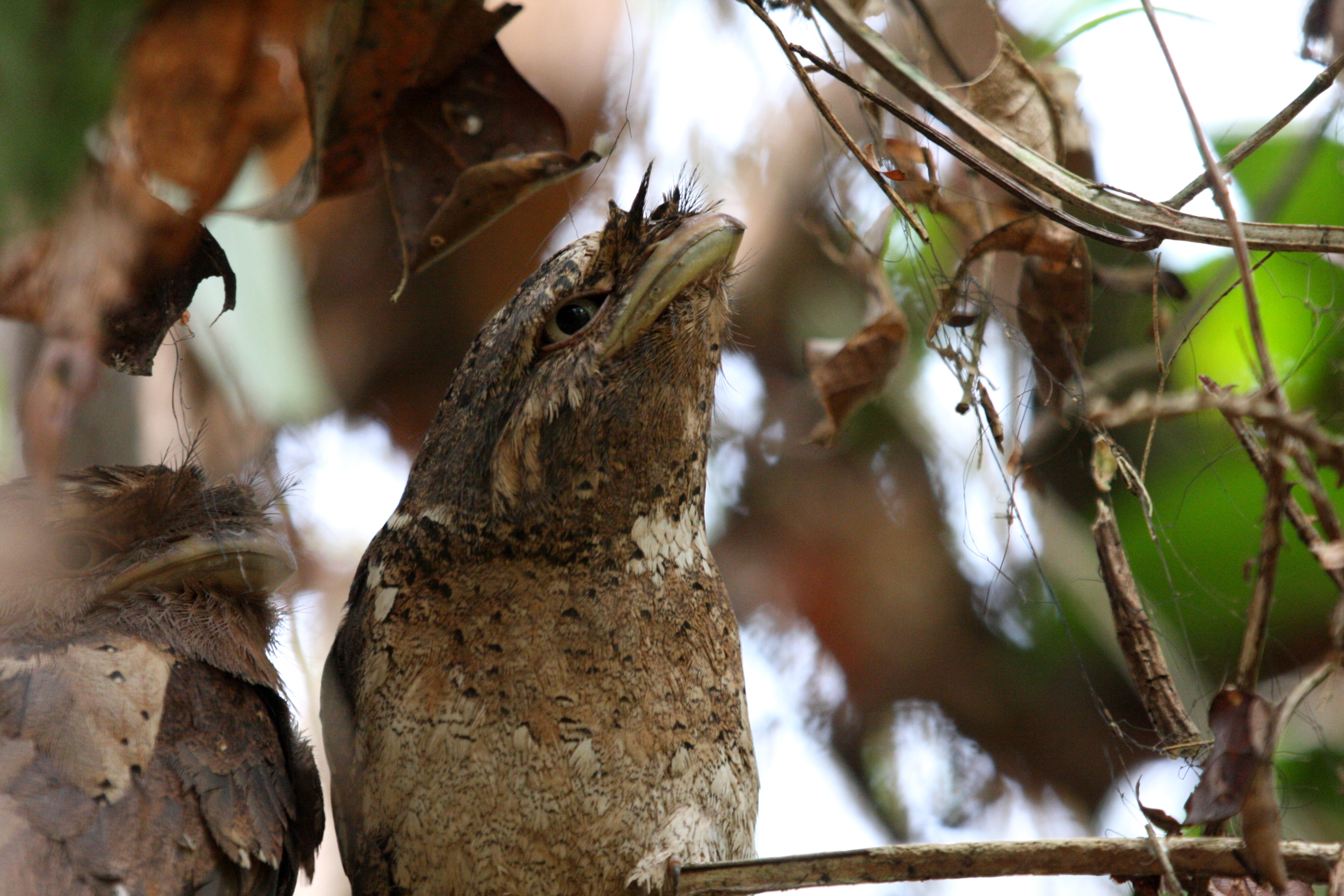
Anyway, we went into the reserve forest area adjacent to the sanctuary and saw a pair of Sri Lanka frogmouths, Yellow-browed bulbul, Brown-breasted flycatcher, White-bellied treepie and the much-sought-after Drongo cuckoo. Not counting the ubiquitous Malabar hornbills, Indian treepies and Racket-tailed drongos. At this point, the rain played spoilsport and we scurried back to town, ending the day’s work with a precious hour’s daylight wasted.

The next morning, Gireesh announced that he planned to take us all to Bhoothathankettu in search of the Black baza, and I was not pleased with this. We had just these two outings on our itinerary and it didn’t make sense (to me) to take BIL all the way to Thattekad and back without ever having set foot inside the sanctuary. At any rate, Gireesh wasn’t going to alter his house guests’ plans, and off he went to Bhoothathankettu looking for the baza. I wanted BIL to experience the rocky area inside the sanctuary that was so productive last time, and got Gireesh to call another guide. Some sort of tenuous arrangement was patched up hurriedly over the phone. BIL and I then drove back to the spot where there was a gap in the sanctuary’s fence and crossed in. Gireesh had some hesitation in sending us in on our own as a herd of elephants was sighted the previous evening in the area, but the fellow on the phone cleared that concern.

Anyway we found our way to the rocky area and joined Vinod, and he did a very decent job of guiding the morning’s outing. We saw Ashy drongo, Hill myna, Rufous woodpecker, Blyth’s starling (excellent and multiple sightings), Green imperial pigeon, Common Iora, Malabar hornbill, Gold fronted leaf bird, Orange minivet, Small minivet and Jungle nightjar. Apologies for the patricians and plebeians all merrily mixed up in that list. Or perhaps not. The highlight of the outing was a frogmouth and chick sighting.

The boat ride around PRL was spectacular as ever. Mr. Luigi himself joined us this time. Ironically, we saw the bird that was partly responsible for the morning’s hullabaloo – the Black baza – right off the boat, a short distance from PRL. And a truly spectacular bird it is. We also saw Black naped oriole, Asian fairy blue-bird, Vernal hanging parrot, Orange minivet and a Crested serpent eagle that thumped onto some small creature in the grass not fifteen feet from us and covered it’s trophy with outspread wings, glowering at us.

Post boat ride, we spent a glorious hour swimming in the river in front of the lodge, and I regret not having done this in the previous trip. Few experiences can beat lazing in a cool, slow-running river flanked by verdant greenery in hot weather.

I should also mention here that the staff and management of PRL showed an admirable degree of concern over the guiding issue, and took pains to follow up and apologize after we had returned to Bangalore. Another reason to return to PRL yet again, next winter.

Here are a few pictures:

Bhoothathankettu:

Image

Thattekad 2nd trip 023

Batrachostomus moniliger, female on the right:

Thattekad 2nd trip 049

Thattekad 2nd trip 069

Frogmouth with chick:

Thattekad 2nd trip 152

CSE:

Thattekad 2nd trip 179

“What you lookin’ at?”

Thattekad 2nd trip 203

Continue reading

Trip Report: Thattekad Bird Sanctuary, Jan-Feb 2014

Trip report:         Thattekad Bird Sanctuary

Dates:                   31-Jan/1-Feb 2014

Camp:                  Periyar River Lodge

Written:              2-Feb 2014

I’ve wanted to get to Thattekad for a while. This trip materialized unexpectedly though. Work took me to Kochi for a couple of days and I took advantage of this to spend an additional two days at Thattekad.

Thattekad

The Thattekad bird sanctuary, more precisely called the Dr. Salim Ali Bird Sanctuary lies about 80 kilometers north-east of Kochi. It comprises twenty five square kilometers of muggy, lowland evergreen forests and an astonishing number of avian species – over 280 in fact.  There are also portions of riverine, scrub and dry deciduous habitats. The Periyar river and its tributaries flow through the area. The recommended window for visiting is Oct-Apr, though the season for winter migrants ends with February.

Bhoothathankettu

We’d left Kochi early in the morning and as check-in time at the Periyar River Lodge (PRL) was at noon, we had time to kill. We stopped off en route at Bhoothathankettu, 64 kilometers from Kochi, for a spot of birding. This forest falls under the Thundathil range of the Malayattoor Forest Division. In 2012, forest staff had discovered what is believed to be the largest teak tree in Asia in this range. Forty meters tall, 500 years old and 765 cms in girth, the giant remained undiscovered until then.  Unfortunately I discovered this fact today, after the trip was done.

There is a trail leading off towards Old Bhoothathankettu just before the entrance to the Idamalayar Hydroelectric Project. This trail runs through some very pleasant evergreen forests for a kilometer or two until it reaches the Idamalayar, a tributary of the Periyar. Our driver Vijay was familiar with the area, blessed with superb eyesight, and was developing a fascination for learning the identities of hitherto unknown birds he’d been seeing for most of his life. This plus the time we had on our hands meant we could spend a very pleasant couple of hours on that trail, walking at the pace forests deserve to be walked through. We saw Malabar giant squirrel, Greater racket-tailed drongo, Malabar parakeet, Vernal hanging parrot, Nilgiri flycatcher, Grey headed fish eagle, Malabar whistling thrush and Orange headed thrush. Once we were done, Thattekad was but a short half hour drive from here.

Periyar River Lodge (PRL)

I hadn’t checked out the Hornbill camp, but I did see a couple of other places in Thattekad and nothing is a patch on the PRL in terms of the ambience (from what I saw). The lodge is small and cosy – just two rooms – and is built largely of teak. It is tastefully sited on the Periyar’s banks, in the midst of a rubber plantation. You could spend all day here, sitting by the river bank or reading on the porch.

Image

Lunch done, N disappeared to nap off the fatigue of his journey leaving me to my own devices. I sat with the binos watching a pair of Red whiskered bulbuls gleaning off a tree facing the porch. Something skittered onto a slender bole fifteen feet away. It didn’t seem to be a bird or butterfly and sure enough, it was Draco dussumieri – the Southern flying lizard. I spent an engrossed ten minutes watching it skim from tree to tree. The little creature had a yellow gular sac that it folded and unfolded in a steady deliberate manner.

Once the lizard disappeared, I climbed down to the riverbank and settled down on an exposed root. A Grey junglefowl cock that had been persistently calling during lunch was now soundlessly foraging at the water’s edge on the far side. Nearer at hand, two rocky outcrops midstream held three interesting couples – a pair of Whiskered terns that occasionally took to the air on fishing forays, a much larger pair of River terns that was all squawk and little action, and an odd pair of sleeping cormorants – greater and little. The terns appeared to have a commendable strike rate, tracing large circles above the water together and steeply descending occasionally to scoop prey off the surface before returning to their place on the rock.  None of the birds appeared to be bothered by the sun that blazed onto the exposed rock. And all three pairs seemed to be permanent habitués of the rock considering that I saw them on it all the time in the two days I was there.

I also had occasion to speed-read the visitors’ book in the little atrium. PRL is visited mainly by European and American tourists and unsurprisingly, they all wax eloquently about the beauty of the place and the graciousness of the hospitality.

Before I move on, I should make a mention of the open-to-air bathrooms at PRL. There is something singularly delightful about showering with a canopy of green peeping from high overhead.

While I was waiting at the Kochi airport, a friend asked me what the highlights of the trip were. After some thought, I concluded that the PRL experience was definitely one of them (the other being basking in the close presence of the frogmouth).

Gireesh

When I checked around prior to traveling, almost everyone I spoke to pointed me to Gireesh Chandran for guiding. Gireesh is a practicing lawyer aside from his near-legendary guiding credentials. He lives at the periphery of the sanctuary just off the main entrance and has eight rooms to accommodate guests who also wish to stay with him. Gireesh is a man of remarkable energy, with that equally remarkable ability to converse comfortably with you like he knew you forever. And since remarkable things come in triples, Gireesh also has a remarkable story around how he came to be a birding guide. But you should hear that from him first hand…

Being guided by Gireesh Chandran in Thattekad involves keeping up with his blistering pace of walk. Gireesh is a connoisseur of avian super-celebrities, and his single-minded purpose is to make sure you get to cover as much of the A-list as possible in the limited time you have with him. So if you’re expecting to soak in the sights and smells of the forest at leisure, stopping by every bird or other interesting sight, be forewarned that these outings aren’t going to allow you that privilege. Gireesh puts an enormous amount of effort into getting you to meet the A-listers and he expects you to do your bit by sticking with the program. He is often on the phone connecting with fellow guides and others, ceaselessly keeping track of what is sighted where.

The A-list

A quick pre-trip check revealed that the A-list for Thattekad roughly comprises: Sri Lanka frogmouth, Indian pitta, Nilgiri wood pigeon, White-bellied treepie, Nilgiri flycatcher, Grey headed bulbul, Wayanad laughing thrush, Rufous babbler, Malabar lark, Crimson backed sunbird, White-bellied blue flycatcher, Malabar parakeet, Mottled wood owl, Oriental bay owl, Oriental Scops owl, Black throated munia, Black baza, Dollar bird, Drongo cuckoo, Banded bay cuckoo and two needletails. We sighted roughly half this list.

Day 1

We did two outings, one in the evening and another the following morning. For the first one, we linked up with Gireesh in the late afternoon a few kilometers ahead of the sanctuary gate (whilst approaching from PRL). The plan was to cross into the sanctuary at a point a few kilometers north of the main gate. We were admiring a Brown breasted flycatcher prior to plunging under the fence-wire when Gireesh got a message on his “phone tree” about an Oriental bay owl having been located at another location. It was then a scramble back to the cars. This worthy had been sighted in the reserve forest adjacent to the sanctuary proper, and we veered off the dirt road (on foot) into game trails in the thick underbrush. And there in the dim understorey was our quarry – Phodilus badius – the Oriental bay owl.

Image

Three Hungarian birdwatchers whom Gireesh was also guiding settled down to spend some time with the owl, while he took me aside to locate the Sri Lanka frogmouth. I had given Gireesh my wishlist comprising seven species – Sri Lanka frogmouth, Crimson-backed sunbird, Mottled wood owl, Oriental bay owl, Black baza, Vernal hanging parrot and Dollar bird – he was looking to get cracking right away; (Gireesh delivered five of these in two sessions plus many more bonus sightings – the elusive exceptions being the baza and the Mottled wood owl).

Sighting the Sri Lanka frogmouth – Batrachostomus moniliger is a fairly unique experience. The bird roosts unmoving in thick undergrowth, often in the same spot for months, and at a low height. Due to its reliance on crypsis, you can creep to within a couple of meters provided you keep silent and refrain from making contact with any part of the shrubbery the bird is perched on. And once you are in position, you can spend as much time as you want staring away (or clicking); the bird continues its somnolent trance quite unmindful of you.

Image

Owl and frogmouth done, it was back to the cars. (We had briefly stopped en route to the frogmouth for a Drongo cuckoo sighting). I had asked to be shown the quaintly named Dollar bird, and Gireesh stopped off at a point by the roadside and walked me to a pair high up on a tree.

Image

The Hungarian trio was in quest of an obscure munia I haven’t heard of, and Gireesh led us to a still pool by the river to look for it.

Image

While the Hungarians went about their business, N and I settled down to contemplate a circling Whiskered tern, a lone Asian openbilled stork and a number of Pond herons. Gireesh however doesn’t favour one set of his wards to the detriment of others, and it wouldn’t do to keep me hanging around waiting for a munia I’d never heard of. He therefore asked me if I’d like to meet the Stork-billed kingfisher. He then spent some considerable effort in looking for this bird, including with the lure of playback. But our luck was out and not wanting us to end the day with failure, Gireesh led us into the sanctuary via the main gate to look for the Indian pitta, leaving the Hungarians to their munia.

Image

A few steps into the gate, he managed to spot the pitta and we spent a few minutes admiring the bird in the fading light.

Image

The light was now gone and after stopping by his place for a quick cuppa, we headed back to the PRL in the dark, feeling that glow that accrues from a day that unfolds well.

Day 2

We met for the morning outing at the same point as the previous day, and crossed over into the sanctuary via a small gap in the (unpowered) electric fencing. Dark fronted babblers buzzed a chorus in the background. Gireesh led us up the rocky area ASK had mentioned to me earlier, to a small and lively clearing. We stood around there for a half hour. We spent another half hour on the edge of a rocky promontory nearby with a grand view of the forest below. A succession of species turned up around us in both spots.

Most numerous were Gold fronted leaf birds and Flame throated bulbuls. Malabar grey hornbills were everywhere, and their weird cackling constantly in the background on the trails as well as in the PRL. Other species sighted were the Malabar trogon, a flock of Malabar starlings, Asian fairy bluebird, Bronzed drongo, Ashy drongo, Vernal hanging parrot, Malabar parakeet, Green barbet, Golden oriole, Black headed oriole, Lesser flameback, Greater flameback, Heart spotted woodpecker, White-bellied woodpecker, Green imperial pigeon, Hill myna, Small minivet, Orange minivet, White rumped needletail, Loten’s sunbird, Crimson backed sunbird, Asian brown flycatcher, Grey tit, Grey fronted green pigeon, Crested goshawk and Banded grey cuckoo. A lone Malabar giant squirrel was also seen foraging in the forest below.

Image

Image

Image

We were elated with the morning’s work, but there was more to come. We trooped to yet another spot to look at a solitary Jungle nightjar – Caprimulgus indicus – roosting on a branch high up on a tree, (the only species of nightjar that doesn’t roost on the ground).

The others in the group hadn’t seen the frogmouth, so Gireesh took us to another solitary female deep inside the underbrush. And then we were done and eager to get our breakfasts.

Image

The canoe ride

Mr. Luige, the manager of PRL had organized a post-breakfast canoe ride up the river. Several mentions in the visitors’ book of the canoe ride’s virtues triggered our request. The “canoe” turned out to be a rather large, well-crafted wooden boat manned by two people (Eldhos of PRL and his brother). The ride was through some breathtakingly beautiful scenery. Rank vegetation and dark forests on both sides of the shallow verdant waterway. The only problem was the sun. The ride should have been done earlier in the morning, or late in the evening. As it was, a blazing sun burned down, tanning us all three shades darker. Doing this ride in the early morning or late evening would take you as close to paradise as is possible on earth.

Image

At one spot we noticed a Malabar grey hornbill sitting on the bank. It took flight at our approach, but landed right back at the same spot. Suspecting that it was caught in a snare, we docked the boat and Vijay and I climbed up the sandy bank. The bird allowed us to approach very close, and then took flight a short distance up a tree. There was no snare and the bird was not tethered. Perhaps it was a juvenile, not fully fledged although it appeared to be adult-sized.

A fair bit of birdlife was visible on the ride. Numerous Chestnut headed bee-eaters hawked everywhere. On the trees were Asian fairy bluebird, Racket tailed drongo, a solitary Grey headed fish eagle, Malabar parakeet, Hill myna and a Little heron. In the river were cormorant, darter, River tern and the ubiquitous Whiskered terns. We spotted a solitary terrapin basking on the bank. Just before docking at the lodge, we sighted a pair of Dollar birds and a solitary White browed wagtail.

Image

The list

Here is the full list of avian species sighted.

1/ Asian fairy bluebird

2/ Chestnut headed bee-eater

3/ Dollar bird

4/ Flame throated bulbul

5/ Red whiskered bulbul

6/ Greater cormorant

7/ Little cormorant

8/ Banded bay cuckoo

9/ Drongo cuckoo

10/ Black headed cuckoo shrike?

11/ Ashy drongo

12/ Bronzed drongo

13/ Greater racket-tailed drongo

14/ Grey headed fish eagle

15/ Lesser flameback

16/ Greater flameback

17/ Asian brown flycatcher

18/ Brown breasted flycatcher

19/ Nilgiri flycatcher

20/ Sri Lanka frogmouth

21/ Crested goshawk

22/ Malabar grey hornbill

23/ Little heron

24/ Pond heron

25/ Grey junglefowl

26/ Pied kingfisher

27/ White throated kingfisher

28/ Brahminy kite

29/ Gold fronted leaf bird

30/ Blue faced malkoha

31/ Orange minivet

32/ Small minivet

33/ Black throated munia

34/ Hill myna

35/ White-rumped needletail

36/ Jungle nightjar

37/ Asian openbilled stork

38/ Black headed oriole

39/ Golden oriole

40/ Brown hawk owl

41/ Oriental bay owl

42/ Malabar parakeet

43/ Vernal hanging parrot

44/ Green imperial pigeon

45/ Grey fronted green pigeon

46/ Indian pitta

47/ Malabar starling

48/ Crimson backed sunbird

49/ Loten’s sunbird

50/ Purple sunbird

51/ Indian swiftlet

52/ River tern

53/ Whiskered tern

54/ Malabar whistling thrush

55/ Orange headed thrush

56/ Grey tit

57/ Malabar trogon

58/ Heart spotted woodpecker

59/ White bellied woodpecker

60/ Green barbet

Trip Report: Megamalai Wildlife Sanctuary, Jan 2014

Trip Report:        Megamalai Wildlife Sanctuary

Dates:                  3-5 Jan 2014

Companions:     GK and VR

(Almost all the photographs here were clicked by GK)

Megamalai Wildlife Sanctuary is a 600 sq km stretch of forest in the Western Ghats, in Theni district of Tamilnadu. It is contiguous with and lies along the north-eastern border of the Periyar Tiger Reserve. The sanctuary was declared in 2012, and harbours two highly endangered endemics – Salim Ali’s fruit bat (Latidens salimali) and Hutton’s pit viper (Tropidolaemus huttoni). More common are elephants, leopards, Sloth bears, Nilgiri langurs, Lion tailed macaques, sambar, chital, dhole and Barking deer. Nilgai are also evidently found here. A tigress with cubs was enumerated in a 2013 survey and we heard claims of over eight cats having been enumerated in the December tiger census. Large tracts of pristine evergreen forests occur at altitude, interspersed with plantations – coffee and cardamom mainly – in the ranges we explored. Our exploration was limited to two of the sanctuary’s six ranges – Vellimalai and Kudalur.

This was another 500+ km drive from Bangalore. We peeled off from the NH7 near Dindigul, towards Theni. The route from here was: Sembatti-Batlagundu-Devathanapatti-Jayamangalam-Vaigai Dam-K. Vilakku-Kandamannur-Kadamalaikundu-Vellimalai

Image

Vellimalai Range

We had sought prior permission to enter the sanctuary at the Manjur checkpost. A twenty five kilometer drive through forested country got us to the gate of the 3,000 acre Pandyan estate. En route is an FRH in a truly delightful spot by a stream, with massive trees towering all around and plenty of birdlife in the vicinity. We tried but couldn’t get permission to stay in this FRH this time around, but that is a place to bookmark and go back to. Around this FRH, we heard loud repeated calls that sounded like shrill, manic laughter. After much searching, the culprits turned out to be a pair of grey hornbills. Malabar or Indian, we couldn’t discern. I later checked Xeno-canto, but could only find the prolongued calls I’m familiar with, for both species.

We did this stretch four times over two days, and saw quite a bit of birdlife, elephant and Black-naped hare. On a large tree that I cannot identify (but which GK thought was Ailanthus triphysa), we saw the largest congregation of Golden orioles any of us had ever seen.

A climb of another eight kilometers from the estate gate brought us to the Vellimalai Murugan temple, from where one gets a panoramic view of the mountain range. This second stretch is at a higher elevation and meanders through plantation and evergreen forest. Several troops of Nilgiri langur can be seen on this stretch.

Image

The lion-tailed macaque proved to be more elusive, though it is reputed to be regularly sighted in the upper reaches. We also saw plenty of Hill mynas, a pair of Malabar trogons, a pair of Asian fairy bluebirds,  sambar, Malabar giant squirrels, a Spot-bellied eagle owl, a Green imperial pigeon, gaur and a muntjac (that barked repeatedly, the very first time I’ve heard this – sounded like the bark of a medium sized dog, a spitz or spaniel perhaps). Apart from other assorted birdlife. We also got a fleeting glimpse of a small creature disappearing into the undergrowth. GK was the only one who got a clear look and from his description, it was probably the Indian tree shrew.

Image

The landscape is very sparsely populated, but this was evidently not always so. Not very long back, an estimated ten thousand people lived in these hills, working the estates. With MGNREGS providing a less strenuous option, labour is now hard to find for estates like these. A hundred and fifty families from West Bengal are principally keeping the estate functioning.

On day two, we took a detour from the FRH to get to another estate at Anaikulipallam. This road is utterly dismal, and we did the eight or so kilometers in an MM540, on constant 4WD. The Scorp didn’t stand a prayer of a chance to negotiate some of the boulders or slopes on that track, so we left her parked at the FRH. There are some three stream crossings on that route and Thangaraj, the chap who drove us up told us about the jeep having been washed away downstream from the crossing nearest to the FRH not once, but thrice. It snagged on rocks some distance downstream each time and was hauled back using a tractor. Anyway, we spent some time with a most remarkable individual at the estate settlement (see next section) and were bounced and bumped down again in the late afternoon.

Since we were unable to get accommodation either at Pandyan estate or in the FRH, we were forced to drive down to the plains on both days – to Kadamalaikundu – some eighteen kilometers from the forest checkpost, this being the nearest village with accommodation of sorts on offer.

Image

Dr. P. Ramesh

We met this extremely interesting man en route. Dr. P. Ramesh, PhD, is in his early thirties, works in the police department, and has a passion for wildlife, especially snakes. He runs an NGO called NEST – Netaji Snake Trust – and is involved with animal rescue, awareness dessemination, census operations and a wide variety of research work. When we ran into him, he was jeeping a group of around ten college students on a wilderness field trip to Anaikulipallam. This remarkable young man had spent his own money and effort to cook and carry a packed meal for the entire group, and which he generously invited us to share as well. He had also arranged for some provisions to be jeeped up for the evening meal (which again he’d cook himself). In a kit bag looped around his waist, he carried a snake venom extractor kit and some homeopathic versions of anti-venom. Ramesh does this often – getting different groups of students who are interested to go on field trips with him, to experience and understand snakes at first hand.

Image

We got off the jeeps and walked the last stretch to Anaikulipallam and on the way, Ramesh showed us likely spots for finding Large scaled vipers, Green pit vipers and other snakes. He also talked about an attempt he is involved with to regenerate or cultivate coral reefs along the Tamilnadu coast in a bid to tsunami-proof the coastline. If you are interested in becoming a member of NEST, or in helping this young man with his work in any way, you can reach him at ramesnest@gmail.com.

While walking this stretch, GK and I heard repeated alarm calls reverberating from the valley below. I initially thought they were sambar calls, but these had a distinctly bovine quality to them. That was when Ramesh pointed out that nilgai occured here. I’m guessing that what we heard were nilgai alarm calls, though I’m unable to find any recordings online to verify this. I should also note that we frequently came across dhole scat on the path here.

Kudalur Range

On day three, we did a quick drive through the Kudalur range, around the Suruliyar Power House area. We saw fresh elephant dung and a very strong elephant odour at one spot, but the pachyderms didn’t show. This was in the morning and birds were up and about. This particular stretch had a remarkable number of Blue faced malkohas and Grey junglefowl, and on a silk cotton tree, we saw the largest congregation of Gold fronted leaf birds that we’d ever seen.

Image

Poaching is a constant menace in all these forests, as is cattle grazing. We came across instances of locals poaching deer in Sathyamangalam TR, and now in Megamalai WS. The proliferation of lantana is another menace. Megamalai is fairly choking with lantana at most altitudes, and with a fair bit of parthenium as well.

On the way back to Bangalore, we stopped for a short while at Uttamapalayam to watch thousands of Indian flying foxes roosting on massive Arjuna trees by the banks of the Mullaiperiyar. We made a quick estimate of around a thousand bats in the three trees under which we stood, and there were more such trees along the far side of the river with still more colonies on them.

Image

The List

Here is a full list of sightings from these three days (or at least the ones we could recognize).

Avifauna

  1. Grey bellied cuckoo
  2. Grey junglefowl
  3. Peafowl
  4. Blue jay
  5. Asian koel
  6. Spotted dove
  7. Pond heron
  8. Jungle babbler
  9. White headed babbler
  10. Black drongo
  11. Purple sunbird
  12. Purple rumped sunbird
  13. Plain prinia
  14. Pied bush chat
  15. Indian robin
  16. Bay backed shrike
  17. White browed bulbul
  18. Blue faced malkoha
  19. White bellied drongo
  20. Golden oriole
  21. White throated kingfisher
  22. Changeable hawk eagle
  23. Brown shrike
  24. Common iora
  25. Coucal
  26. Gold fronted leaf bird
  27. Green barbet
  28. Coppersmith barbet
  29. Ashy woodswallow
  30. Red rumped swallow
  31. Common hawk cuckoo
  32. Indian treepie
  33. Velvet fronted nuthatch
  34. Black bulbul
  35. Grey hornbill
  36. Lesser flameback
  37. Racket tailed drongo
  38. Spot bellied eagle owl
  39. Hoopoe
  40. Magpie robin
  41. Chestnut headed bee eater
  42. Malabar parakeet
  43. Rose ringed parakeet
  44. Green bee eater
  45. Indian robin
  46. Common quail
  47. Hill myna
  48. Common myna
  49. Grey wagtail
  50. White-browed wagtail
  51. Asian fairy bluebird
  52. Red vented bulbul
  53. Red whiskered bulbul
  54. Crested bunting? (uncertain ID)
  55. Green imperial pigeon
  56. Malabar trogon
  57. Large grey babbler (thanks to Deepa Mohan for helping ID this and the next one)
  58. Common rosefinch, female? (ID not fully certain)
  59. Malabar whistling thrush (calls)

Fauna

  1. Malabar giant squirrel
  2. Sambar
  3. Barking deer
  4. Gaur
  5. Elephant
  6. Black-naped hare
  7. Nilgiri langur
  8. Indian flying fox
  9. Chital
  10. Indian tree shrew (GK alone got the privilege of this sighting)